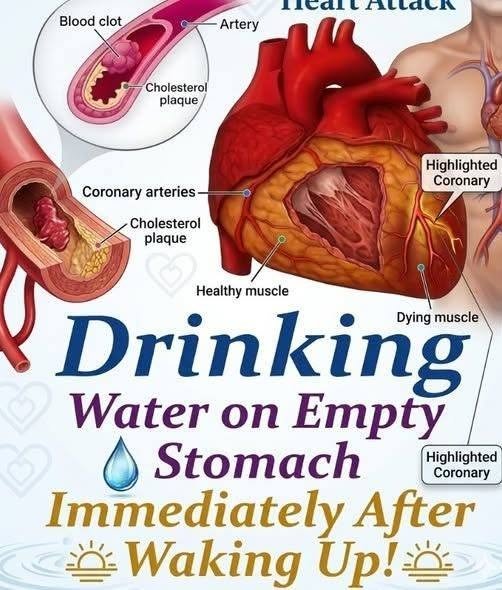
The viral infographic depicts complex cardiovascular diagrams—including cross-sections of coronary arteries, blood clots, cholesterol plaque, and myocardial tissue—under the dramatic header: “Drinking Water on Empty Stomach Immediately After Waking Up!”. Juxtaposing medical heart attack diagrams with an incomplete headline is a blatant medical misinformation tactic designed to generate health anxiety. In reality, drinking water on an empty stomach is a standard, beneficial physiological habit that poses no risk of cardiovascular disease or heart attacks.
Physiological Effects of Morning Hydration
- Rehydration and Circulation: During sleep, the body naturally loses water through respiration and perspiration. Drinking water upon waking rehydrates the body, helping maintain optimal blood volume and fluid balance without triggering acute cardiovascular strain.
- Digestive Stimulation (Gastrocolic Reflex): Consuming water on an empty stomach stimulates peristalsis—the natural wave-like muscular contractions of the digestive tract—helping kickstart digestion and bowel regularity for the day.
- Coronary Artery Health Debunked: Heart attacks (myocardial infarctions) are caused by the rupture of atherosclerotic plaque inside coronary arteries, leading to localized blood clot formation that blocks blood flow to heart tissue. Plain water consumption has no biological mechanism that creates blood clots, plaque build-up, or arterial blockages.
- Extreme Cold Water Myth: While drinking excessive amounts of ice-cold water very rapidly can occasionally trigger a minor vagal nerve response (potentially lowering heart rate temporarily), standard morning water intake is completely safe for healthy individuals and heart patients alike.
Pseudo-Medical Clickbait and Health Shock Tactics
Infographics that pair alarmist anatomical diagrams with incomplete, sensationalized hooks represent standard pseudo-medical engagement farming.
Content creators leverage these graphic formats to drive social media reach:
- Visual Shock Association: Juxtaposing a routine daily habit (drinking water) with terrifying clinical images (heart failure, dying muscle tissue) exploits health paranoia, forcing users to stop scrolling out of fear.
- The Incomplete Hook: Trailing off with an unfinished premise (“Did you know that…”) creates an artificial curiosity gap, forcing viewers to click external links or hunt through comments to find the missing warning.
- Comment Section Traps: Health warnings stir up heavy debate in the comments between users pointing out the absurdity, people asking for medical advice, and accounts sharing folk remedies, generating high comment metrics that boost the post’s algorithmic distribution.
- Monetized Link Routing: Posts using these graphics frequently pin comments directing users to external blogs selling unverified supplements, fake health detoxes, or ad-dense clickbait sites.
Drinking water upon waking is a simple, healthy way to stay hydrated and support bodily functions, completely unrelated to the cardiovascular pathology depicted in the clickbait diagram.
Leave a Reply