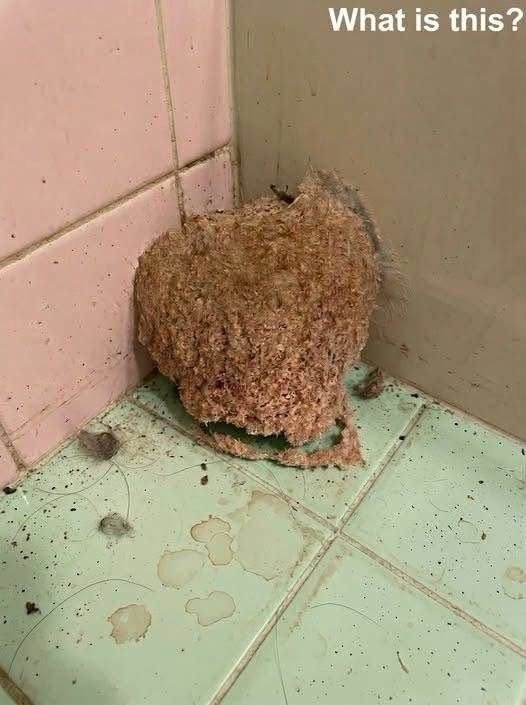
The object in the corner appears to be a rodent nest (likely built by mice or rats) made from torn insulation material, lint, hair, and gathered debris. When a house remains dark, quiet, and unoccupied for a week, rodents often take advantage of the undisturbed environment to build sheltered nests close to water sources like drains or pipes.
These nests present multiple safety and sanitation concerns. Beyond harboring bacteria, parasites, and airborne pathogens associated with rodent waste, these structures can cause hidden damage inside walls or cabinets where insulation was pulled. Furthermore, if rodents gnaw through electrical wiring behind tile or wall voids, it creates a potential fire risk.
To safely resolve this issue, follow these steps:
- Wear Protection: Put on heavy rubber or nitrile gloves and an N95 respirator mask before approaching the area to avoid inhaling airborne particles.
- Disinfect First: Spray the entire nest and surrounding tile thoroughly with a household disinfectant or diluted bleach solution; never vacuum or sweep it dry, as this disperses contaminants into the air.
- Safe Disposal: Carefully scoop the damp nest into a heavy-duty plastic trash bag, seal it tightly, place it inside a second sealed bag, and dispose of it outdoors.
- Sanitize & Inspect: Deep-clean the area with disinfectant, then inspect lower cabinets, baseboards, and pipe entries to seal any gaps larger than a pencil eraser with steel wool and caulk.
Leave a Reply