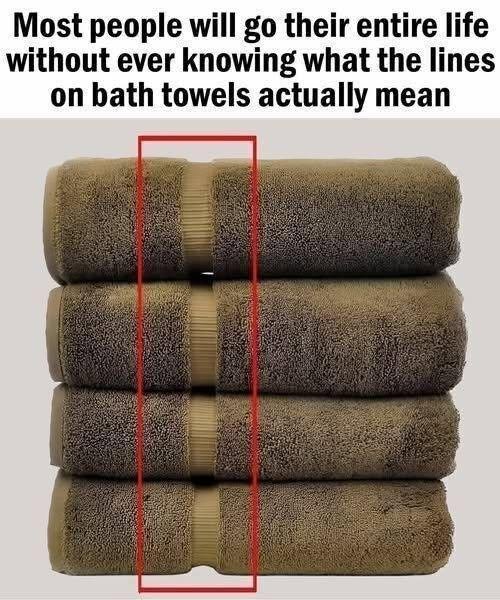
Those flat lines woven into many bath towels may look like a simple decorative feature, but they have a practical purpose. The section shown in the image is commonly called a dobby border. Unlike the soft, looped terry fabric that makes up most of the towel, this area uses a tighter, flatter weave. Textile experts explain that the border provides additional structure, helping the towel maintain its shape and reducing the likelihood of fraying around the edges.
The reason becomes clearer when you consider how often towels are washed, dried, folded, pulled, and handled. The plush terry loops are excellent for absorbing moisture, but the edges of a towel experience repeated tension and can gradually stretch, curl, or unravel. The dobby border acts as a reinforced transition zone, giving the fabric greater stability near the ends. It can also create a neat visual finish and provide a convenient flat area for patterns, embroidery, or branding. You may notice that the striped section feels considerably less fluffy than the rest of the towel. That is intentional: its tighter construction is designed for structure rather than maximum absorbency. So, if you have ever wondered why manufacturers interrupt an otherwise soft towel with a smooth strip, the answer is largely about textile construction and durability—not because the towel is defective or because the stripe has some secret hygiene function. The exact design can vary between manufacturers, and some towels do not have a dobby border at all.
The next time you fold your towels, take a closer look at those seemingly ordinary lines. They are a small example of smart product design, where appearance and function work together. While the border may make a towel look more polished, its structural role is arguably more interesting: it helps stabilize the fabric and protect vulnerable areas from repeated wear. So the viral idea that these lines are simply decoration misses an important part of the story. Your towel was not randomly designed that way—the manufacturer deliberately used a different weave to create a stronger, more finished product.
Disclaimer: This article is for general educational and informational purposes. Towel construction can vary by manufacturer, fabric, and design, so the exact function of a particular border may differ. Information may be general or unauthenticated and should be verified through reliable textile or manufacturer sources when specific product details are important.
Leave a Reply