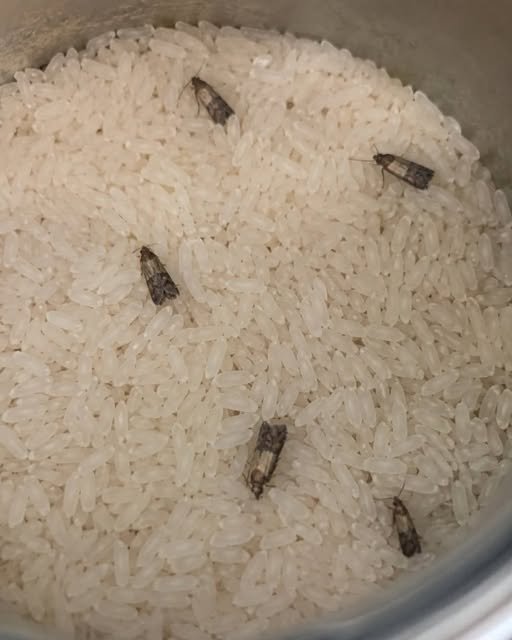
If you open a bag of rice and discover tiny insects crawling around, don’t panic—but don’t eat the rice either. They may be pantry pests such as rice weevils or grain moths, depending on their appearance. Rice weevils are small reddish-brown to dark beetles, while pantry moth infestations may involve tiny moths, caterpillar-like larvae, webbing, or clumped grains. Rice weevils are particularly associated with whole grains, and their larvae can actually develop inside individual kernels, meaning the rice can look perfectly normal when you first buy it. If the insects are moth-like, look for silky webbing or larvae around the rice and nearby pantry products.
So how did bugs get inside a sealed package in the first place? Unfortunately, packaging doesn’t always provide complete protection. Pantry pests can sometimes enter through tiny openings, while eggs or immature insects may already be present in grain before it reaches the supermarket. Some pests can even penetrate thin plastic or cardboard, meaning an unopened package isn’t necessarily guaranteed to be pest-free. The safest approach is to seal the infested rice in a bag and discard it, then inspect nearby flour, pasta, cereal, grains, nuts, spices, pet food, and birdseed because pantry pests can spread from one food source to another.
After removing the affected food, completely empty the cupboard and vacuum cracks, corners, shelf edges, and food crumbs, then wash the shelves with warm soapy water and let them dry thoroughly. Avoid spraying insecticides inside food-storage areas. Remaining dry goods should be transferred into tightly sealed glass, metal, or sturdy plastic containers rather than being left in ordinary bags or cardboard boxes. For foods you want to keep, freezing can be an effective way to kill existing pantry-pest eggs and larvae; extension guidance commonly recommends several days to a week depending on the pest and source. Disclaimer: This article provides general household and food-storage information. The exact insect cannot be identified without seeing a photograph, and recommendations can vary by species. When in doubt, discard visibly infested food and verify the pest identification with a qualified pest professional or reliable extension service.
Leave a Reply