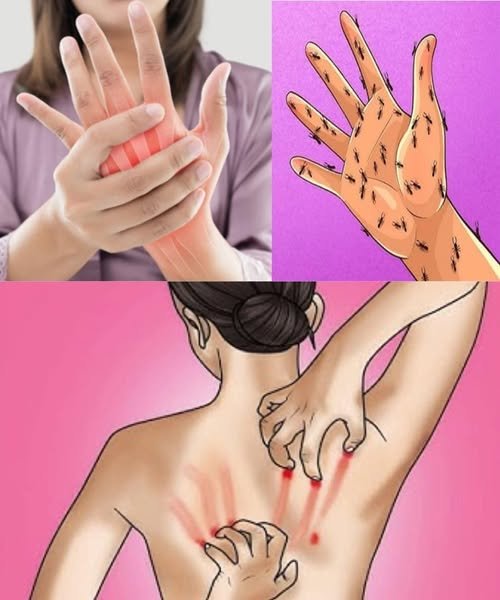
The image presents a composite of three illustrations depicting joint pain, an exaggerated sensation of ants crawling on a hand (formication), and intense back scratching. It is paired with an incomplete headline: “ATTENTION! These are the 7 signs that indicate you have too much…”
Posts using this specific combination of stock illustrations typically target high uric acid (gout) or systemic inflammation / “toxins.” However, the visual depictions mix distinct neurological, dermatological, and joint symptoms into a single exaggerated health warning.
Medical Context of the Depicted Symptoms
- Joint Pain / Swelling (Top-Left):
- Actual Causes: Frequently associated with arthritis (rheumatoid or osteoarthritis), overuse injuries, or gout.
- Uric Acid Link: Excess uric acid forms sharp monosodium urate crystals in joints, causing sudden, severe inflammation (gout). While it most commonly strikes the big toe, it can affect fingers, wrists, and knees.
- “Ants Crawling” Sensation / Paresthesia (Top-Right):
- Medical Term: Known as formication (a sub-type of paresthesia), where a person feels a crawling sensation on or under the skin without physical insects.
- Actual Causes: Peripheral neuropathy (frequently tied to diabetes or vitamin B12 deficiency), nerve compression (such as carpal tunnel syndrome), severe anxiety, or withdrawal from certain substances. It is not a direct sign of “excess uric acid” or unspecified “toxins.”
- Intense Pruritus / Severe Itching (Bottom):
- Actual Causes: Allergic reactions, eczema, psoriasis, dry skin (xerosis), or systemic conditions like liver failure, kidney disease, or thyroid imbalances.
Deconstructing Health-Clickbait Mechanics
This post follows a well-worn content-farm playbook designed to maximize social media reach:
- The Truncated Headline (“Curiosity Gap”): Leaving the text cut off mid-sentence (“indicate you have too much…”) triggers anxiety and curiosity, forcing scrollers to click through to an ad-laden blog or open the comment section.
- Visually Jarring Metaphors: Drawing literal ants crawling over a hand exploits sensationalist imagery to evoke disgust and stop scrollers mid-feed.
- Symptom Clumping: Grouping completely unrelated symptoms (joint stiffness, nerve tingling, and back itching) ensures almost every viewer identifies with at least one symptom, making the “warning” feel personally relevant.
- Algorithmic Inflation: Viewers flocking to the comments to guess what the missing word is—or to describe their own symptoms—signals high engagement to platform algorithms, boosting the post to wider feeds.
Leave a Reply