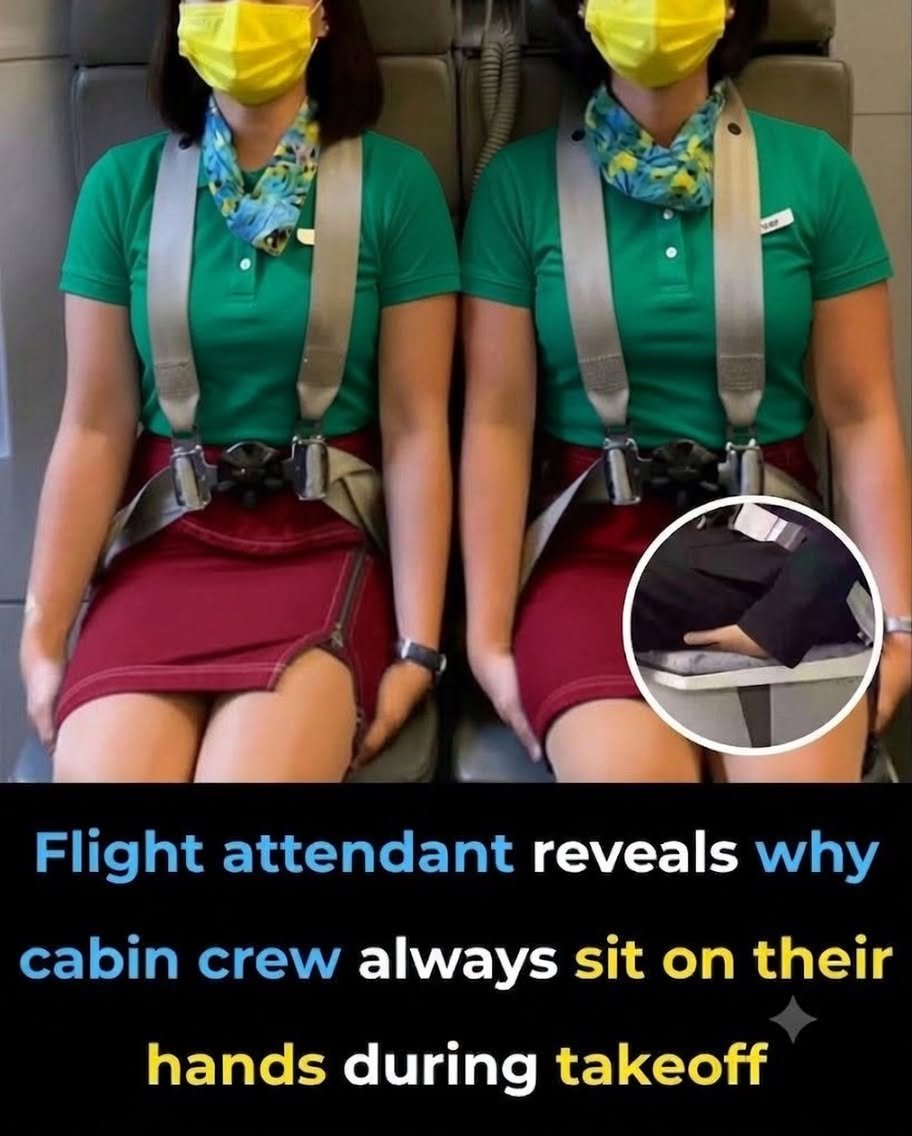
If you have ever noticed a flight attendant sitting with their hands positioned underneath their thighs or otherwise appearing to “sit on their hands” during takeoff, there is a practical aviation-safety reason behind the posture. This position is often associated with a technique called the braced position, which helps cabin crew prepare their bodies for the possibility of a sudden stop, hard landing, or unexpected impact. During takeoff and landing—the phases of flight when many accidents are more likely to occur—flight attendants must remain secured in their assigned jump seats and be ready to respond quickly if an emergency occurs. Keeping the body positioned correctly helps reduce unnecessary movement and can help cabin crew maintain a stable posture during an unexpected event. (faa.gov)
The exact technique can vary according to the airline, aircraft, jump-seat design, and crew training, so it is not accurate to say that every flight attendant always sits on their hands. Aviation authorities and airlines train cabin crew in specific brace positions designed to reduce the likelihood of injury during an impact. The underlying principle is to keep the body restrained, minimize loose movement, and protect vulnerable parts of the body. Flight attendants also have additional responsibilities during takeoff and landing: they monitor the cabin, secure equipment and passengers, and remain prepared to respond to an emergency. Their jump seats are specifically designed to provide restraint and support during these critical phases of flight. (faa.gov)
So the next time you see a flight attendant adopting this unusual-looking posture, it is not simply a quirky habit or a way to stay comfortable. It can be part of a carefully trained safety procedure designed for an extremely unlikely but potentially serious situation. Cabin crew spend extensive time learning emergency procedures, including evacuation, fire response, first aid, communication, and appropriate protective positioning. The seemingly small details passengers notice—such as where a flight attendant places their hands or how they sit in a jump seat—can therefore have a specific safety purpose. Disclaimer: This article is for general informational purposes only. Procedures and brace positions can differ between airlines, aircraft types, and jurisdictions. Always follow the safety instructions provided by your airline and cabin crew during a flight, and verify aviation-safety information through reliable airline or aviation-authority sources.
Leave a Reply