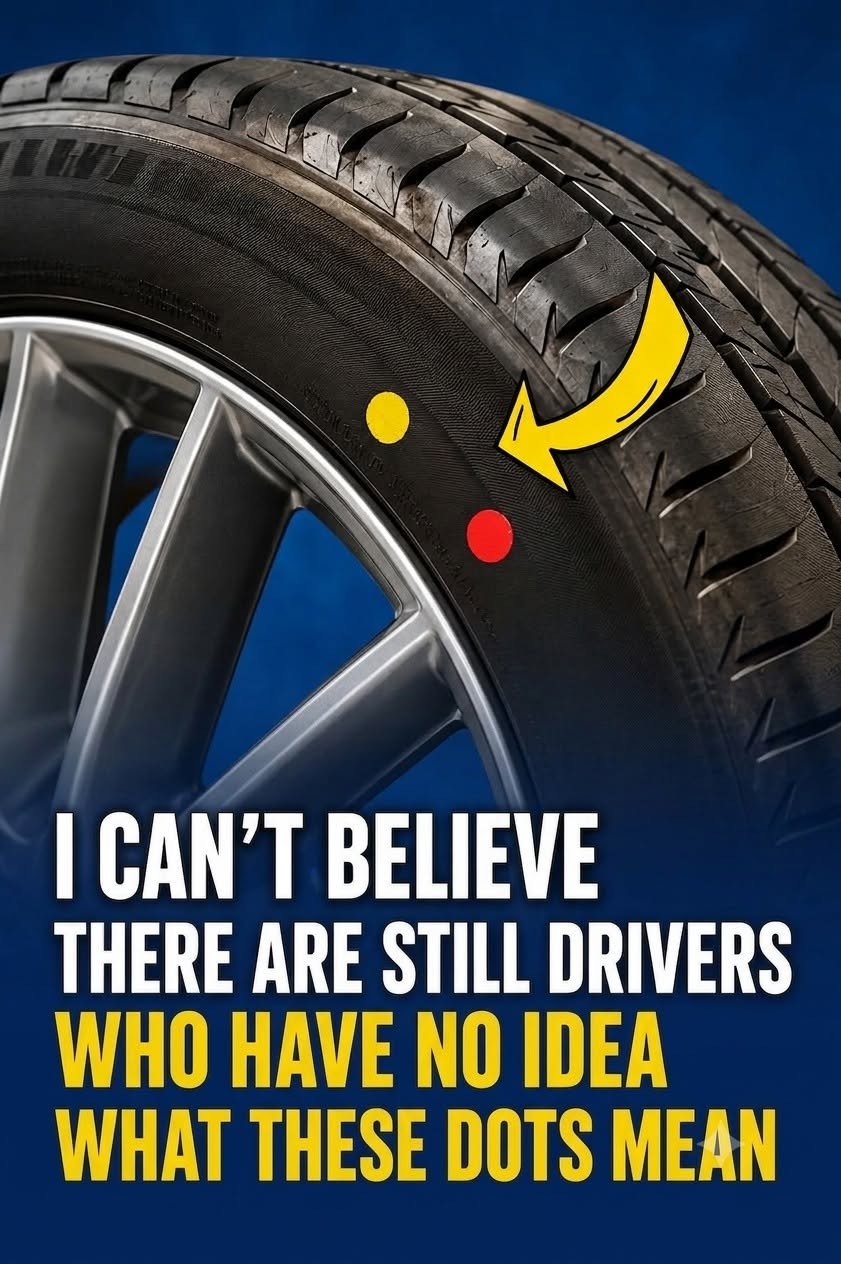
Those small red and yellow dots on new tires are not random decorations—they are manufacturing and installation markings designed to help technicians position the tire correctly on a wheel. The yellow dot commonly indicates the tire’s lightest point, based on radial force or weight-related manufacturing measurements, depending on the tire manufacturer. During installation, a technician may align this yellow mark with the valve stem, which is often considered one of the heavier points of a wheel assembly. Doing so can potentially reduce the amount of additional balancing weight required. However, marking conventions can vary between tire manufacturers, so a yellow dot does not always have exactly the same meaning on every brand. These small markings are therefore part of the precision process used to improve wheel balance, ride quality, and overall driving comfort.
The red dot is generally associated with the tire’s point of greatest radial force variation or a location identified by the manufacturer for matching the tire to the wheel’s runout. In some tire-and-wheel mounting procedures, technicians use the red mark to match the tire with a corresponding low point on the wheel. This process, sometimes called “match mounting,” can help minimize overall assembly variation. It is important to understand that red and yellow markings do not necessarily mean that a tire is defective or damaged. They are usually factory reference points intended to help professionals during installation. Some tires may have both markings, while others may have only one, and manufacturers can use different systems. Modern tire shops may also rely on balancing machines and manufacturer-specific procedures rather than simply matching a colored dot to the valve stem.
So, if you notice these dots on your tires, there is usually no reason to panic or remove them. They are primarily useful during mounting and balancing, and they may eventually disappear through normal wear or simply remain on the sidewall without affecting performance. Proper tire installation, correct inflation pressure, regular rotation when recommended, and professional wheel balancing are much more important for long-term safety and tire life. If your vehicle develops steering-wheel vibration, uneven tire wear, pulling, or unusual road noise after installing new tires, have the tire-and-wheel assembly inspected by a qualified technician. Disclaimer: This article is for general educational and informational purposes only and does not constitute professional automotive advice. Tire markings can vary by manufacturer, so the exact meaning of a particular red or yellow dot should be confirmed with the tire manufacturer’s documentation or a qualified tire professional. Always verify important vehicle-safety information through reliable sources and follow the manufacturer’s recommendations.
Leave a Reply