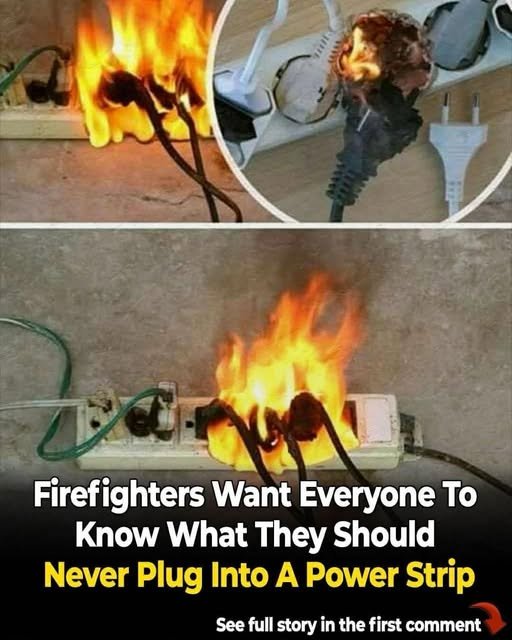
Power strips are convenient for powering multiple electronics, but they can become a serious fire and electrical hazard when used incorrectly. One of the most common mistakes is plugging a power strip into another power strip or extension cord, creating a practice known as “daisy chaining.” This can overload the electrical circuit and increase the risk of overheating. Another mistake is using damaged strips with frayed cords, cracked housings, loose plugs, or burn marks. Safety authorities recommend replacing damaged electrical equipment rather than continuing to use it.
Another important mistake is using an ordinary power strip for high-power appliances such as space heaters, air conditioners, refrigerators, or other equipment that draws substantial current. These appliances may require a dedicated wall outlet or specific electrical setup according to the manufacturer’s instructions. Power strips should also never be covered by rugs, carpets, bedding, or furniture because trapped heat can increase the risk of overheating. Keep cords away from water and avoid using electrical equipment in damp locations unless it is specifically designed for that environment.
Before using a power strip, check that it is appropriate for the intended equipment and has recognized safety certification. Avoid exceeding its rated electrical load, and don’t assume that having several available sockets means every socket can safely handle a high-power appliance simultaneously. If a strip becomes unusually hot, smells like burning plastic, sparks, makes unusual noises, or repeatedly trips a circuit breaker, stop using it immediately and have the electrical system inspected if necessary. A few simple precautions can significantly reduce electrical-fire risks in the home. Disclaimer: This article provides general electrical-safety information and is not a substitute for professional inspection or local electrical codes. Power requirements vary by appliance and installation. Always follow the manufacturer’s instructions and consult a qualified electrician when you’re unsure about safe electrical use.
Leave a Reply