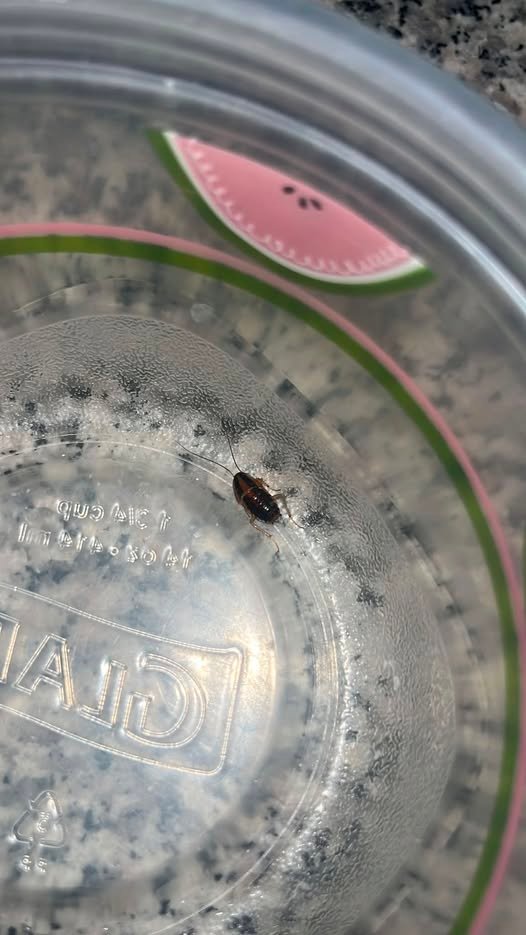
The insect trapped inside the plastic container is indeed a cockroach nymph (a juvenile cockroach). Based on its dark oval body, distinct long antennae, lack of fully developed wings, and subtle pale stripe across its pronotum/torso, it closely resembles an early-instar German cockroach nymph (Blattella germanica) or a related domestic pest species.
Pest Ecology and Infestation Risks
- Significance of Finding Nymphs: Finding adult cockroaches indoors can sometimes mean an isolated traveler flew or crawled in from outside. However, encountering juvenile nymphs indicates active breeding nearby, as nymphs do not travel far from where their egg case (ootheca) was deposited.
- Low Volume Frequency: Finding only two nymphs over a two-month span suggests an infestation is either in its very early stages or localized in an adjacent area (such as a neighboring apartment, behind kitchen appliances, or inside wall voids).
- Behavior and Habitats: Cockroach nymphs are nocturnal, highly elusive, and seek out small, dark, humid gaps near food and water sources—most commonly under sinks, behind refrigerators, inside cabinets, or around bathroom plumbing.
Pest Identification Misdirection and Engagement Framing
Images of captured domestic insects asking “Is this a baby cockroach?” are frequently repurposed on social media to exploit pest anxieties and drive high-interaction forum discussions.
Content creators and viral pages utilize these posts to boost algorithmic performance:
- Household Anxiety Triggers: Cockroach infestations evoke intense disgust and worry about home cleanliness, causing users to pause their scroll to confirm their suspicions.
- Crowdsourced Identification Hooks: Posing straightforward identification questions prompts hundreds of users to chime in with personal extermination stories, DIY remedies, or species debates in the comments.
- Monetized Affiliate Links: Pages posting these images often pin sponsored comments leading to external sites promoting pest-repellent gadgets, exterminator lead generators, or ad-dense blogs.
To manage potential pest activity early, inspect dark kitchen/bathroom crevices for droppings or shed skins, keep food in sealed containers, eliminate standing moisture, and consider setting gel baits or consulting a professional pest technician.
Leave a Reply