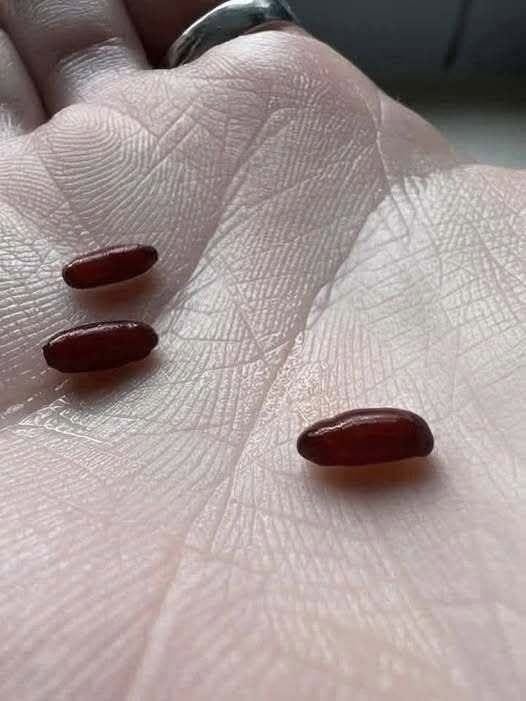
The small, reddish-brown, capsule-like objects shown in the palm are fly puparia (most commonly from houseflies or blowflies). Despite frequent online posts misidentifying these or linking them to severe pest outbreaks, these rigid, smooth capsules represent a standard non-feeding stage of a fly’s life cycle rather than bedbug eggs or parasites.
Biological Nature and Mechanics
- Pupal Stage: After a fly maggot finishes feeding, its outer larval skin hardens, darkens, and forms a protective, smooth shell called a puparium. Inside this casing, the insect metamorphoses into an adult fly.
- Distinction from Bedbugs: Bedbug eggs are significantly smaller (around 1 mm), pearly-white, soft, and translucent. Adult bedbugs are flat, oval, and have visible body segments and legs, whereas fly puparia are completely smooth, legless, cylinder-shaped, and dark reddish-brown.
- How They End Up on Beds: Fly larvae often migrate away from their breeding site (such as trash, pet food, or decaying organic material) to find a dark, dry, quiet spot to pupate. They can easily crawl into laundry, baseboards, or under bedding before forming their casings.
Social Media Context and Engagement Farming
Images of mystery insect casings found in domestic spaces are frequently weaponized on social platforms to exploit household pest anxieties and trigger disgust.
Content creators leverage these household finds to drive algorithmic reach:
- Parasite Panic: Framing common, harmless environmental debris or fly pupae as mysterious bedbug eggs or invasive parasites creates instant anxiety, causing users to stop scrolling.
- Open-Ended Engagement: Captioning the image with panicky questions (“I found this on my bed… what is it?”) prompts hundreds of users to comment with guesses, personal pest infestation stories, or incorrect diagnoses.
- Monetization Links: Comment sections attached to these viral posts often feature pinned links directing concerned users to ad-heavy blogs or affiliate pages selling unnecessary pest control products.
Finding a few fly puparia simply calls for inspecting nearby trash bins or laundry hampers for decaying organic matter rather than panicking about a bedbug infestation.
Leave a Reply