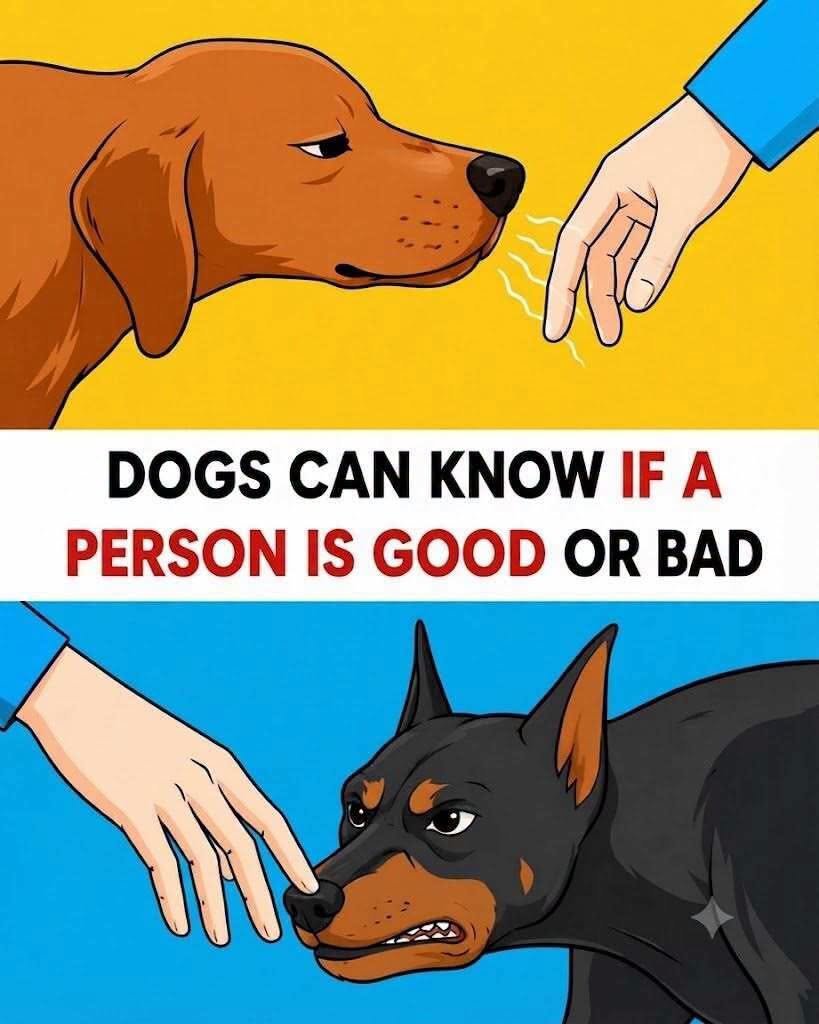
A dog’s reaction to a particular person can be influenced by many factors. Someone wearing a hat, carrying an unusual object, speaking loudly, moving quickly, or behaving nervously may appear threatening to a dog even when that person has completely harmless intentions. Dogs can also form associations based on previous experiences. If a person resembles someone connected with a negative experience, a dog may react cautiously even though there is nothing objectively dangerous about the new individual. On the other hand, dogs may approach people who use calm voices, gentle movements, and familiar social signals. Their extraordinary sense of smell may also allow them to detect physiological changes that humans cannot easily notice, but this should not be confused with an ability to determine whether someone is morally good or evil. A dog’s behavior can provide useful information about how comfortable it feels, but it cannot reliably serve as a character test.
The healthiest approach is to treat a dog’s reaction as a signal worth observing, not proof of someone’s personality or intentions. If a dog consistently becomes fearful or aggressive around a particular situation, owners should pay attention to the animal’s safety and investigate possible triggers without immediately accusing anyone of wrongdoing. Likewise, people should never approach an unfamiliar dog simply because it appears friendly. Respecting the animal’s boundaries, asking the owner for permission, and watching its body language are safer practices. Dogs can be remarkably sensitive companions, but their instincts are not a substitute for evidence when making judgments about other people. Disclaimer: This article provides general informational content about canine behavior and does not establish that dogs can accurately determine whether a person is morally good or bad. Individual dogs can react differently based on training, genetics, experiences, environment, and health. For concerns about unusual aggression or behavior, consult a qualified veterinarian or certified animal-behavior professional.
Leave a Reply