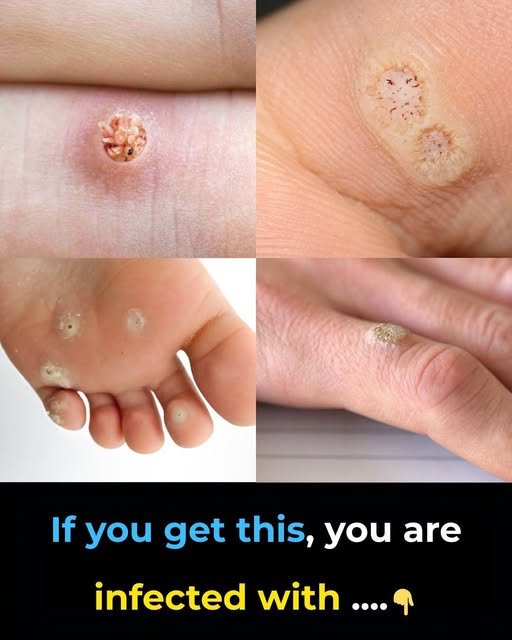
The image shows a four-panel grid highlighting common skin lesions—specifically warts—with an incomplete, dramatic headline: “If you get this, you are infected with ….”.
While the headline uses a dramatic “cliffhanger” tone to incite fear, the actual medical reality is very common and manageable: these are standard skin warts caused by strains of the Human Papillomavirus (HPV).
What Are These Lesions?
- Common Warts (Verruca Vulgaris):
- Shown in the top-left and bottom-right panels, these are rough, raised growths that often appear on hands, fingers, or near nails.
- The top-left image displays a filiform-like or prominent spiky texture, which occurs when skin cells hyper-proliferate in tiny projections.
- Plantar Warts (Verruca Plantaris):
- Shown in the top-right and bottom-left panels, these occur on the soles of the feet or toes.
- Tiny Black Dots: The small dark specks visible inside these lesions (often called “wart seeds”) are actually tiny, clotted blood vessels (thrombosed capillaries) that supply blood to the wart.
- The Viral Cause:
- Warts are caused by direct contact with low-risk skin strains of HPV (primarily types 1, 2, 4, 27, or 57).
- These non-cancerous strains infect only the top layer of skin (epidermis) through tiny cuts or scrapes, leading to rapid cell growth. They are completely distinct from the high-risk mucosal HPV strains associated with cervical cancer.
How Warts Are Treated
Most skin warts are benign and often go away on their own as the immune system eventually recognizes and clears the virus, though this can take months or years. Common standard treatments include:
- Salicylic Acid: Over-the-counter topical treatments that gradually dissolve the layers of infected skin.
- Cryotherapy: A healthcare provider uses liquid nitrogen to freeze the wart off.
- Duct Tape Occlusion: Covering the area to break down the skin barrier (often used alongside topical remedies).
- Minor In-Office Procedures: Electrocautery, laser therapy, or prescription topical immunotherapy for stubborn cases.
Deconstructing the “Health Panic” Clickbait
This graphic uses standard digital content-farm tactics designed to generate viral traffic:
- The Incomplete Headline (“Curiosity Gap”): Leaving the text open-ended with an emoji pointing downward (“infected with ….”) creates artificial suspense, compelling users to click a link or read through comments.
- Visually Jarring Close-ups: Using macro, high-contrast photos triggers mild aversion (or trypophobia-like responses to clustered textures), forcing scrollers to stop mid-feed.
- Weaponizing Common Conditions: Because millions of people get warts on their hands or feet at some point in their lives, viewers flock to the comment section to share experiences or express concern. This comment engagement signals high interest to social media algorithms, boosting the post’s reach.
Leave a Reply