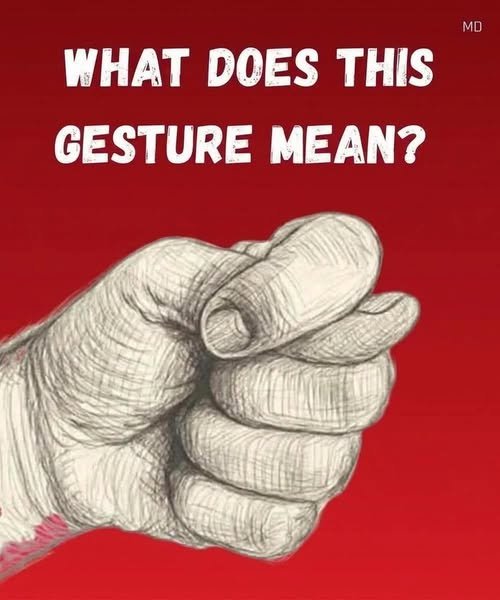
Sensationalist viral posts frequently frame common body language as containing “hidden secrets” or ominous universal meanings to spark online speculation. The hand gesture depicted in the illustration—made by forming a fist and inserting the thumb between the index and middle fingers—is known historically as the fig sign (manoin fica or figa). Far from a single universal code, its meaning varies dramatically across different cultures, ranging from a playful children’s game to an apotropaic charm or a crude, vulgar insult depending on geographic location and historical context.
Cultural Meanings Across Different Regions
- The “I’ve Got Your Nose” Game: In North America and several Western nations, parents and children commonly use this gesture in a lighthearted pretend game where an adult “steals” a toddler’s nose, holding the protruding thumb tip to represent the captured nose.
- Ancient Protection and Luck Symbol: Dating back to ancient Roman and Mediterranean antiquities, the figa gesture was considered an apotropaic talisman used to ward off the “evil eye,” jealousy, or bad fortune. In modern Brazil, wooden or stone charms shaped like this fist are widely worn as lucky amulets to bring good fortune.
- Obscene or Dismissive Insult: In Eastern Europe, Turkey, Greece, and parts of the Mediterranean, the gesture is historically considered an offensive, vulgar sign expressing defiance, severe rejection, or a crude refusal equivalent to “you get nothing.”
The Importance of Cultural Context
Body language and hand gestures do not possess a single, immutable meaning across global societies. While internet graphics often hype these symbols to suggest secret societies or sinister hidden truths, the fig sign is simply an ancient hand symbol that evolved along multiple cultural paths over thousands of years. Understanding its diverse cultural interpretations prevents unnecessary misunderstandings and neutralizes viral clickbait claims.
Leave a Reply