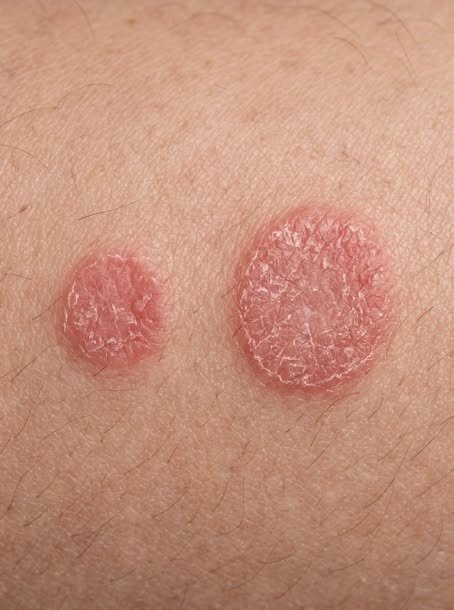
Sensationalist health posts online often display close-up images of circular skin patches alongside alarming warnings to induce panic and drive clicks. While encountering unexpected skin changes warrants attention, round, raised, or scaly lesions are exceptionally common dermatological presentations that typically stem from manageable, non-life-threatening conditions. The image displays classic circular, erythematous (reddened), and slightly scaly plaques on the skin, which are most frequently associated with superficial fungal infections or inflammatory skin conditions rather than medical emergencies.
Common Causes of Ring-Shaped and Scaly Skin Patches
- Tinea Corporis (Ringworm): Despite its misleading name, ringworm is caused by a common microscopic fungus (dermatophyte), not a worm. It typically presents as a circular, red, itchy rash with raised or scaly edges and slightly clearer skin in the center, spreading easily through direct skin-to-skin contact or shared personal items.
- Nummular Eczema (Discoid Eczema): This non-contagious inflammatory condition causes coin-shaped, dry, scaly, or crusted patches that can be intensely itchy. It is frequently triggered by dry skin, environmental irritants, or severe skin allergies.
- Plaque Psoriasis or Pityriasis Rosea: Autoimmune or post-viral inflammatory conditions can manifest as well-defined, rounded red patches covered with silvery or fine scales, commonly appearing on the limbs, chest, or back.
Proper Diagnosis and Treatment Approaches
Attempting to self-diagnose complex skin lesions using sensationalized social media graphics can lead to improper treatment, such as applying over-the-counter hydrocortisone to a fungal infection, which can actually worsen ringworm. Fungal infections generally respond well to topical antifungal creams, while inflammatory dermatoses like eczema or psoriasis require targeted moisturizers or prescription corticosteroids. Seeking guidance from a healthcare provider ensures an accurate diagnosis and an effective, safe treatment plan.
Leave a Reply