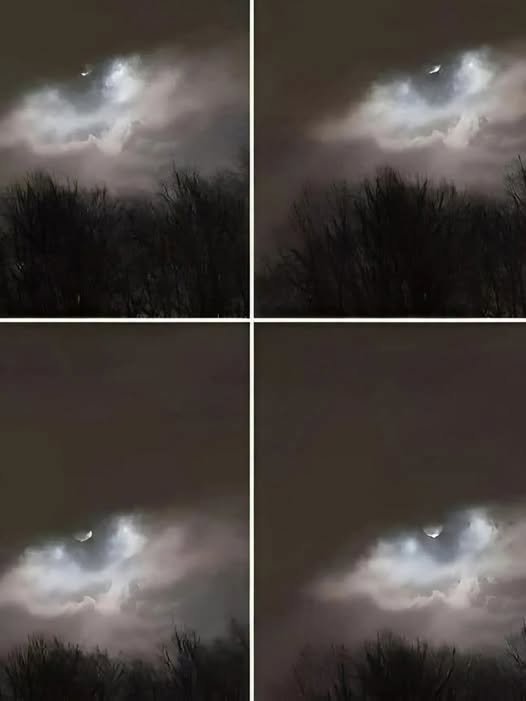
Images showing eerie, natural formations like cloud openings or moonlit skies that appear to form giant “eyes” are popular viral staples. These posts rely on sensationalized stories and sensory curiosity to encourage users to zoom in, stare, and debate what they are looking at.
Psychological Phenomenon: Pareidolia
- Visual Perception: The image showcases a classic example of pareidolia, a psychological phenomenon where the human brain perceives familiar patterns—most commonly human faces or eyes—in random, neutral visual stimuli.
- Natural Formation: The “eyes” in the four-panel layout are created simply by light reflecting off cloud edges surrounding breaks in the night cover, with the moon or bright light source acting as a “pupil” or reflection.
- Manipulated Layout: Presenting the same photograph in a four-panel grid mirrors symmetrical face structures, intentionally tricking the brain into recognizing an sinister or otherworldly pair of eyes.
Engagement Farming and Misdirection
Viral posts sharing these optical illusions alongside absurd or contradictory captions—such as “My brother took this… She shared it… 21 km from our house!”—are tailored specifically for online engagement farming:
- Inconsistent Narratives: The text intentionally uses conflicting details (referring to “brother” and then “she”) to prompt viewers to point out typos in the comment section.
- Artificial Mystery: Claiming that “no one noticed the most important detail” exploits curiosity, driving users to inspect the image repeatedly and leave hundreds of comments guessing what the hidden feature might be.
- Algorithmic Boost: High comment counts and prolonged viewing times signal interest to social media algorithms, amplifying the post’s reach to generate ad views and traffic for the creator’s page.
While naturally occurring cloud patterns can yield striking visual illusions, the image represents a standard psychological trick rather than a rare or supernatural event.
Leave a Reply