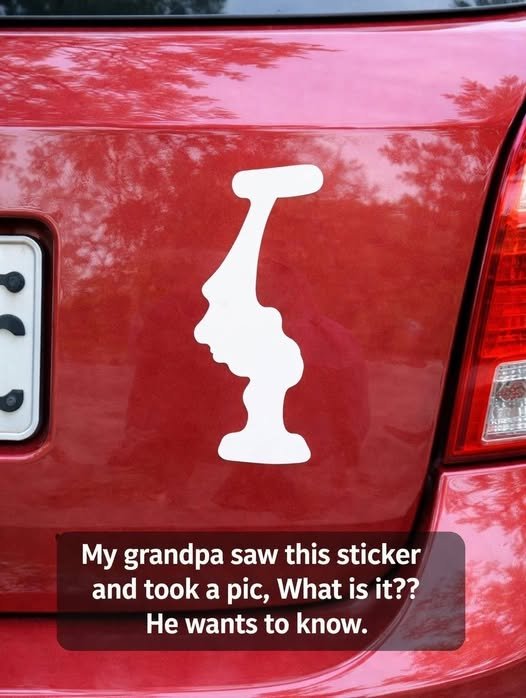
This sticker features a famous psychological optical illusion based on “Rubin’s Vase,” a concept created by Danish psychologist Edgar Rubin in 1915. The design plays with visual perception by tricking the brain into seeing two distinct images in one shape. Depending on whether you focus on the white graphic or the dark background, your brain interprets the visual information in entirely different ways.
When looking at the white silhouette, it appears to represent an abstract candlestick, lamp, or vase. However, if you shift your focus to the negative space created by the red surface of the car around the graphic, you can clearly see the profile outlines of two human faces looking directly at each other. This phenomenon demonstrates figure-ground organization, which is how the human visual system distinguishes an object from its surrounding background.
Decals like this are popular on vehicles because they serve as clever conversation starters and showcase a love for art, psychology, or visual puzzles. The brain cannot focus on both the vase/candlestick and the two face profiles at the exact same moment, causing a continuous mental shift back and forth as you view it. It remains one of the most recognizable examples of Gestalt psychology principles in modern pop culture.
Leave a Reply