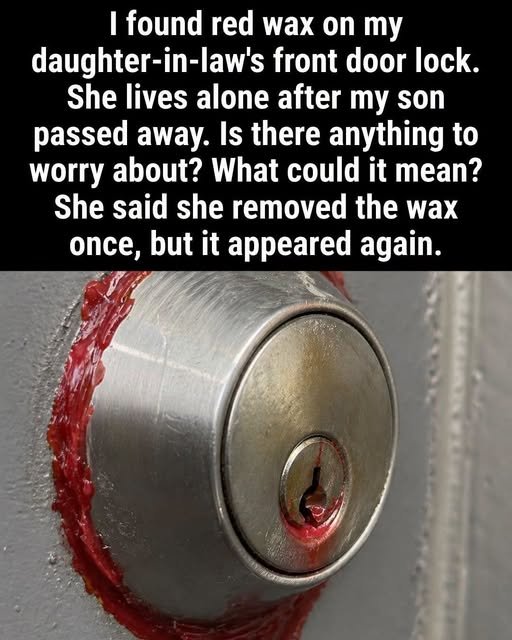
The dramatic story attached to this image—claiming a grieving relative keeps finding mysterious red wax reappearing on her door lock—is a classic social media copypasta. Online viral accounts routinely combine alarming, high-contrast imagery with unsettling, fictional storylines (often involving vulnerable individuals like single women or widows) to trigger fear, spark heated comment sections, and boost algorithm engagement.
What the Image Actually Shows
- Accidental Key Residue: In real-life scenarios where wax, lipstick, or red gunk ends up on a deadbolt keyhole, it is almost always caused by everyday household accidents. A common cause is carrying keys inside a purse or pocket where a melted tube of red lipstick, lip balm, or a melted crayon coated the key tip, which then got transferred directly into the lock mechanism when unlocking the door.
- Not a Burglar “Marking” Technique: Internet rumors frequently claim burglars use wax or crayons to “pick locks,” “make key molds,” or “mark homes.” Locksmiths and crime prevention experts widely debunk these claims. Standard pin-tumbler deadbolts cannot be key-molded simply by shoving soft wax into the keyway, as it deforms instantly upon removal.
How Engagement Bait Exploits Fear
Social media pages frequently manufacture fictional “true crime” scenarios or urban legends around everyday oddities. By claiming the wax “keeps appearing,” the post intentionally mimics suspense horror tropes to keep readers sharing the post.
If someone actually finds a foreign substance in their lock, spraying a small amount of contact cleaner or WD-40 inside and wiping the key clean usually clears out the residue. Recognizing these recycled text templates helps clear up digital panic and separates internet clickbait from reality.
Leave a Reply