Category: Uncategorized

  • Demystifying Household Findings: Identifying the Moth Pupal Case

    Demystifying Household Findings: Identifying the Moth Pupal Case

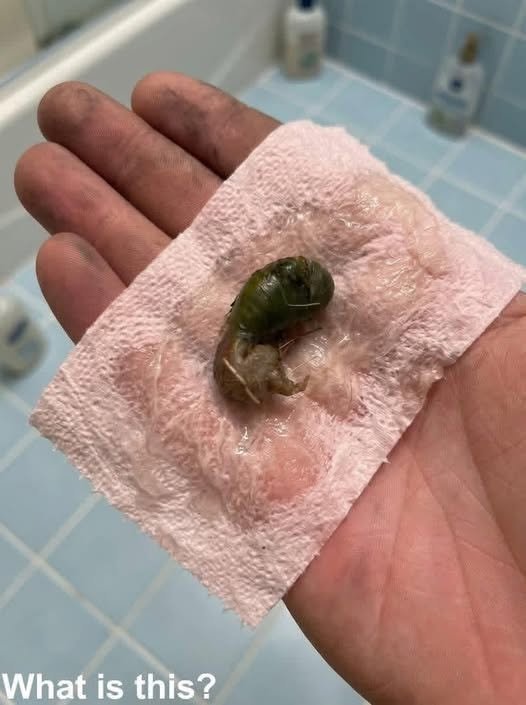
    Finding an unfamiliar, organic-looking object in domestic spaces like bathrooms can naturally provoke anxiety, but the item in the image is a completely harmless insect pupal casing. Specifically, this object is the pupa—or empty exuviae shell—of a large moth, such as a hawk moth or cutworm moth. During the pupal stage, caterpillars transform inside a protective, hardened chrysalis that often features dark green, brown, or bronze coloration, segmented rings, and a distinct curved tail hook. These pupae are non-venomous, do not bite or sting, and pose zero physical threat to humans or household pets.

    How Garden Pupae Enter Indoor Living Spaces

    • Accidental Import: Caterpillars frequently pupate in soil, potted plant dirt, or outdoor laundry hung outside to dry, allowing them to be accidentally brought indoors on shoes, clothing, or household items.
    • Drain and Vent Exploration: In rare cases, fully grown caterpillars searching for dark, humid places to undergo metamorphosis crawl through small gaps around window screens, bathroom exhaust vents, or plumbing penetrations.
    • Pet Transport: Outdoor pets like dogs or cats can unknowingly transport pupae or caterpillars inside their fur after playing in gardens or leaf piles.

    Proper Disposal and Household Prevention

    Disposing of a moth pupa requires no specialized chemical treatments or pest control interventions. Homeowners can simply wrap the casing in a paper towel or tissue and place it outdoors in a garden bed or trash receptacle. To prevent future garden insects from entering living areas, ensure window screens fit securely, seal small gaps around bathroom pipe entry points, and inspect indoor potted plants regularly. Understanding basic insect life cycles replaces fear with clear knowledge, ensuring a calm, safe, and clean home environment.

  • Sleep Positions and Personality Myths: What Science Really Says

    Sleep Positions and Personality Myths: What Science Really Says

    Viral social media graphics often claim that your preferred sleeping posture reveals personal traits, such as laziness, productivity, or core emotional habits. The image illustrates eight common sleep positions—ranging from back sleeping with arms raised (1) and neutral side-sleeping (2) to starfish spreads (3) and curled fetal positions (4). While these personality charts generate high online engagement, medical science confirms that nighttime posture is driven by musculoskeletal comfort, airway alignment, and physical health rather than personal ambition or character traits.

    Biomechanical and Ergonomic Realities of Sleep Posture

    • Side Sleeping (Positions 4, 5, 6, & 7): Side sleeping is the most common adult posture, highly recommended by sleep specialists to promote spinal alignment and reduce gastroesophageal reflux. Hugging a pillow (Positions 6 & 7) provides crucial hip and shoulder support, preventing joint strain rather than signaling behavioral laziness.
    • Back Sleeping (Positions 1, 2, & 3): Lying flat on the back helps evenly distribute body weight and protects the spine. However, wide-spread starfish or raised-arm positions often reflect natural temperature regulation or upper-body tension relief.
    • Airway Dynamics: Individuals who shift frequently or adopt unusual sleeping postures often do so unconsciously to keep their airways open, alleviating nighttime breathing resistance or snoring.

    Promoting Optimal Sleep Quality over Viral Myths

    Debunking pseudoscientific personality quizzes allows individuals to focus on evidence-based sleep hygiene rather than internet tropes. Choosing a sleeping position should be guided by physical comfort, spinal health, and pre-existing medical conditions, such as acid reflux or chronic back pain. Utilizing supportive pillows and a quality mattress ensures proper ergonomic rest, leading to higher daytime energy, improved cognitive function, and long-term health benefits.

  • he Utility of Everyday Objects: The Secret Purpose of the Nail Clipper Hole

    he Utility of Everyday Objects: The Secret Purpose of the Nail Clipper Hole

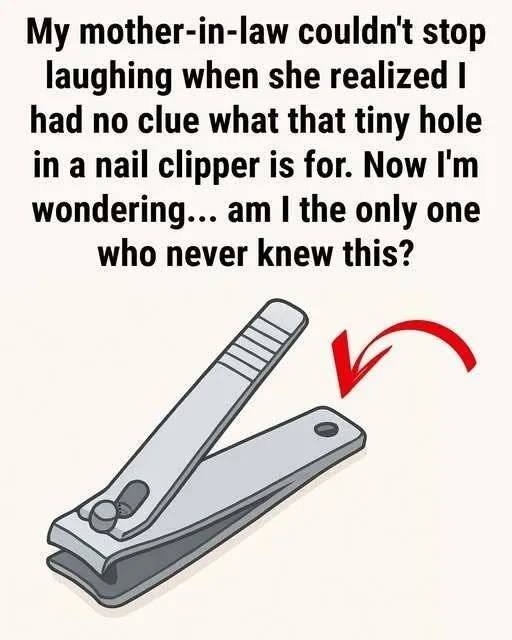
    Everyday household items frequently feature subtle manufacturing design details that serve specific practical functions. The tiny hole located at the base of standard metal nail clippers is an intentional utility feature rather than a manufacturing flaw or decorative element. While many people use nail clippers daily without noticing this small perforation, understanding its intended design applications highlights how basic industrial engineering makes personal grooming tools more accessible, portable, and versatile.

    Primary Practical Uses of the Hole

    • Keyring Attachment: The primary purpose of the hole is to allow a small metal ring or ball chain to pass through, enabling users to attach the clippers directly to a keychain, travel pouch, or toiletry kit for easy access.
    • Hanging Storage: It allows the tool to be hung on small hooks inside bathroom cabinets or pegboards, keeping counter surfaces tidy and preventing loss.
    • Manufacturing Alignment: During the industrial production process, machinery uses this hole to secure, align, and stamp the metal plates evenly before assembling the lever mechanism.

    Consumer Convenience and Ergonomic Design

    Incorporating small attachment points into personal care tools reflects thoughtful ergonomic design aimed at portability and loss prevention. Compact personal grooming tools are easily misplaced in large bags or drawers; securing them via a keyring ensures they remain readily available during travel or daily commutes. Understanding these subtle design elements helps consumers maximize the full functional value of everyday household tools.

  • Understanding Beef Anatomy: Extruded Blood Vessels vs. Parasites

    Understanding Beef Anatomy: Extruded Blood Vessels vs. Parasites

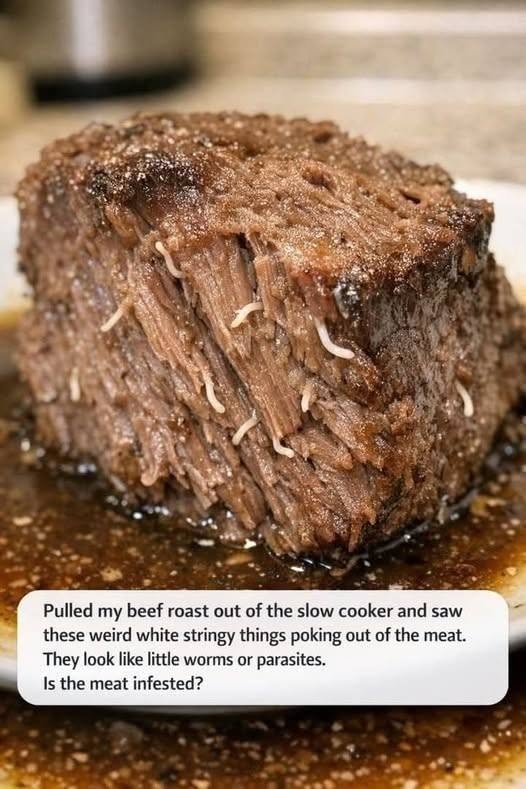
    The white, stringy structures visible in the beef roast are completely harmless anatomical features rather than parasitic worms or maggots. While their appearance can cause concern, these strands are small blood vessels, nerve sheaths, or connective tissue channels naturally embedded within muscle tissue. When beef is cooked low and slow, muscle fibers contract and tighten around these hollow, elastic structures, forcing them outward between the meat’s grain.

    Anatomical Characteristics vs. Parasites

    • Structure and Texture: Blood vessels are hollow, firm, and elastic, holding their tubular shape when pulled. Parasites or larvae are soft, segmented, and disintegrate rapidly when exposed to prolonged heat.
    • Location and Pattern: These vessels run parallel along the muscle fiber bundles, emerging uniformly from the cut edges of the meat.
    • Color: After extensive cooking, vascular collagen and elastine lose their red coloration and turn a pale white or translucent tan.

    Food Safety and Preparation

    • Safe Internal Temperature: Cooking beef in a slow cooker to an internal temperature above 63°C (145°F) for whole cuts neutralizes standard foodborne pathogens and parasites.
    • Removal: If the texture or appearance is unappealing, simply pick the strands out with tongs or trim them away before serving. The surrounding meat remains entirely safe to consume.
  • Uncovering Traditional Dowsing Rods: History, Folklore, and Water Divining

    Uncovering Traditional Dowsing Rods: History, Folklore, and Water Divining

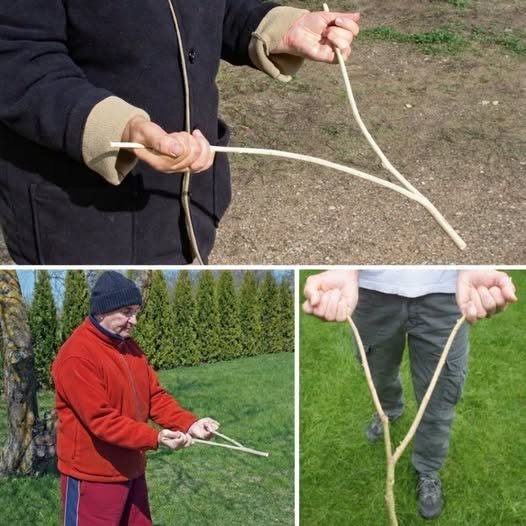
    The traditional Y-shaped wooden stick depicted in the images is a classic dowsing rod, also historically known as a divining rod or water witching stick. For centuries, practitioners used these fork-shaped wooden branches—typically cut from hazel, willow, or peach trees—in a traditional folk practice intended to locate underground water sources, buried minerals, or hidden oil reserves. Dowsers hold the two split ends of the Y-rod firmly in their hands with palms facing upward, walking slowly across land until the pointed end suddenly dips downward, allegedly indicating the presence of hidden subterranean aquifers.

    Historically, dowsing played a major role in rural community development, agricultural planning, and well-drilling before modern geological surveying technology existed. Proponents believed that natural earth energies, magnetic variations, or subtle physical resonances triggered the rod’s movement over hidden water tables. However, modern scientific studies attribute the movement of dowsing rods to the ideomotor phenomenon—a psychological effect where unconscious, minute muscular movements in the practitioner’s hands cause the delicate, tension-held wooden stick to pivot, creating the illusion of an external magnetic pull.

    Appreciating traditional dowsing rods highlights how early human agricultural societies sought practical solutions for locating vital natural resources. While modern environmental engineering, hydrogeology, and advanced seismic imaging have replaced traditional divining rods for professional well installation, dowsing remains a fascinating subject of cultural folklore and rural history. Understanding the science behind the ideomotor effect allows individuals to respect ancient agricultural traditions while relying on evidence-based geological surveys to manage modern land, groundwater, and environmental resources efficiently.

  • How to Identify Pure Honey: Truth Behind the Upside-Down Bottle Test

    How to Identify Pure Honey: Truth Behind the Upside-Down Bottle Test

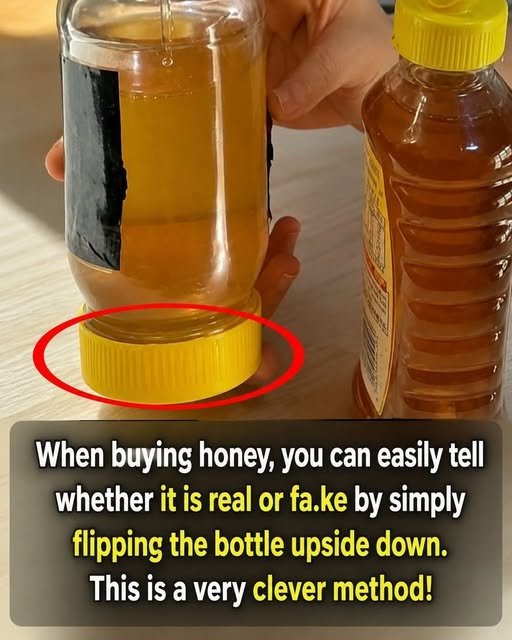
    Evaluating pure natural honey versus adulterated syrup requires understanding fluid dynamics, viscosity standards, and food testing science. The viral image claims that flipping a bottle upside down provides an effortless test for authenticity, suggesting that the speed or movement of rising air bubbles indicates purity. While genuine honey possesses high density and viscosity—causing air bubbles to rise slowly compared to diluted syrups—this home method is not foolproof. Modern adulterated syrups engineered with high-fructose corn syrup can easily replicate honey’s thick consistency, rendering simple visual tests inconclusive for definitive purity verification.

    Beyond basic viscosity observations, commercial food authenticity testing relies on advanced laboratory diagnostics, such as Nuclear Magnetic Resonance (NMR) spectroscopy and isotope ratio mass spectrometry. Adulterators frequently mix pure honey with inverted sugar solutions, rice syrups, or sugarcane concentrates that closely match natural moisture levels and flow characteristics. Common home tests—such as the water dissolution test, thumb test, or paper towel drip method—offer basic clues regarding moisture content, but cannot replace laboratory analysis. Moisture levels naturally vary across authentic floral varieties, meaning a honey’s physical flow rate depends heavily on botanical origin, harvest season, and storage temperature.

    Securing high-quality, authentic honey requires purchasing from transparent, reputable producers and verifying certified organic labeling. Pure unpasteurized honey naturally undergoes crystallization over time—a process where natural glucose solidifies, indicating minimal processing and zero added liquid syrups. Inspecting ingredient labels for raw, single-origin sourcing ensures you avoid ultra-filtered or sugar-fortified products. By combining smart consumer habits with verified agricultural standards, buyers can enjoy the rich nutritional benefits, antioxidants, and pure floral flavors of genuine natural honey while supporting ethical beekeeping practices globally.

  • The Mystery Behind the Turquoise McDonald’s Arches: City Zoning and Brand Adaptation

    The Mystery Behind the Turquoise McDonald’s Arches: City Zoning and Brand Adaptation

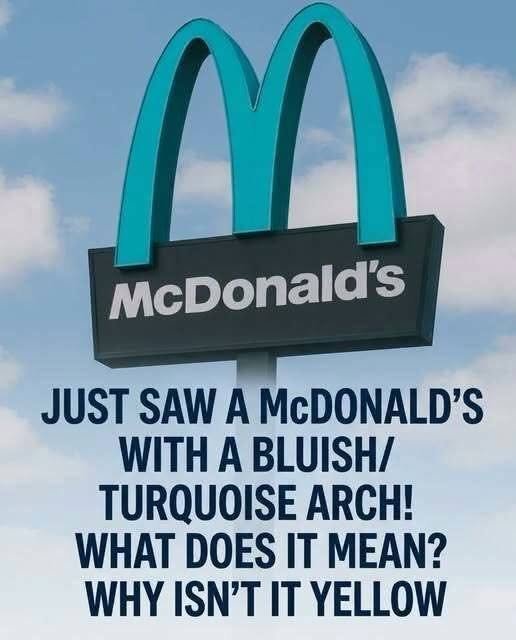
    Encountering a McDonald’s location with teal or turquoise arches instead of the world-famous golden ones frequently sparks curiosity and viral internet discussions. The most famous location featuring these unique blue arches is situated in Sedona, Arizona, where local government planning regulations strictly enforce aesthetic harmonization with the surrounding natural landscape. When the franchise was built in May 1993, city zoning ordinances prohibited bright, saturated colors like golden yellow to preserve the natural desert scenery and red rock beauty. To comply with municipal architectural guidelines, the restaurant opted for soft turquoise arches that seamlessly match the local building facades and desert palette.

    Beyond Sedona, Arizona, non-traditional corporate branding guidelines appear in various cities globally due to strict historical preservation laws and strict municipal signage codes. For example, locations in historic European districts, such as Paris or Champs-Élysées, often feature muted gold, black, white, or bronze signage to honor local architectural heritage. Municipalities implement these aesthetic regulations to prevent commercial visual clutter, protect historic downtown districts, and maintain cohesive regional identities. Corporate franchises frequently adapt their signature colors, building materials, and exterior logos to secure municipal construction permits while respecting local environmental standards.

    Understanding why major international brands alter their iconic logos highlights the balance between corporate marketing and local civic governance. Adapting brand aesthetics to comply with municipal zoning laws allows businesses to integrate smoothly into unique communities while creating rare, famous tourist attractions. These custom storefront designs demonstrate how flexible commercial architecture can honor local culture without sacrificing global brand recognition. Today, travelers intentionally visit such unique locations, transforming regulatory compliance measures into iconic viral photo opportunities and memorable commercial milestones.

  • Which Glass Has More Water: Understanding Physics, Volume Displacement, and Brain Teasers

    Which Glass Has More Water: Understanding Physics, Volume Displacement, and Brain Teasers

    Solving classic logic puzzles that test volume displacement requires applying basic physical principles rather than relying on viral personality claims. In the image provided, four identical glasses filled to the exact same visual water line contain different submerged objects: a paperclip (A), a baseball (B), an eraser (C), and a wristwatch (D). According to Archimedes’ principle of displacement, an object submerged in liquid displaces a volume of water equal to its own physical volume. Therefore, the glass containing the object with the smallest volume—the metal paperclip (Glass A)—holds the maximum actual volume of liquid water.

    Viral internet brain teasers frequently attach pseudoscientific personality tests—such as determining whether a person is a “giver” or a “taker”—to basic physical puzzles to drive online engagement. While these social media graphics frame your choice as a psychological test, liquid volume measurements remain purely mathematical and scientific. The object occupying the least space inside the glass leaves the most physical space available for the water itself. Recognizing how solid mass displaces liquid volume helps viewers evaluate these visual riddles through sound scientific logic rather than falling for clickbait personality quizzes.

    Engaging with visual riddles and logic puzzles serves as an excellent mental exercise for sharpening critical thinking, problem-solving skills, and scientific reasoning. By analyzing real physical variables like density, mass, and volumetric displacement, individuals can easily bypass misleading viral headlines and enjoy genuine intellectual challenges. Prioritizing accurate scientific literacy over viral entertainment trends allows online users to appreciate fun visual puzzles while maintaining a clear understanding of fundamental physics.

  • Honoring the Legacy of Jack Hogan: Remembering a Classic Hollywood Icon

    Honoring the Legacy of Jack Hogan: Remembering a Classic Hollywood Icon

    The image circulating online references veteran American actor Jack Hogan, widely celebrated for his unforgettable role as PFC William G. Kirby in the classic 1960s World War II television drama Combat!. While social media posts often feature misdated graphics or clickbait headlines, Jack Hogan peacefully passed away on December 6, 2023, at the age of 94 at his home in Bainbridge Island, Washington. Born Richard Roland Benson Jr. in Chapel Hill, North Carolina, in 1929, Hogan built an impressive multi-decadal legacy across television and film through remarkable talent, dedication, and professional versatility.

    Before capturing the hearts of television audiences nationwide, Hogan served as a staff sergeant in the United States Air Force during the Korean War. Following his military service, he pursued dramatic arts at the Pasadena Playhouse and in New York, quickly establishing himself as a compelling presence in classic Hollywood productions. Over his long career, Hogan starred in popular series including Adam-12, Hawaii Five-O, Sea Hunt, and Sierra, while also working behind the scenes as a casting director for the hit show Magnum, P.I. His authentic character work and strong on-screen presence made him a beloved staple of 20th-century American entertainment.

    Remembering Jack Hogan highlights the enduring impact of classic television stars who brought compelling stories, historical reverence, and artistic dedication into millions of homes. His memorable portrayals continue to inspire classic film and television enthusiasts around the globe through syndicated broadcasts and archived collections. Honoring the life and career of performers like Hogan preserves the rich history of mid-century cinema, ensuring that their artistic contributions and cultural legacies remain vibrant for future generations.

  • Identifying Earwigs: Understanding Common Household Insects and First Aid

    Identifying Earwigs: Understanding Common Household Insects and First Aid

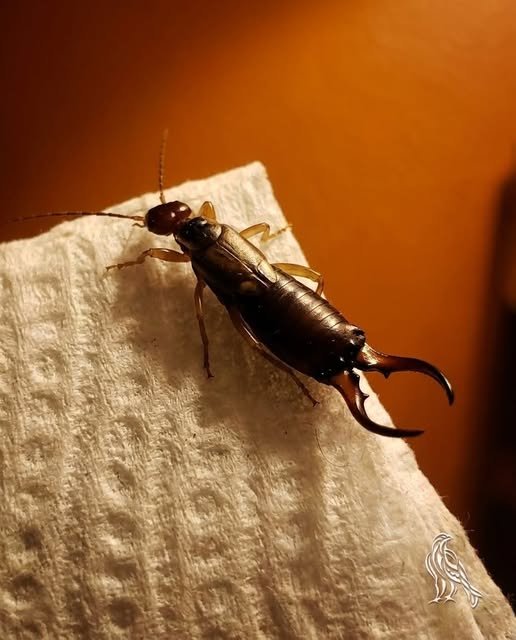
    The insect shown in the image is an earwig, a common household insect easily recognized by its dark, elongated body and prominent abdominal pincers (cerci). Despite their fierce appearance and scary urban legends, earwigs are completely non-venomous and do not transmit dangerous diseases to humans. When disturbed or handled, an earwig may use its rear pincers in self-defense, which can produce a mild pinch or slight skin prick rather than a true venomous bite. For a 7-year-old child, the pinch might cause minor temporary discomfort, localized redness, or mild swelling, but it is harmless and generally resolves very quickly without serious medical complications.

    First aid management for an earwig pinch is simple, straightforward, and easily handled at home using basic hygiene protocols. Immediately wash the pinch area thoroughly with warm water and mild antibacterial soap to prevent secondary surface skin infections. Applying a cool compress or ice pack wrapped in a clean cloth for 10 minutes helps soothe minor localized irritation and reduces swelling. Keeping the area clean, applying a mild antiseptic ointment, and discouraging the child from scratching the skin ensures rapid healing. Parents should monitor the site for standard signs of infection—such as increasing redness, warmth, or pus—and consult a pediatrician if unusual allergic reactions occur.

    Preventing earwig intrusions inside residential homes involves controlling moisture levels and sealing entry points around living areas. Earwigs thrive in damp, dark environments, often hiding under garden mulch, potted plants, decaying leaves, or cool bathroom tiles. Homeowners can deter these insects by fixing plumbing leaks, utilizing dehumidifiers in damp basements, and sealing gaps around door thresholds, low windows, and wall foundations. Maintaining clean, dry indoor spaces eliminates attractive habitats for earwigs, protecting household areas and ensuring long-term peace of mind for families