Category: Uncategorized

  • Deconstructing Home Remedy Clickbait: The Bedbug Cure Grid

    Deconstructing Home Remedy Clickbait: The Bedbug Cure Grid

    The image features a four-panel grid combining macro shots of bedbugs (Cimex lectularius), a dirty mattress seam, a rash-covered back overlaid with a daisy flower, and a hand holding whole cloves. It is accompanied by the headline “Dealing With Bedbugs? Here’s How to Identify and Remove Them Effectively…” This graphic represents a classic household anxiety and natural cure engagement template designed to sell pseudoscience solutions for complex pest infestations.

    Anatomy of the Misinformation & Clickbait Strategy

    • The Ineffective “Natural Cure” Myth: The inclusion of cloves and daisies pushes a widespread internet myth that home remedies—specifically essential oils like eugenol (found in cloves) or pyrethrin-like extracts—can easily eradicate a bedbug infestation. While concentrated clove oil can kill individual bugs on direct contact, it has zero residual effect, cannot penetrate eggs, and will not eliminate a systemic, hidden infestation.
    • Sensationalized Imagery: Combining severe rash photos (censored or visual-masked with a daisy flower) alongside clustered pests triggers both disgust and household hygiene anxiety.
    • The Pseudoscience Funnel: Pages post these infographics to target distressed homeowners looking for quick, cheap, chemical-free solutions. The text hook leads to ad-heavy blogs or affiliate pages selling “miracle” herbal sprays that fail to solve the pest issue.
    • Algorithmic Monetization: Desperate users save, share, and comment heavily on pest control posts to ask for advice. Content networks exploit this high-engagement topic to boost page visibility and direct traffic to monetized sites.
  • Deconstructing Biological Mystery Clickbait: The False Centipede / Eyelash Trap

    Deconstructing Biological Mystery Clickbait: The False Centipede / Eyelash Trap

    The image displays a strange, curved organism placed on a paper towel, featuring a fleshy pink body with feather-like, brownish spines or appendages radiating outward. It is paired with a classic crowd-sourcing story: “My girlfriend came home after a walk with the dog. Attached to the dog’s fur, we discovered this… Does anyone know what this is?” This post is a prime example of an alien-creature / parasite panic template engineered to exploit biological disgust and curiosity.

    Anatomy of the Object & Strategy

    • Identification: The object shown is actually a pair of strip false eyelashes coated in dried makeup, liquid latex adhesive, or debris, placed curve-side up on paper towel tissue. When individual hair fibers stick together and curl after being discarded or wet, the flexible band resembles a pinkish spine or fleshy centipede-like parasite.
    • Fabricated Narrative: The “dog walk” backstory is completely manufactured. By framing a mundane, discarded cosmetic item as a strange parasite attached to a pet’s fur, the post creates immediate concern for animal safety and triggers revulsion toward potential parasites.
    • Crowdsourced Identification Trap: Posting an unidentifiable, unsettling object and asking “What is this?” leverages collective mystery. Viewers are driven to comment with guesses ranging from sea creatures to alien worms, while others step in to reveal that it is simply a dirty fake eyelash.
    • Algorithmic Monetization: High-volume debates in the comment section—where users argue over whether it is an insect, a sea worm, or a beauty product—signal massive user interaction to platform algorithms. Content farms use this engagement boost to build follower bases and route traffic toward monetized link hubs.
  • Deconstructing Ego-Bait Trivia Clickbait: The “WC” Restroom Sign

    Deconstructing Ego-Bait Trivia Clickbait: The “WC” Restroom Sign

    The image displays a public restroom sign with the letters “WC” above male and female pictograms, accompanied by the text: “Most people still don’t know what the acronym ‘WC’ used in restrooms stands for.” A red arrow points down to a call to action: “See full story in the first comment.” This graphic represents a classic ego-baiting trivia engagement template engineered to exploit minor gaps in general knowledge to farm comments and link clicks.

    Anatomy of the Acronym & Clickbait Strategy

    • The Factual “Answer”: WC stands for Water Closet. The term originated in late 19th-century Britain during the invention of indoor flush toilets. It was used to distinguish a room with an actual water-flushed toilet from traditional dry outhouses, chamber pots, or “earth closets.” While the phrase has mostly fallen out of daily spoken English in North America, the abbreviation remains a universal international standard for public restroom signage across Europe and Asia.
    • Ego-Bait Strategy: Pretending that basic or historical acronyms are “secret knowledge” (“yet no one seems to know…”) relies on superior-feeling psychology. Viewers who do know what WC stands for are immediately motivated to comment to prove their knowledge or correct the post’s premise.
    • The “First Comment” Funnel: Notice the call-out directing users to the “first comment.” By suppressing the direct explanation in the main post, page operators force users to scroll into the comment section. There, a pinned link redirects traffic to a third-party, ad-heavy blog monetized through impressions and affiliate networks.
    • Algorithmic Monetization: High comment volumes generated by thousands of users typing “Water Closet” signal strong relevance to social media algorithms, artificially boosting the post’s distribution.
  • Deconstructing Emotional Curiosity Clickbait: The Hospice Chef Mystery

    Deconstructing Emotional Curiosity Clickbait: The Hospice Chef Mystery

    vThe image features a chef working in a commercial kitchen next to an inset photo of hands holding, overlaid with text stating, “CHEF WHO PREPARES LAST MEALS AT HOSPICE FOR PEOPLE AT END OF LIVES SAYS THEY OFTEN WANT SAME THING.” This graphic represents an emotionally charged curiosity-gap template designed to leverage human sentimentality about end-of-life moments for social media reach.

    Anatomy of the Human-Interest Story & Clickbait Strategy

    • The Real-World Origin: The chef pictured is Gareth O’Hara, head chef at Hartlands Hospice in the UK. In viral interviews, he shared that rather than demanding elaborate gourmet dishes, hospice patients overwhelmingly request simple, nostalgia-rich comfort foods from their childhoods. The single most common request mentioned in these profiles is traditional rice pudding, alongside simple childhood favorites like egg and chips or stew.
    • The Curiosity-Gap Trap: By concealing the specific food (“the one comfort food” / “says they often want same thing”), the headline creates an artificial mystery. Readers are driven by emotional empathy and curiosity to figure out what item connects so many people in their final days.
    • Sentimentality as Engagement Fuel: Topics touching on mortality, nostalgia, and human connection trigger strong emotional responses. Viewers frequently share these posts accompanied by personal stories about their late loved ones’ favorite foods, flooding the comment section with high-engagement stories.
    • Algorithmic Monetization: Content networks repurpose genuine, moving human-interest stories by stripping out the direct answer and turning them into cliffhangers. The resulting surge in shares and comments boosts the page’s algorithmic reach, allowing administrators to monetize user attention via ad-heavy click-through sites.
  • Deconstructing Produce Fear Clickbait: The “Hollow Heart” Watermelon Trap

    Deconstructing Produce Fear Clickbait: The “Hollow Heart” Watermelon Trap

    The image shows a cut-open watermelon with internal cracks and a hollow center marked by a white arrow, accompanied by a alarming hook: “You cut open a watermelon and saw cracks? Stop eating it immediately! Here’s what it means.” This graphic is a classic food-panic engagement template that frames a natural plant growth condition as a dangerous health threat to generate clicks.

    Anatomy of the Condition & Clickbait Strategy

    • The Scientific Reality (Hollow Heart): Internal cracking in watermelons is caused by a physiological condition known as hollow heart. It is primarily triggered by inadequate or poor pollination early in the growing season (often due to cold, rainy weather slowing down bee activity), followed by sudden growth spurts from fluctuating temperatures or watering.
    • Safe to Eat: Hollow heart is purely an aesthetic defect. The watermelon is completely safe to eat and is not toxic. In fact, watermelons with hollow heart often taste sweeter because natural sugars concentrate along the edges of the internal cracks.
    • The “Chemical/Toxin” Myth: Internet rumors frequently claim internal cracks are caused by harmful growth chemicals (like forchlorfenuron) or toxic injections. While growth regulators caused exploding crops in China over a decade ago, internal hollow heart in commercially available watermelons is a natural pollination failure, not chemical contamination.
    • Alarmist Framing: Using imperative commands like “Stop eating it immediately!” creates artificial urgency and panic, driving users to share the post or click external links out of health anxiety.
  • Deconstructing Health Shock Clickbait: Toxic Squash Syndrome (Bitter Bottle Gourd)

    Deconstructing Health Shock Clickbait: Toxic Squash Syndrome (Bitter Bottle Gourd)

    The image depicts a child sleeping in a bed beside an adult receiving medical care with oxygen tubes, overlaid with a picture of sliced green squash/bottle gourd (Lagenaria siceraria). The text claims “Family Of 4 Collapses After Eating This Vegetable. Doctors Warn Its Toxicity Can Be Stronger Than Arsenic.” This graphic represents a sensationalized food-fear engagement template designed to leverage medical shock value for clicks.

    Anatomy of the Compound & Clickbait Strategy

    • The Scientific Reality (Toxic Squash Syndrome): Members of the Cucurbitaceae family—including bottle gourds (lauki), zucchini, and cucumbers—contain natural defensive chemicals called cucurbitacins. While ordinary cultivated gourds contain safe, trace amounts, environmental stress (such as extreme heat, drought, or improper cross-pollination) can cause a massive spike in cucurbitacin levels. High concentrations taste extremely bitter and cause severe toxic gastroenteritis, rapid blood pressure drop (hypotension), and upper gastrointestinal bleeding.
    • Sensationalized Arsenic Comparison: While bitter bottle gourd juice can lead to severe illness or hospitalization if consumed in large quantities, claiming its toxicity is “stronger than arsenic” is an exaggerated hook intended to spark public panic.
    • Shock Value Visuals: Placing stock photos of hospitalized patients and children next to standard sliced vegetables exploits health anxiety and fear of common household foods.
    • Simple Prevention: The safety rule for gourds is straightforward—always taste a small piece raw before cooking or juicing. If it tastes unusually bitter, spit it out and throw the vegetable away immediately.
  • Deconstructing Health & Paranormal Hybrid Bait: The 3 A.M. Awakening

    Deconstructing Health & Paranormal Hybrid Bait: The 3 A.M. Awakening

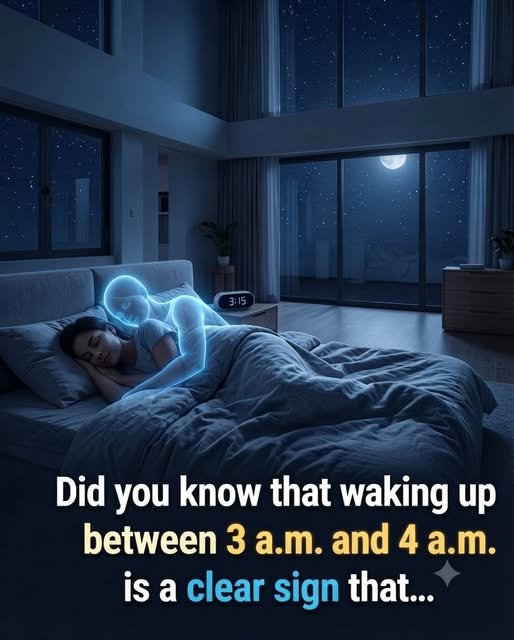
    The image pairs AI-generated artwork of a glowing, spectral entity hovering over a sleeping woman with a classic cliffhanger prompt (“Did you know that waking up between 3 a.m. and 4 a.m. is a clear sign that…”). This represents a cross-niche engagement template engineered to exploit both medical self-diagnosis anxieties and supernatural superstitions.

    Anatomy of the Mechanics & Clickbait Strategy

    • The Medical Reality: Experiencing brief awakenings around 3:00 to 4:00 AM is a routine feature of human sleep architecture rather than a medical crisis or spiritual phenomenon. As the body progresses through roughly 90-minute sleep cycles, deep slow-wave sleep dominates the early night, while lighter REM sleep and stage 2 sleep dominate the early morning hours. Common triggers for waking during this window include:
      • Circadian Rhythm Shifts: A natural drop in core body temperature and rising cortisol levels preparing the body for the morning.
      • Physiological Triggers: Alcohol processing, blood sugar fluctuations, mild sleep apnea, or bladder pressure.
      • Stress & Anxiety: High baseline cortisol causing hyper-arousal during lighter sleep stages.
    • The Supernatural Crossover Hook: Layering a glowing ghostly figure over the image taps directly into long-standing urban legends and folklore regarding the “witching hour” (traditionally 3:00 AM). Fusing spiritual superstition with medical-sounding phrasing maximizes emotional resonance across diverse audiences.
    • The Cliffhanger Funnel: Leaving the sentence unfinished with an ellipsis (“is a clear sign that…”) forces viewers to click the comment section or external link to find out the “hidden diagnosis” or supernatural cause.
    • Algorithmic Monetization: High comment volume driven by users sharing their personal sleep experiences signals urgency to platform algorithms. Page administrators use this artificially boosted visibility to expand follower counts and route user traffic toward monetized blog networks or unverified health supplements.
  • Deconstructing Sleep Disruption Clickbait: The “3 A.M. Phenomenon” Trap

    Deconstructing Sleep Disruption Clickbait: The “3 A.M. Phenomenon” Trap

    The image features an AI-generated scene of a sleeping woman overlaid with a glowing blue, spectral figure, paired with the text: “Did you know that waking up between 3 a.m. and 4 a.m. is a clear sign that…” This graphic represents a classic medical anxiety and supernatural crossover engagement template engineered to turn standard human physiology into a spooky or alarming mystery.

    Anatomy of the Physiology & Clickbait Strategy

    • The Scientific Reality: Waking up briefy around 3–4 a.m. is a standard part of normal human sleep architecture, not a omen or medical crisis. Most adults complete 90-minute sleep cycles; by 3:00 a.m., sleep shifts heavily into lighter REM stages. Factors like natural cortisol spikes, room temperature changes, blood sugar dips, aging, or mild sleep apnea commonly cause brief awakenings during this window.
    • Supernatural & Fear Framing: By pairing a medical-sounding prompt with a glowing, ghost-like spirit, the image deliberately bridges two high-engagement niches: paranormal superstition (e.g., the “witching hour”) and self-diagnostic medical anxiety.
    • The “Clear Sign That…” Cliffhanger: The sentence cuts off before revealing the answer. This artificial curiosity gap forces users to click into the comment section or follow external links to find out what “condition” or “spirit” is supposedly visiting them.
    • Algorithmic Monetization: Universal relatable experiences (like waking up mid-night) make prime engagement hooks. Users flood the comments sharing their own sleep struggles, which boosts the post’s visibility and allows content networks to monetize traffic via ad-heavy blogs or pseudoscience remedies.
  • Deconstructing Hygiene Fear Clickbait: The Demodex Mite Trap

    Deconstructing Hygiene Fear Clickbait: The Demodex Mite Trap

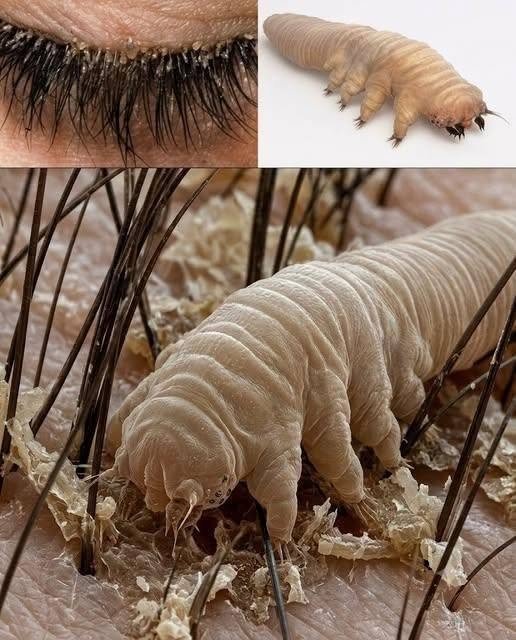
    The image pairs close-up macro shots of human eyelashes with flaky crust along the lid margin alongside 3D biological renderings of microscopic skin parasites, paired with the incomplete clickbait hook “Here are the consequences of sleeping with…” This graphic represents a classic hygiene-shaming and disgust-based engagement template engineered to sensationalize ordinary human biology for viral reach.

    Anatomy of the Organism & Clickbait Strategy

    • Identification: The organisms shown are microscopic face mites (Demodex folliculorum and Demodex brevis). These microscopic arachnids live inside hair follicles and sebaceous glands on human faces (especially eyelashes, eyebrows, and noses). They are a completely normal part of the human skin microbiome—present on virtually all adult humans—and feed on dead skin cells and natural sebum.
    • Pathologizing Normal Biology: While an overpopulation of Demodex mites can occasionally cause blepharitis (eyelid inflammation) or exacerbate rosacea, the post frames a harmless, ubiquitous microorganism as a terrifying “consequence” of poor hygiene, wet hair, or unwashed pillowcases.
    • The Incomplete Sentence Hook: Leaving the caption unfinished (“Here are the consequences of sleeping with…”) pairs with electron-microscope style imagery to induce immediate disgust, forcing viewers to click “See More” or search the comments to figure out what behavior allegedly caused the “infestation.”
    • Algorithmic Monetization: Disgust and skin anxiety are powerful drivers of social media interaction. Content networks deploy these close-up microscopic renderings to provoke visceral reactions, build page reach, and funnel viewers to ad-monetized sites selling unnecessary skin cleansers or eyelid scrubs.
  • Deconstructing Health Panic Clickbait: The Bed Bug Exaggeration Trap

    Deconstructing Health Panic Clickbait: The Bed Bug Exaggeration Trap

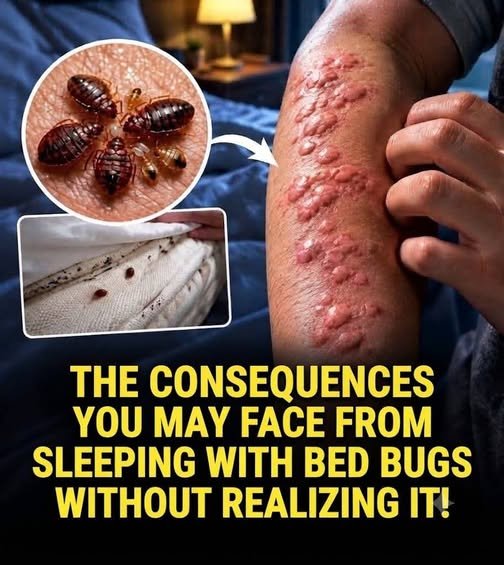
    The image features an arm covered in severe, raised, confluent skin lesions next to inset graphics of bed bugs (Cimex lectularius) and a contaminated mattress seam, paired with text reading, “THE CONSEQUENCES YOU MAY FACE FROM SLEEPING WITH BED BUGS WITHOUT REALIZING IT!” This graphic represents a classic health anxiety and disgust-based clickbait template engineered to trigger visceral horror and mass sharing.

    Anatomy of the Misinformation & Clickbait Strategy

    • Medical Disconnect & Image Exaggeration: Real bed bug bites typically appear as small, itchy, red bumps often arranged in a line or cluster (“breakfast, lunch, and dinner” pattern). The severe, blistering rash depicted on the main arm photo does not represent a standard bed bug reaction; it resembles severe contact dermatitis, shingles, or an AI-generated extreme skin condition designed purely for graphic shock value.
    • Sensationalized Fear Framing: By pairing graphic medical imagery with an alarming warning (“without realizing it”), the post targets the universal phobia of unseen parasites invading personal home spaces.
    • The Suspense Narrative: The user prompt cuts off mid-sentence (“These Are the Consequences of Sleeping with…”), working in tandem with the visual shock to drive viewers to click “See More” or check the comment section for details.
    • Monetization Funnel: Parasite anxiety is one of the highest-performing drivers of digital engagement. Content networks deploy these sensationalized graphics to build page traffic, farm likes and shares from panicked users, and direct traffic to ad-monetized blogs selling unverified pest control or medical remedies.