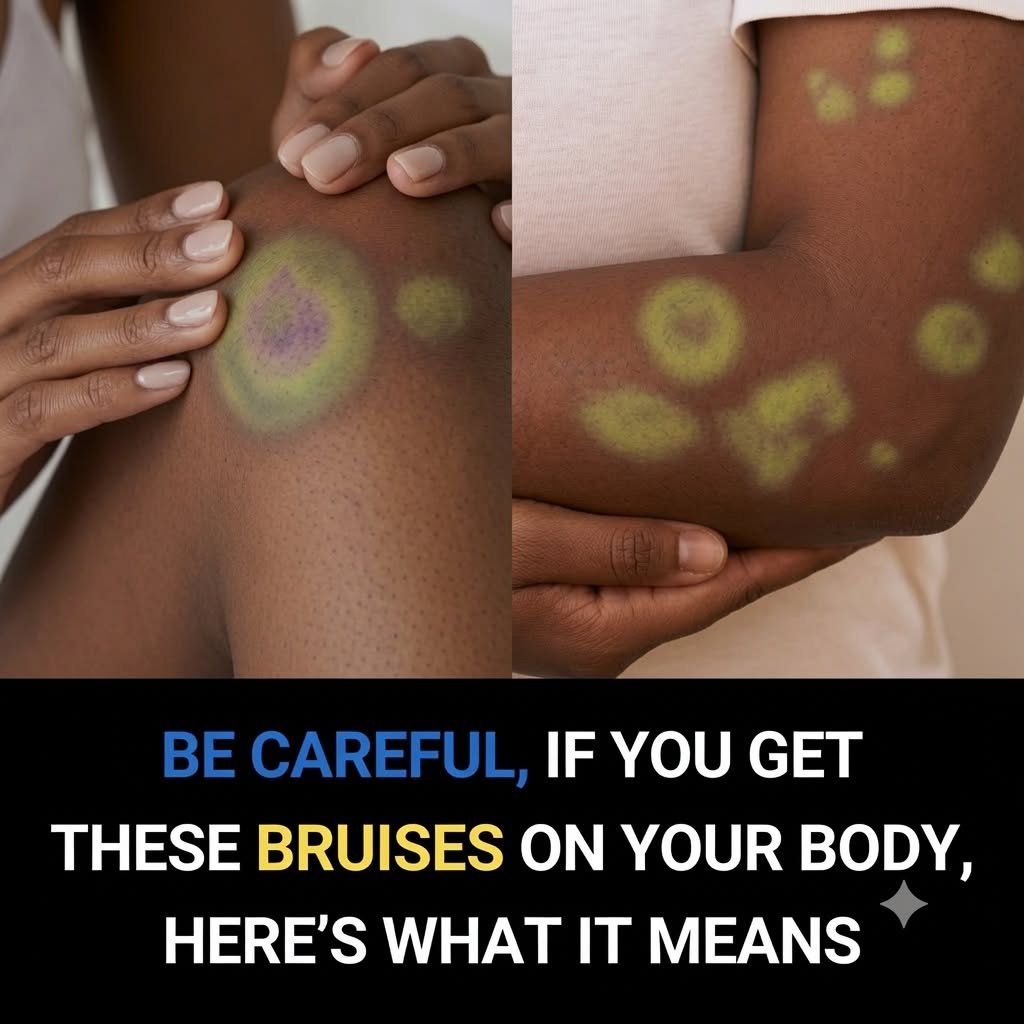
A bruise usually develops when small blood vessels beneath the skin are damaged, allowing blood to leak into surrounding tissue. Most ordinary bruises are harmless and gradually change color before disappearing as the body reabsorbs the blood. Bruising can also become more common with age because skin becomes thinner and loses some of the protective fatty tissue that cushions blood vessels. Certain medicines—including blood thinners, antiplatelet drugs, some anti-inflammatory medicines, and corticosteroids—can also make bruising easier. (mayoclinic.org) Therefore, finding an occasional bruise after a minor bump is generally not a reason to panic, particularly when it heals normally.
However, frequent, unusually large, painful, or unexplained bruises deserve more attention. Be especially cautious if bruises suddenly begin appearing without an obvious injury, occur repeatedly on areas such as the chest, abdomen, back, or face, or are accompanied by other bleeding. Nosebleeds, bleeding gums, unusually heavy menstrual bleeding, blood in urine or stool, or tiny red-purple spots called petechiae can sometimes occur with problems involving platelets or blood clotting. (mayoclinic.org) Less commonly, unusual bruising can be associated with certain blood disorders or other medical conditions. If the pattern changes suddenly—especially after starting a new medication—contact a healthcare professional rather than assuming it is simply part of getting older. Do not stop prescribed blood-thinning medication on your own; discuss concerns with your doctor or pharmacist. (mayoclinic.org)
For a typical bruise, rest the affected area and use a cold pack wrapped in a thin towel for about 20 minutes at a time during the first day or two to help reduce swelling and discomfort. (mayoclinic.org) Seek medical evaluation if bruises are frequent, large, painful, appear without a clear cause, form a noticeable lump, or remain painful several days after a minor injury. (mayoclinic.org) Bleeding that will not stop with normal first aid is an emergency and requires immediate medical attention. The key is to look for patterns and accompanying symptoms, rather than assuming every bruise signals a serious illness. Disclaimer: This article is for general educational and informational purposes only and does not constitute medical advice, diagnosis, or treatment. Bruising has many possible causes, and the presence of unexplained bruises does not automatically mean a serious disease is present. Always verify health information through reliable medical sources and consult a qualified healthcare professional about persistent, unusual, or worsening bruising.
Leave a Reply