Author: Mohsin king

  • The Context Behind the Headline: Remembering Chef Dom Taylor

    The Context Behind the Headline: Remembering Chef Dom Taylor

    This news graphic refers to British chef Dom Taylor, who died unexpectedly at the age of 47.

    Who Was Chef Dom Taylor?

    • Breakthrough Success: Taylor rose to widespread national fame after winning Channel 4’s culinary competition Five Star Kitchen: Britain’s Next Great Chef in 2023.
    • The Good Front Room: His victory secured a high-profile pop-up residency at the prestigious Langham Hotel in London, where he opened The Good Front Room. His menu reimagined traditional Caribbean cuisine, drawing inspiration from his family’s heritage and his great-aunt Myrtle.
    • Permanent Establishment: Following the success of his pop-up residency, Taylor expanded his vision by opening a permanent location for The Good Front Room in Dalston, London.

    Tributes and Legacy

  • Debunking Viral Myths: The Sam Neill Death Hoax

    Debunking Viral Myths: The Sam Neill Death Hoax

    Social media graphics declaring the death of actor Sam Neill with dates like “1947–2026” are part of a recycled celebrity death hoax. While the Jurassic Park star has been open about his battle with blood cancer in recent years, claims that he has passed away are entirely false.

    The Facts Behind the Rumors

    • Alive and Well: Representatives for Sam Neill and major news verification outlets have confirmed that the actor is alive, healthy, and continuing to work on film projects.
    • Health Journey: Neill was diagnosed with stage-three angioimmunoblastic T-cell lymphoma in 2022. In late 2023, he shared that he had entered complete remission thanks to a rare targeted rare-cell infusion therapy, which he receives regularly.
    • Digital Clickbait Tactics: Viral accounts routinely take real health disclosures from beloved figures, add black-and-white filters with “Rest in Peace” graphics, and broadcast fake obituaries to generate dramatic reactions, comments, and web traffic.

    Recognizing Social Media Hoaxes

    Sensationalist tribute graphics appearing on unverified accounts often exploit emotional topics like cancer recovery for viral reach. When major news outlets or official family representatives have not made an announcement, these circulating image templates are almost always fabricated.

  • Debunking Viral Myths: Anachronistic Pareidolia and Time-Travel Claims

    Debunking Viral Myths: Anachronistic Pareidolia and Time-Travel Claims

    Viral social media posts claiming that historical photographs contain “proof of time travel”—such as a person allegedly holding a modern smartphone—rely on anachronistic misinterpretation and sensory bias. This famous 1940s photograph (often referred to as the “Towyn Beach” or “Icelandic Time Traveler” photo depending on the variation circulating online) does not depict an iPhone, but rather a completely period-accurate object misinterpreted through a modern lens.

    The Historical Reality Behind the Photograph

    • Anachronistic Cognitive Bias: Modern viewers are conditioned to associate a hand held near the face or ear with smartphone use. When looking at vintage black-and-white images, people naturally project familiar contemporary habits onto ambiguous posture or object shapes.
    • Period-Accurate Objects: Historical context and archival records clarify that figures in these mid-20th-century photos are actually holding standard period items, such as a handheld pocket watch, a compact mirror, a folding pocket knife, or a small portable radio.
    • Checking the Time or Winding a Watch: In this specific scene, the man standing in the suit is simply holding or checking a small pocket watch, or potentially adjusting his lapel or pipe.

    Why Time-Travel Memes Go Viral

    Sensationalist accounts regularly scour digital historical archives for blurry, low-resolution figures making gestures that resemble modern technology usage (like texting or taking a selfie). By overlaying dramatic headline banners like “Proof of Time Travel,” these posts generate viral debate, speculative comments, and high share rates. Contextualizing vintage photography within its correct era quickly dispels the illusion.

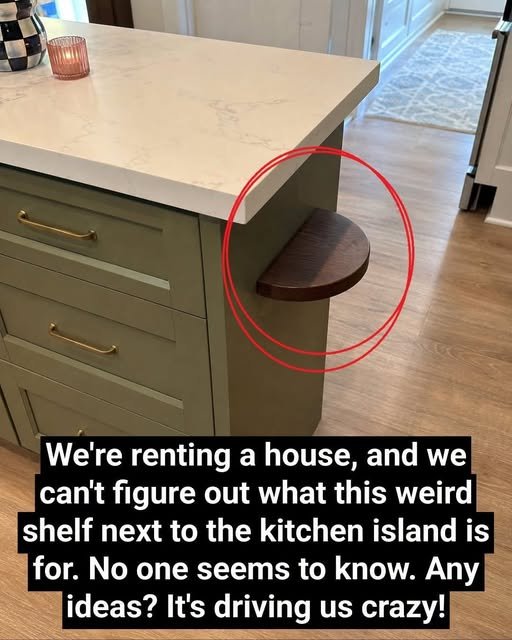
  • Demystifying Home Design Misconceptions: The “Mystery” Kitchen Island Shelf

    Demystifying Home Design Misconceptions: The “Mystery” Kitchen Island Shelf

    The dramatic post framing this small wooden ledge as an unsolvable rental mystery uses a classic social media engagement template. By attaching an eerie or perplexing story to a simple home feature, viral accounts prompt readers to leave guesses, debate design choices, and share the post. In reality, this piece is neither an ancient architectural mystery nor a bizarre mistake—it is a functional or decorative addition deliberately placed by the homeowner or cabinetmaker.

    Common Purpose and Uses for Side-Island Shelves

    • Pet Bowl Station / Step-Up Ledge: In many modern custom kitchens, low side-shelves attached to cabinetry serve as elevated feeding stations for pets (keeping food bowls off the main walkway) or a small step for younger family members to reach the counter.
    • Handheld Appliance / Accessory Rest: Small, thick ledges mounted at knee or hip height are often designed to hold specific kitchen gadgets, such as a trash bag roll holder, a small charging station, or a dedicated stand for a home assistant device (like a smart speaker).
    • DIY Modifications and Decorative Accents: Homeowners frequently add custom wooden brackets to display small potted plants, succulents, or decorative items, or to act as a bumper to protect cabinet corners from being scuffed by vacuums, strollers, or high foot traffic.

    Understanding Viral Home Riddles

    Social media memes frequently present unusual floor plans or custom DIY additions as universal riddles. Because custom cabinetry often reflects the specific, quirky preferences of a former owner, these features can look confusing to new renters. However, they are simply practical human-centered tweaks rather than mysterious structural anomalies.

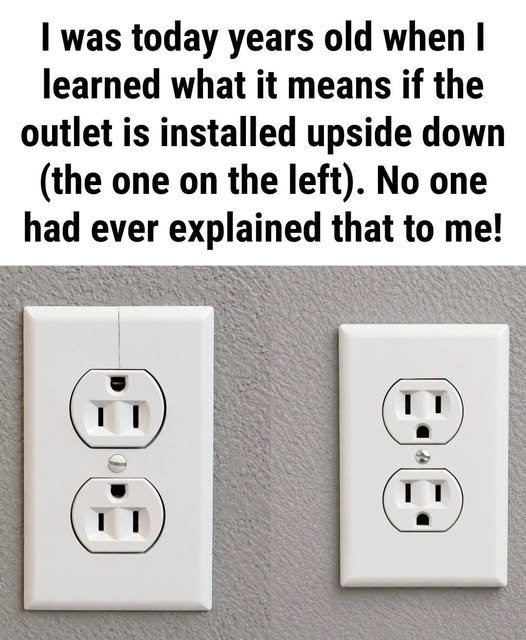
  • Demystifying Home Trade Secrets: The Truth About “Upside-Down” Outlets

    Demystifying Home Trade Secrets: The Truth About “Upside-Down” Outlets

    Viral posts often frame an inverted electrical outlet (ground pin on top) as a secret code or hidden home hack. In reality, there is no universal “secret meaning” required by law, though electric contractors intentionally install outlets with the ground pin facing up for practical safety and operational reasons.

    Why Electricians Install Outlets Ground-Up

    • The Switched Outlet Standard: In many residential homes, an upside-down outlet is a deliberate visual cue used by electricians to indicate a switched receptacle—meaning the outlet is wired to a nearby wall switch to control a floor lamp or room lighting.
    • Fall-Protection Safety: The primary safety benefit of ground-up installation is preventing accidental short circuits. If a plug is pulled slightly out of the wall and a thin metal object (like a coin, paperclip, or blind slat) falls between the wall and the plug, it will hit the uncharged ground pin first rather than bridging the hot and neutral prongs, which causes sparks or a blown breaker.
    • NEC Code Neutrality: The National Electrical Code (NEC) in North America does not specify whether an outlet must be installed with the ground pin facing up or down. Both orientations are fully compliant with code, provided the wiring behind the faceplate is attached correctly.

    Understanding Household Electrical Orientation

    While standard residential construction historically placed the ground pin on the bottom to resemble a traditional “face,” commercial buildings, hospitals, and industrial facilities almost exclusively install outlets ground-up for enhanced safety. Whether an inverted outlet in a home signifies a wall-switch connection or simply an electrician prioritizing fall-protection, it poses no danger and operates identically to standard outlets.

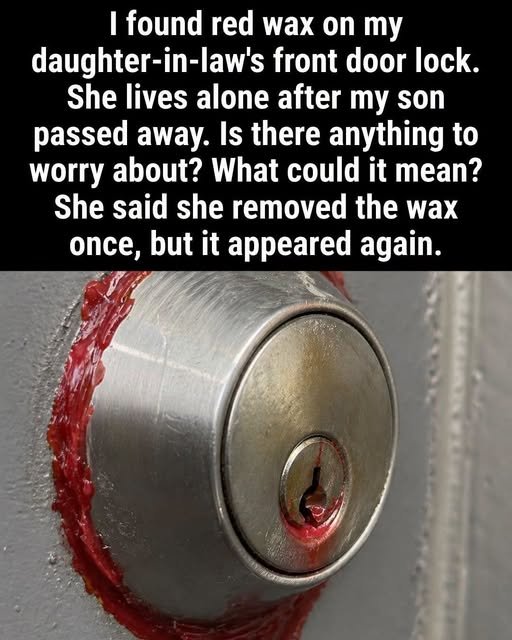
  • Debunking Viral Myths: “Red Wax on Door Locks” and Social Media Copypastas

    Debunking Viral Myths: “Red Wax on Door Locks” and Social Media Copypastas

    The dramatic story attached to this image—claiming a grieving relative keeps finding mysterious red wax reappearing on her door lock—is a classic social media copypasta. Online viral accounts routinely combine alarming, high-contrast imagery with unsettling, fictional storylines (often involving vulnerable individuals like single women or widows) to trigger fear, spark heated comment sections, and boost algorithm engagement.

    What the Image Actually Shows

    • Accidental Key Residue: In real-life scenarios where wax, lipstick, or red gunk ends up on a deadbolt keyhole, it is almost always caused by everyday household accidents. A common cause is carrying keys inside a purse or pocket where a melted tube of red lipstick, lip balm, or a melted crayon coated the key tip, which then got transferred directly into the lock mechanism when unlocking the door.
    • Not a Burglar “Marking” Technique: Internet rumors frequently claim burglars use wax or crayons to “pick locks,” “make key molds,” or “mark homes.” Locksmiths and crime prevention experts widely debunk these claims. Standard pin-tumbler deadbolts cannot be key-molded simply by shoving soft wax into the keyway, as it deforms instantly upon removal.

    How Engagement Bait Exploits Fear

    Social media pages frequently manufacture fictional “true crime” scenarios or urban legends around everyday oddities. By claiming the wax “keeps appearing,” the post intentionally mimics suspense horror tropes to keep readers sharing the post.

    If someone actually finds a foreign substance in their lock, spraying a small amount of contact cleaner or WD-40 inside and wiping the key clean usually clears out the residue. Recognizing these recycled text templates helps clear up digital panic and separates internet clickbait from reality.


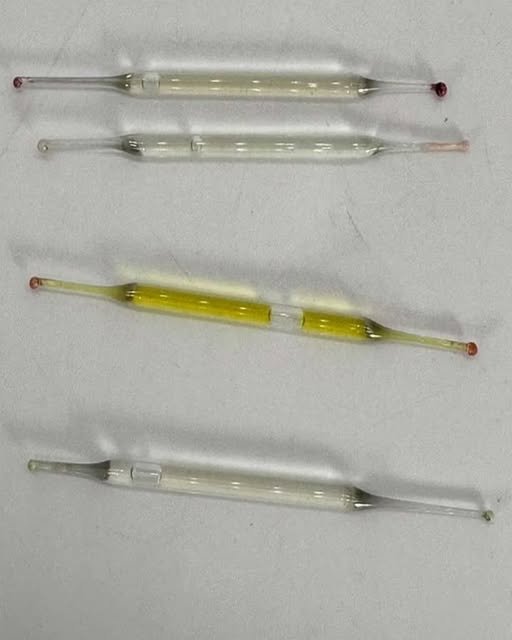
  • These are vintage, single-use glass medication ampoules (often called snap-off or double-tipped ampoules).

    These are vintage, single-use glass medication ampoules (often called snap-off or double-tipped ampoules).

    They were widely used from the mid-20th century for sterile, single-dose topical remedies, smelling salts, or antiseptic treatments commonly found in household medicine cabinets or specialized first-aid kits.

    Key Features and How They Worked

    • Sealed Design: The liquid inside is hermetically sealed in glass to preserve shelf life and prevent contamination or evaporation without needing chemical preservatives.
    • Breakable Tips: The thin, rounded ends are scored or sealed under tension. To use them, you would snap off one or both tips (often wrapped in a tissue or cotton ball to prevent glass cuts), allowing the liquid to drop or flow out.
    • Common Contents: Depending on the color and intended use, these historical ampoules typically contained:
      • Ammonia Inhalants (Smelling Salts): Used to revive someone who had fainted.
      • Iodine or Mercurochrome: Applied as a topical antiseptic for minor cuts.
      • Fragrances or Essential Oils: Used as bath additives, perfume samples, or room fresheners.

    Safety Precautions

    Do not try to snap these open or crush them with bare hands. Because of their age, the glass may be fragile, and the contents could be degraded, harsh chemicals, or skin irritants. It’s best to wrap them carefully and dispose of them safely, or keep them stored in a sealed container if keeping them as vintage curiosities.

  • Demystifying Medical Headlines: Ejaculation Frequency and Prostate Health

    Demystifying Medical Headlines: Ejaculation Frequency and Prostate Health

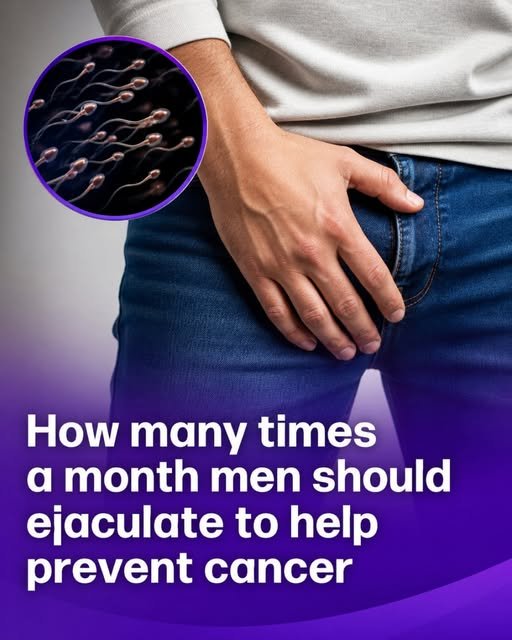
    Social media posts commonly frame observational urology studies with dramatic headlines like “A study has revealed the answer…” to present nuanced medical research as a guaranteed preventative cure. The image references observational research examining the potential relationship between higher ejaculation frequency and a reduced risk of prostate cancer. While large-scale epidemiological studies have observed an association, experts emphasize that ejaculation frequency is just one of many lifestyle and genetic factors in overall prostate health.

    What the Research Shows

    • The Harvard Health Study: A widely cited 18-year study conducted by Harvard T.H. Chan School of Public Health following over 31,000 men found that those who reported ejaculating at least 21 times per month had approximately a 20% lower risk of developing prostate cancer compared to those who reported ejaculating 4 to 7 times per month.
    • The “Prostate Flushing” Hypothesis: Researchers suggest that frequent ejaculation may help clear the prostate gland of potential carcinogens, secretions, or micro-calcifications that could otherwise build up and trigger localized cellular changes over time.
    • Reduction in Sympathetic Stress: Higher frequencies of sexual activity or ejaculation are also linked to reduced biological stress responses, which can positively influence immune function and hormone regulation.

    The Bigger Picture in Prostate Health

    While these findings suggest a positive correlation, urologists emphasize that frequent ejaculation is not a magic bullet or absolute guarantee against prostate disease. Prostate cancer risk is heavily influenced by non-modifiable factors like age, family history, and genetics, as well as broader lifestyle habits such as diet, exercise, and regular medical screenings.

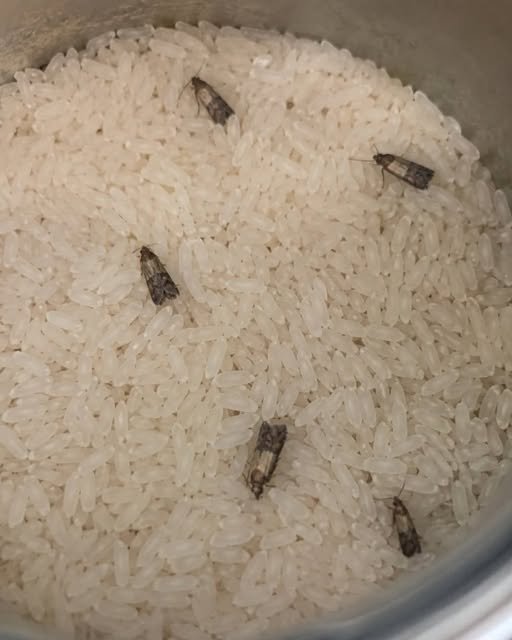
  • Yes, those are Indianmeal moths (Plodia interpunctella), commonly referred to as pantry moths.

    Yes, those are Indianmeal moths (Plodia interpunctella), commonly referred to as pantry moths.

    It can be surprising to find live insects in a newly opened bag, but understanding how they get in and how to eliminate them helps prevent future infestations.

    How They Get Inside Packaged Rice

    Pantry moths usually enter packaging through one of two ways:

    • Microscopic Eggs Before Packaging: Moths often lay tiny, invisible eggs on grains while they are stored in farm silos, processing plants, or warehouses. The eggs are packed directly into the bag, remain dormant, and later hatch into larvae—which eventually mature into adult moths inside the container.
    • Chewing Through Packaging: Pantry moth larvae can bite through thin plastic, paper, and cardboard. If an infested item sits near sealed bags on store shelves or in a pantry, the larvae can easily chew their way inside.

    How to Get Rid of Them

    1. Discard the Contaminated Food: Immediately throw away the infested rice into an outdoor trash bin. Do not leave it in your indoor kitchen bin.
    2. Inspect the Pantry: Check all surrounding dry goods—flour, oats, pasta, cereals, nuts, spices, and pet food. Look for live larvae, adult moths, or fine, web-like webbing inside packages or along container rims. Throw out any infested items.
    3. Deep Clean Shelves: Vacuum all pantry shelves, corners, and cracks to pick up stray eggs, larvae, or food crumbs, then discard the vacuum bag or empty the bin outside. Wipe down shelves with warm, soapy water or a vinegar-water solution.
    4. Switch to Airtight Containers: Move all uninfested grains and dry foods out of thin plastic or cardboard packaging and store them in thick, airtight glass, metal, or heavy-duty plastic containers.
    5. Freeze New Grains (Prevention Tip): When bringing home new rice or grains from the store, place the package in the freezer for 3–4 days. This neutralizes any hidden microscopic eggs before they can hatch.
  • Demystifying Viral Sports Narratives: Preseason Realities vs. Clickbait Speeches

    Demystifying Viral Sports Narratives: Preseason Realities vs. Clickbait Speeches

    Dramatic headlines proclaiming a “heartbreaking defeat” and a “powerful emotional speech” by Patrick Mahomes use sensationalized sports journalism templates to harvest social media engagement. While the score line shown is factual, the emotional context pushed by the graphic turns a routine exhibition game into fabricated viral drama.

    Context Behind the Graphic

    • Preseason Exhibition Game: The 16–15 victory for Tampa Bay over Kansas City was an NFL Preseason Week 2 exhibition game. Preseason games serve primarily as low-stakes evaluation reps for depth charts, backups, and undrafted rookies rather than high-stakes regular season or playoff clashes.
    • Starters Resting: Star Quarterback Patrick Mahomes did not play or deliver an impassioned post-game speech regarding a “heartbreaking” loss. Backup quarterbacks Garrett Nussmeier and Chris Oladokun took the late-game snaps for Kansas City while the coaching staff evaluated roster depth.
    • Game Mechanics: The game ended when Kansas City kicker Harrison Butker missed a 43-yard field goal wide right as time expired, sealing the 16–15 preseason margin for Tampa Bay.

    How Clickbait Sports Memes Work

    Viral sports accounts frequently take real broadcast scoreboards from low-stakes preseason games and slap dramatic “Leadership Speeches” or “Emotional Press Conferences” text over them. By framing a routine exhibition game as a devastating, tear-jerking defeat, these posts bait fan bases into commenting, debating, and sharing the content. Checking actual box scores and official post-game press transcripts quickly strips away the manufactured drama.