Author: Mohsin king

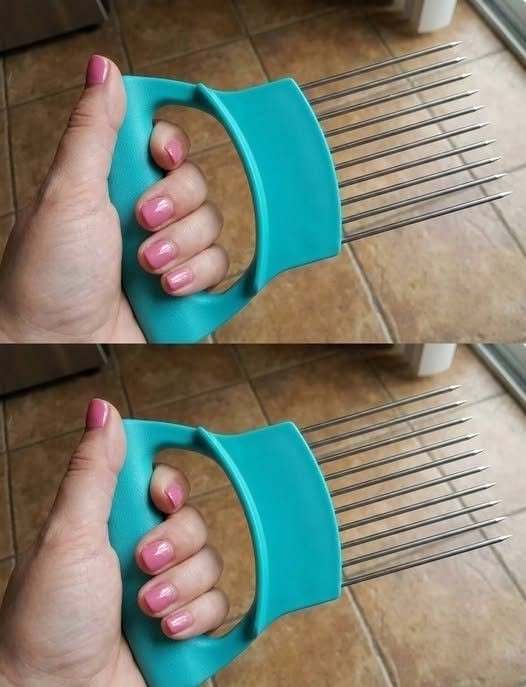
  • That is an onion holder slicing guide (also frequently sold as a meat tenderizer / vegetable slicing comb).

    That is an onion holder slicing guide (also frequently sold as a meat tenderizer / vegetable slicing comb).

    Primary Functions

    • Onion & Vegetable Slicing Guide: You press the metal tines vertically down into a whole onion, tomato, potato, or lemon. The long stainless-steel prongs hold the food securely in place and serve as cutting channels, letting you guide your knife between the tines to slice uniform, even rounds without touching or smelling like the onion.
    • Meat Tenderizer: Squeezing the handle and pressing the sharp tines repeatedly into steaks, chicken breasts, or pork chops pierces the muscle fibers, helping marinate and tenderize tougher cuts of meat.
    • Hand Guard: It acts as a safety barrier to keep your fingers well clear of the knife blade while cutting round or slippery ingredients.
  • Debunking Viral Myths: The “Ring Finger Stretch” Clickbait

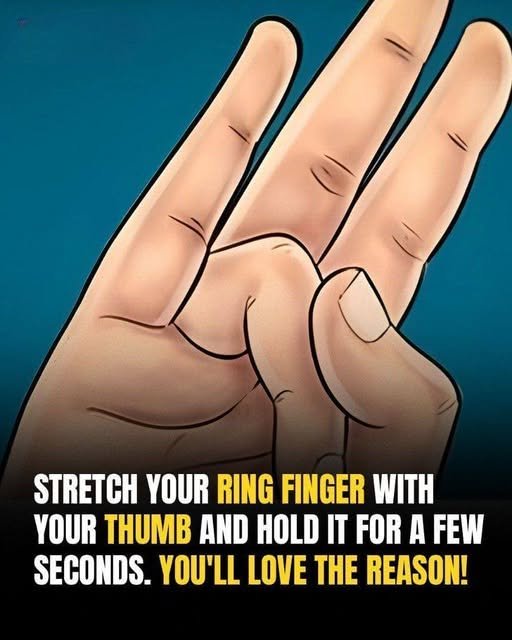
    Debunking Viral Myths: The “Ring Finger Stretch” Clickbait

    This graphic depicting a hand holding down the ring finger with the thumb is a textbook engagement-farming template designed to trick users into boosting page reach on social media.

    The Reality Behind the Graphic

    • Surprise “Benefits” Don’t Exist: The caption promises a “surprising benefit” or “full article” once you type “Yes” or like the post. There is no hidden medical breakthrough, fat-burning secret, or miraculous health cure linked to bending your ring finger in this specific position.
    • The “Type YES” Trap: Social media algorithms prioritize posts with high comment volume. Prompts urging users to leave a specific word (like “Yes” or “Amen”) are explicit engagement traps created solely to increase a page’s visibility and ad revenue potential.
    • Origins in Mudras / Yoga: The visual actually depicts Surya Mudra (a traditional hand gesture in yoga and reflexology where the tip of the ring finger touches the base of the thumb). While practiced in traditional mudra routines, health pages exaggerate claims—asserting it causes rapid weight loss or immediate healing—to manufacture viral curiosity.
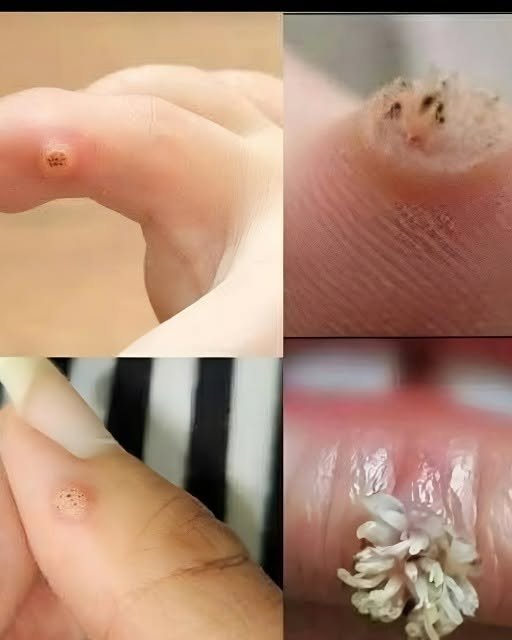
  • This image shows examples of warts, which are harmless skin growths caused by strains of the Human Papillomavirus (HPV).

    This image shows examples of warts, which are harmless skin growths caused by strains of the Human Papillomavirus (HPV).

    Despite scary social media captions, these are not parasitic infections, dangerous mold, or alien organisms—they are just ordinary viral warts.

    What You’re Seeing in the Image

    • The Top Left, Bottom Left, & Top Right Images: These show standard skin warts (often common or plantar warts). The tiny dark speckles visible inside them are commonly called “wart seeds,” but they aren’t seeds at all—they are tiny clotted blood vessels (capillaries) that supply blood to the wart.
    • The Bottom Right Image: This shows a filiform wart (or digitate wart). These warts produce long, finger-like, or thread-like spiky projections made of hyperkeratotic skin. While they can look unsettling, they are completely benign.

    Key Facts About Warts

    • The Cause: HPV enters through tiny microscopic cuts or abrasions in the skin.
    • Contagiousness: They are contagious through direct skin-to-skin contact or shared items (like towels, nail clippers, or wet pool decks).
    • Treatment: Warts often disappear on their own as the immune system recognizes the virus. They can also be treated using over-the-counter salicylic acid, cryotherapy (freezing), or removal by a dermatologist.
  • Leaving a dryer sheet inside a mailbox is a well-known pest-repellent trick used by mail carriers and homeowners.

    Leaving a dryer sheet inside a mailbox is a well-known pest-repellent trick used by mail carriers and homeowners.

    • Repelling Wasps & Yellow Jackets: Scented dryer sheets give off a strong aromatic scent that wasps, yellow jackets, and bees strongly dislike. Dark, enclosed metal or plastic mailboxes make prime locations for stings and nest-building during warmer months.
    • Preventing Stings: Mail carriers frequently reach blindly into dozens of mailboxes daily. Placing a sheet at the back deters insects from setting up home inside, protecting both the mail carrier and the resident from getting stung when retrieving mail.
    • Deterring Other Pests: The strong fragrance also helps deter other unwanted pests like ants, spiders, and silverfish.

    So if you—or your tenant—notice dryer sheets in the mailbox, it’s best to leave them in place (and refresh them once they lose their scent)!

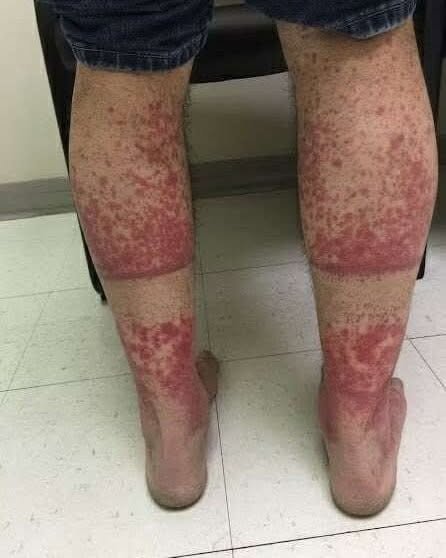
  • This image depicts a classic example of stasis dermatitis (also known as venous stasis dermatitis or gravitational dermatitis).

    This image depicts a classic example of stasis dermatitis (also known as venous stasis dermatitis or gravitational dermatitis).

    What Causes It

    • Poor Circulation: It occurs when the valves in the leg veins weaken (chronic venous insufficiency), making it hard for blood to flow back up to the heart.
    • Fluid Pooling & Pressure: Blood and fluid pool in the lower legs. Over time, pressure builds up, causing tiny blood vessels (capillaries) to leak fluid and red blood cells into the skin.
    • The “Sock Line”: The distinct sharp line seen in the photo happens where tight elastic socks compressed the tissues, temporarily preventing fluid accumulation in that narrow band while the skin above and below swells and becomes inflamed.

    Key Symptoms

    • Reddish, purplish, or brownish speckling/discoloration (often described as “cayenne pepper” spots).
    • Swelling (edema) in the lower calves, ankles, and feet.
    • Dry, scaly, itchy, or tight-feeling skin.
    • A heavy or aching sensation in the legs after sitting or standing.

    (Note: “Sleeping with socks on” isn’t the cause of this condition, though tight socks can accentuate the pattern of the swelling and rash).

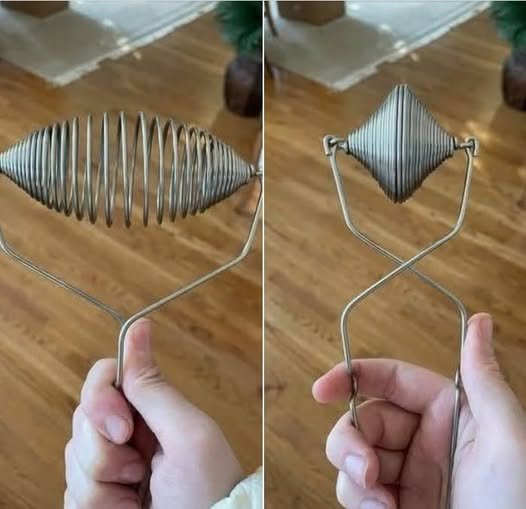
  • That is a vintage spring wire hot dog / sausage tong (often sold as a “boiling tong” or hot dog retriever).

    That is a vintage spring wire hot dog / sausage tong (often sold as a “boiling tong” or hot dog retriever).

    How it Works

    • Closed / Resting State: The spring coil relaxes into a wide barrel shape so you can easily slip it over a hot dog or sausage floating in boiling water or sitting on a grill.
    • Squeezed State: As you squeeze the crossover handles together, the spring coil compresses tightly around the hot dog, holding it securely without tearing the skin or poking holes in it.

    Common Uses

    • Hot Dogs & Sausages: Safely lifting franks out of boiling water or turning them on a grill.
    • Boiled Eggs: Retrieving eggs from boiling water.
    • Pickles & Corn on the Cob: Grabbing whole pickles out of deep mason jars or lifting hot corn ears.

    These clever mechanical gadgets were popular mid-20th-century kitchen novelty tools!

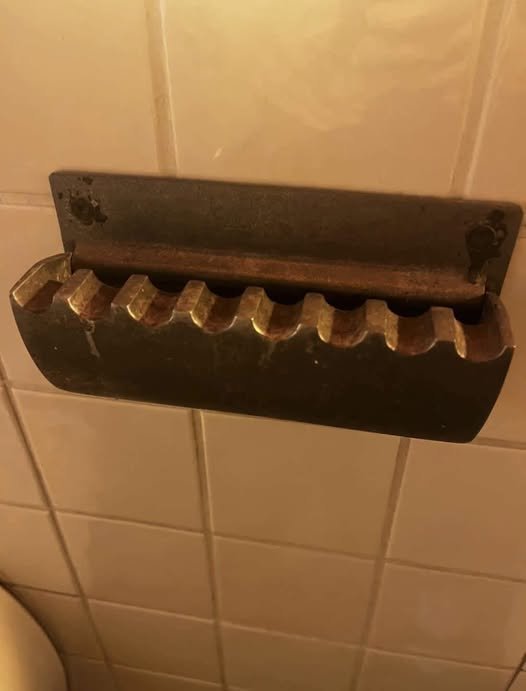
  • That is a vintage wall-mounted cigarette rest/ashtray (Wandascher).

    That is a vintage wall-mounted cigarette rest/ashtray (Wandascher).

    • Where & Why It Was Used: These heavy metal fixtures were extremely common in European public venues, train cars, and bar restrooms during the mid-to-late 20th century, back when indoor smoking was ubiquitous.
    • How It Works: Placed next to urinals or stalls, the grooved teeth gave patrons a designated, heat-safe spot to rest a burning cigarette (or cigar) horizontally while using the facilities or washing up, preventing burn marks on porcelain fixtures or littering on the floor.
    • Tipping Mechanism: The top tray is hinged—when tipped or lifted, the ash drops down into a lower catchment box or trough (though the bottom catch pan on this particular vintage unit appears to be missing or integrated behind the tile).

    While smoking in indoor public spaces in Germany has long been banned, many vintage Berlin kneipen and dive bars leave these fixtures installed as a piece of nostalgia.

  • Context Behind the Viral Headline

    Context Behind the Viral Headline

    The social media post referencing an “unexpected new take” from a body language expert on U.S. President Donald Trump’s presence during Spain’s World Cup trophy lift uses sensationalized clickbait framing to exploit a real, widely covered tournament event.

    • The Real Match: Spain defeated Argentina 1–0 in extra time on July 19, 2026, at MetLife Stadium to win the 2026 FIFA World Cup, thanks to a 106th-minute goal by Ferran Torres.
    • The Actual Event: President Donald Trump and FIFA President Gianni Infantino were present on the on-field stage during the post-match ceremony to hand out medals and participate in the official presentation.
    • The Podium Moment: Trump remained on or near the stage alongside FIFA officials as Spanish captain Rodri gathered with his teammates to lift the trophy. While the moment felt awkward to viewers and prompted stadium boos and online banter, it was an unscripted trophy presentation dynamic rather than a security standoff.
    • Clickbait Strategy: Digital content publishers routinely grab frames from official broadcasts, append pseudo-scientific angles like “body language expert reveals real reason,” and funnel users to ad-heavy comment sections or landing pages.
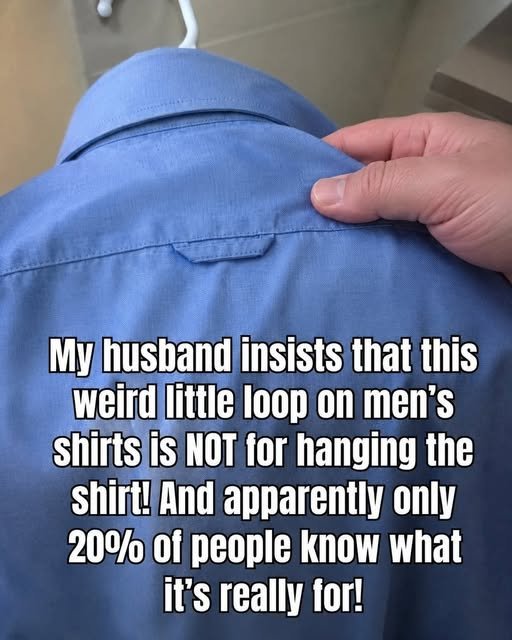
  • The fabric tab on the back of the shirt is called a locker loop, and hanging the shirt is precisely what it was designed for.

    The fabric tab on the back of the shirt is called a locker loop, and hanging the shirt is precisely what it was designed for.

    Origins & History

    • Utilitarian Beginnings: Originally used by sailors to hang shirts on wall hooks on ships where space was tight and clothes hangers were scarce.
    • Ivy League Popularity: Popularized in the 1960s by menswear brand Gant, which added them to button-down oxfords for Ivy League students to hang their shirts inside gym lockers without causing wrinkles.
    • 1960s Dating Code: On college campuses, the loops doubled as a relationship status signal. A student would cut or remove his locker loop to indicate he was “going steady,” while interested classmates would sometimes pull on them to show interest.

    While hangers have made the feature mostly obsolete today, brands keep it as a traditional design detail.

  • Paw print stickers placed on mailboxes are an official safety marker used by local post offices (such as the United States Postal Service).

    Paw print stickers placed on mailboxes are an official safety marker used by local post offices (such as the United States Postal Service).

    Purpose of the Sticker

    • Mail Carrier Alert: The stickers warn letter carriers that a dog resides at or immediately adjacent to that address so they can approach with caution.
    • Color Code System:
      • Sticker on your mailbox: Indicates a dog lives at your home.
      • Sticker on a neighbor’s mailbox: In many regional USPS programs (often using yellow vs. orange stickers), a sticker on a house with no dogs signals that a neighboring house has a dog, alerting the carrier as they walk between properties.

    Debunking Viral Myths

    Sensationalized social media posts often claim these stickers are placed by criminals to “mark” houses for burglary or pet theft. This is entirely false. The markers are applied exclusively by postal authorities to prevent worker dog bites. Many post offices have since phased out physical stickers in favor of digital warnings on carriers’ handheld GPS scanners, but old stickers frequently remain on mailboxes.