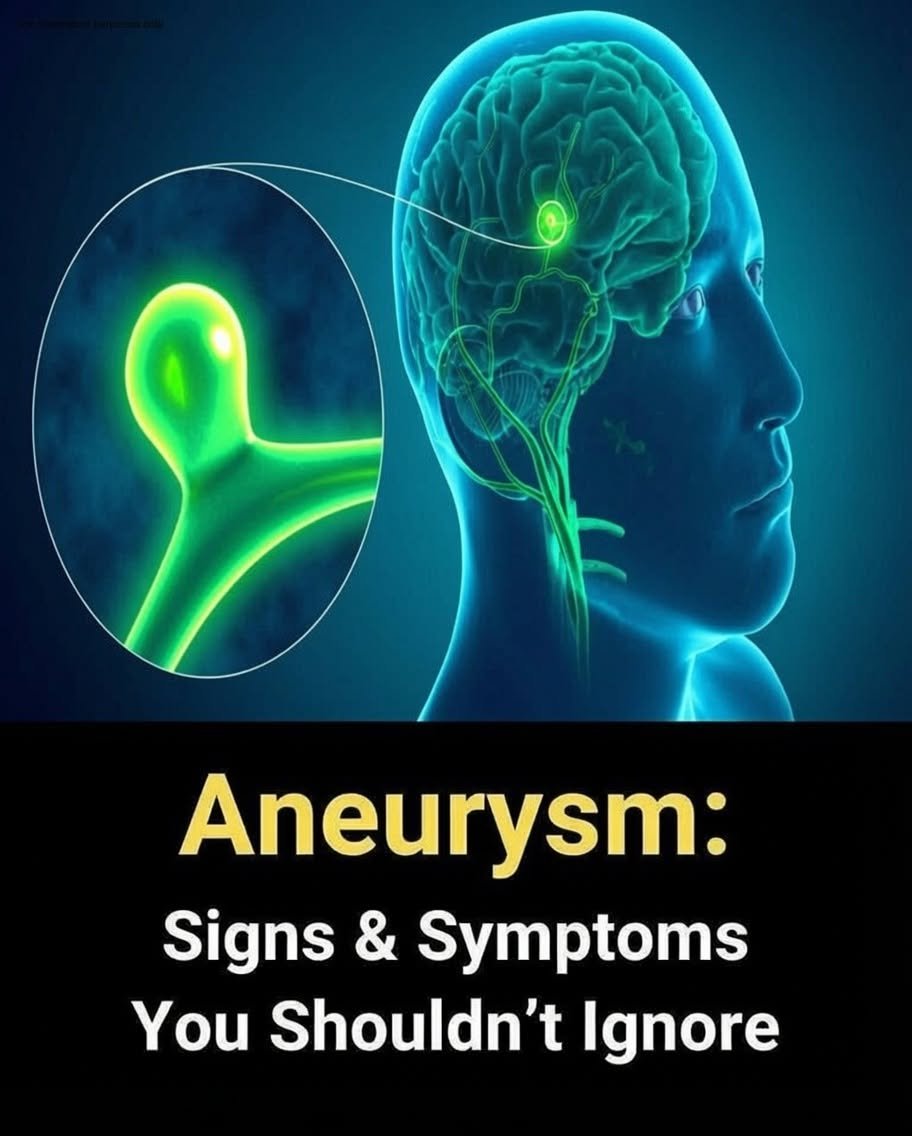
An aneurysm is a weakened area in the wall of a blood vessel that can gradually enlarge without producing noticeable symptoms. Many aneurysms are discovered accidentally during imaging performed for another reason, which is why the absence of symptoms does not necessarily mean an aneurysm is impossible. Brain aneurysms, for example, often remain silent until they become large, press on nearby nerves, leak, or rupture. A larger unruptured brain aneurysm may cause pain around or behind one eye, vision changes or double vision, a dilated pupil, numbness, or weakness on one side of the face. (ninds.nih.gov) Aneurysms can also occur in major arteries such as the aorta, where symptoms can differ depending on their location and size. Because symptoms overlap with many other conditions, they should not be used to self-diagnose an aneurysm. (medlineplus.gov)
The most important warning sign of a ruptured brain aneurysm is a sudden, extremely severe headache that may feel unlike any previous headache and is sometimes described as a “thunderclap” headache. It can occur with nausea, vomiting, stiff neck, sensitivity to light, confusion, seizures, vision changes, weakness, or loss of consciousness. (ninds.nih.gov) A sudden severe headache accompanied by neurological symptoms should be treated as an emergency rather than something to monitor at home. Aneurysms elsewhere in the body can produce different emergency symptoms; for example, rupture of an abdominal aortic aneurysm may cause sudden, severe abdominal or back pain, while a thoracic aneurysm complication can cause intense chest or upper-back pain. (newsinhealth.nih.gov) Because internal bleeding can become life-threatening very quickly, immediate emergency medical care is essential when rupture is suspected.
Although not every aneurysm can be prevented, several lifestyle measures can help reduce important risk factors. Keeping blood pressure under control, avoiding tobacco, exercising regularly, maintaining a healthy diet, and managing cholesterol can support overall blood-vessel health. (newsinhealth.nih.gov) People with a strong family history of aneurysms or certain inherited conditions may need to discuss screening with a healthcare professional. (ninds.nih.gov) Most importantly, never ignore a sudden, severe, unusual headache, fainting, seizure, sudden weakness, major vision changes, or severe unexplained chest, abdominal, or back pain. Disclaimer: This article is for general educational and informational purposes only and does not constitute medical advice, diagnosis, or treatment. Aneurysms can have different causes, locations, and symptoms, and these signs do not confirm an aneurysm. Always verify health information through reliable medical and scientific sources and seek emergency medical attention for sudden or severe symptoms.
Leave a Reply