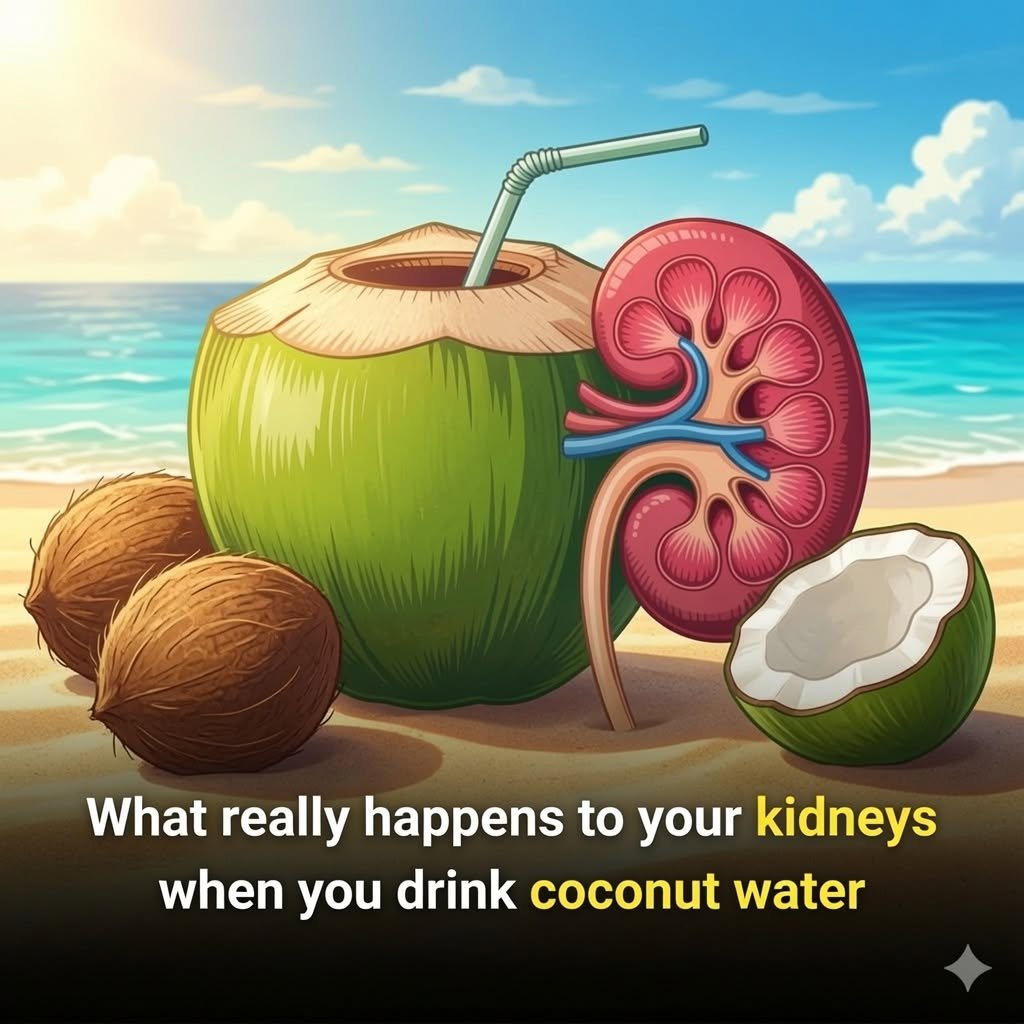
Coconut water is often promoted as a natural hydration drink, and for many healthy people it can be a refreshing source of fluids and electrolytes. It contains potassium, magnesium, and other minerals, which help support normal muscle, nerve, and fluid-balance functions. Adequate hydration is important for kidney health because the kidneys rely on water to remove waste and produce urine. However, coconut water should not be confused with a kidney “detox” or treatment. Its mineral content—particularly potassium—means that the effect can be very different for someone with impaired kidney function. The USDA’s dietary guidance lists unsweetened coconut water as a significant source of potassium, with about 198 mg in a half-cup serving.
For people with chronic kidney disease, high blood potassium, or kidney failure, coconut water may require caution. Healthy kidneys normally remove excess potassium from the bloodstream, but damaged kidneys may have difficulty doing so. Potassium can then accumulate and, when levels become dangerously high, cause muscle weakness or potentially serious heart-rhythm problems. The National Kidney Foundation specifically lists coconut water and coconut-based supplements among high-potassium products that some people with kidney disease may need to limit. Fluid intake can also become complicated in advanced kidney disease or dialysis, because some patients need to restrict the total amount of fluid they consume. Therefore, the idea that everyone with kidney problems should drink coconut water to “clean” or strengthen their kidneys is misleading.
For most people without kidney disease or a potassium restriction, moderate amounts of unsweetened coconut water can fit into a balanced diet. But it should not replace plain water as your primary hydration source, and sweetened or flavored varieties may contain additional sugar. If you have kidney disease, take medicines that affect potassium, have been told to restrict potassium or fluids, or have abnormal kidney-function blood tests, ask your doctor or renal dietitian whether coconut water is appropriate for you. Your ideal intake depends on kidney function, laboratory results, medications, and overall diet—not simply on the fact that coconut water is considered “natural.” Disclaimer: This article is for general educational and nutritional information only and does not constitute medical diagnosis, treatment, or personalized dietary advice. Coconut water is not a proven treatment or “detox” for kidney disease, and its high potassium content may make it unsuitable for some people. Always verify kidney-health claims through reliable medical sources and consult a qualified healthcare professional for individualized guidance.
Leave a Reply