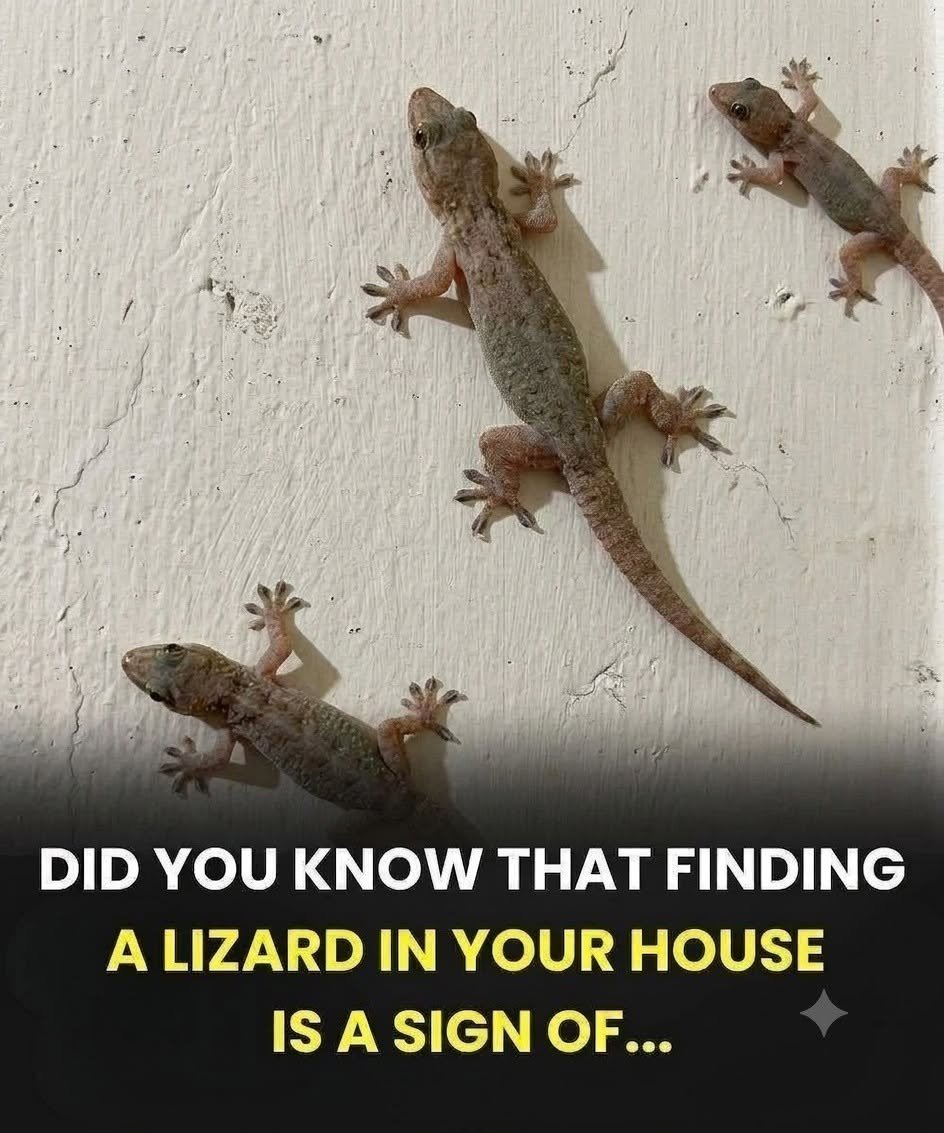
Finding a lizard inside the home is usually a simple part of nature, especially in warm climates where geckos commonly enter buildings looking for insects, shelter, and suitable temperatures. Yet across different cultures, people have attached symbolic and traditional meanings to these small reptiles. In some South Asian and Southeast Asian folk traditions, house geckos have been associated with protection, good fortune, or household omens, while South Indian folk practices have developed detailed interpretations based on a lizard’s location and behavior. (richardalois.com) Other cultural interpretations connect the lizard with adaptability, survival, transformation, and renewal because of characteristics such as its ability to shed skin and, in many species, regenerate a lost tail. (enviroliteracy.org) These meanings are part of folklore and cultural storytelling rather than scientifically established predictions about someone’s future.
Interestingly, interpretations can differ dramatically depending on the tradition. Some communities view a lizard around the home as a guardian or positive presence, while others historically associate certain reptiles with caution, misfortune, or unwanted influences. In Māori cultural contexts, lizards have been associated with guardianship and relationships between the living world and ancestors, although these traditions should be understood within their specific cultural framework rather than generalized to every lizard sighting. (richardalois.com) South Asian folk traditions can also assign different meanings depending on where the lizard appears or how it behaves, but these interpretations vary between regions and communities. Importantly, Islamic teachings should not be mixed with unrelated folklore: a house lizard is not automatically a jinn or supernatural being. A Hanafi scholarly response specifically states that the lizards commonly found in homes are lizards, not jinn. (islamqa.org) This distinction is important because cultural symbolism and religious belief are not necessarily the same thing.
From a practical perspective, a lizard entering your home usually has a straightforward explanation: it may be looking for food, warmth, water, or shelter. Rather than assuming that its appearance predicts wealth, illness, death, or another major event, homeowners can simply consider ordinary environmental factors such as insects, open windows, cracks, or outdoor lighting. If lizards become frequent visitors, sealing entry points and reducing insect activity may help naturally. Cultural interpretations can still be interesting when presented respectfully as traditions rather than facts. Ultimately, the “meaning” of a lizard in the home depends on the culture, family tradition, and personal beliefs of the people observing it. Disclaimer: This article is for general educational and cultural purposes only. Symbolic meanings associated with lizards vary widely across traditions and are not scientifically proven predictions or guarantees of future events. Religious claims should be verified through qualified scholars, while cultural and historical claims should be checked against reliable sources.
Leave a Reply