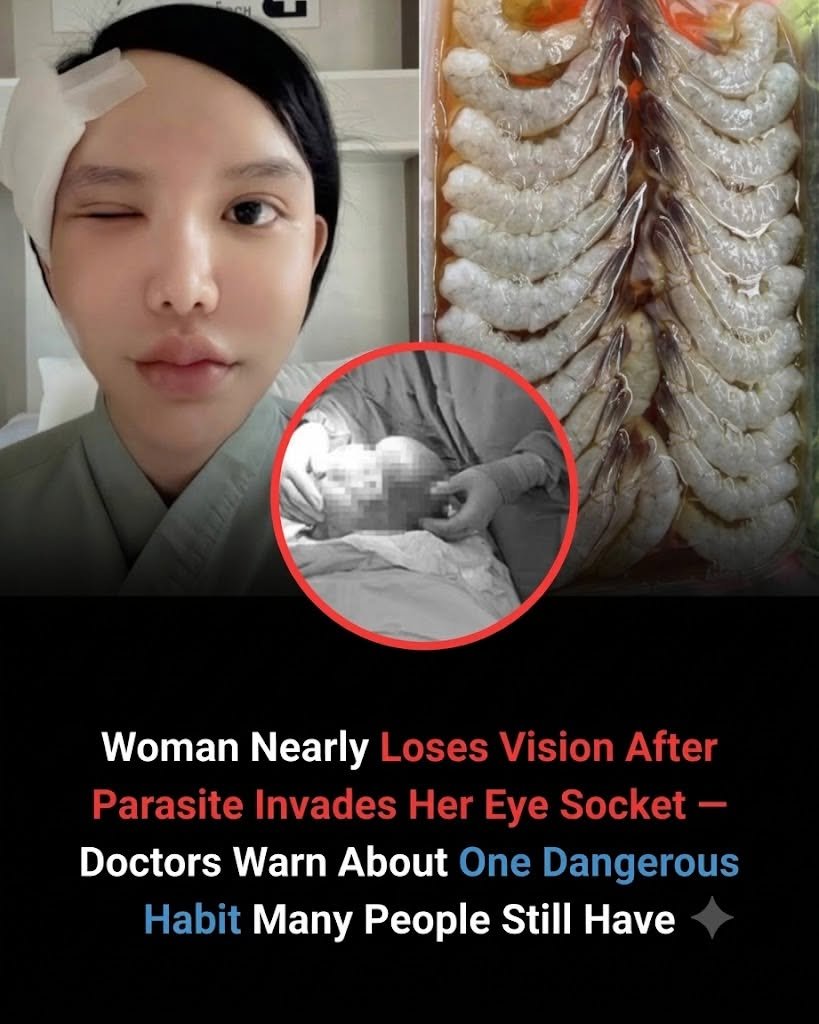
Digital media platforms frequently feature high-stakes medical imagery—such as a recovering patient paired with unrelated stock photos of raw seafood and clinical procedures—accompanied by sensationalized headlines like “A parasite invaded her eye after one common contact lens mistake” and “Woman Nearly Loses Vision After Parasite Invades Her Eye Socket — Doctors Warn About One Dangerous Habit Many People Still Have”. These viral posts rely on dramatic vision-loss horror tropes, severe health anxiety hooks, and curiosity-driven framing to bypass content moderation filters, provoke intense medical panic in comment sections, and drive rapid social media sharing and ad-monetized click-through rates rather than offering accurate ophthalmological or optometric education.
812132885_1412515507639815_295701490905911028_n.jpg+ 1
From an ophthalmology and clinical parasitology perspective, serious corneal infections—such as Acanthamoeba keratitis—can indeed occur in contact lens wearers, but they are relatively rare conditions tied to specific hygiene failures. Acanthamoeba is a microscopic free-living amoeba found in tap water, swimming pools, soil, and hot tubs. The primary risk factors for contracting this severe infection include wearing contact lenses while swimming, rinsing lenses or cases in untreated tap water, reusing old disinfecting solution, or failing to follow proper lens disinfection protocols. Content-farming networks systematically take rare medical conditions and juxtapose them with unrelated imagery to manufacture widespread fear and maximize digital ad revenue.
812132885_1412515507639815_295701490905911028_n.jpg+ 2
Maintaining proper contact lens hygiene and protecting ocular health effectively relies on evidence-based clinical guidelines rather than sensationalized internet warnings. Standard optometric care emphasizes thorough hand washing before handling lenses, using fresh sterile multipurpose solutions (never tap water or saliva) for cleaning and storage, replacing contact lens cases regularly, and avoiding wearing lenses while swimming or showering. Understanding how engagement algorithms weaponize health anxiety helps consumers approach online medical content with critical media literacy. For verified guidance on contact lens care, eye infections, or vision preservation, consulting a board-certified ophthalmologist or optometrist provides authoritative, scientifically grounded care.
812132885_1412515507639815_295701490905911028_n.jpg+ 3
Leave a Reply