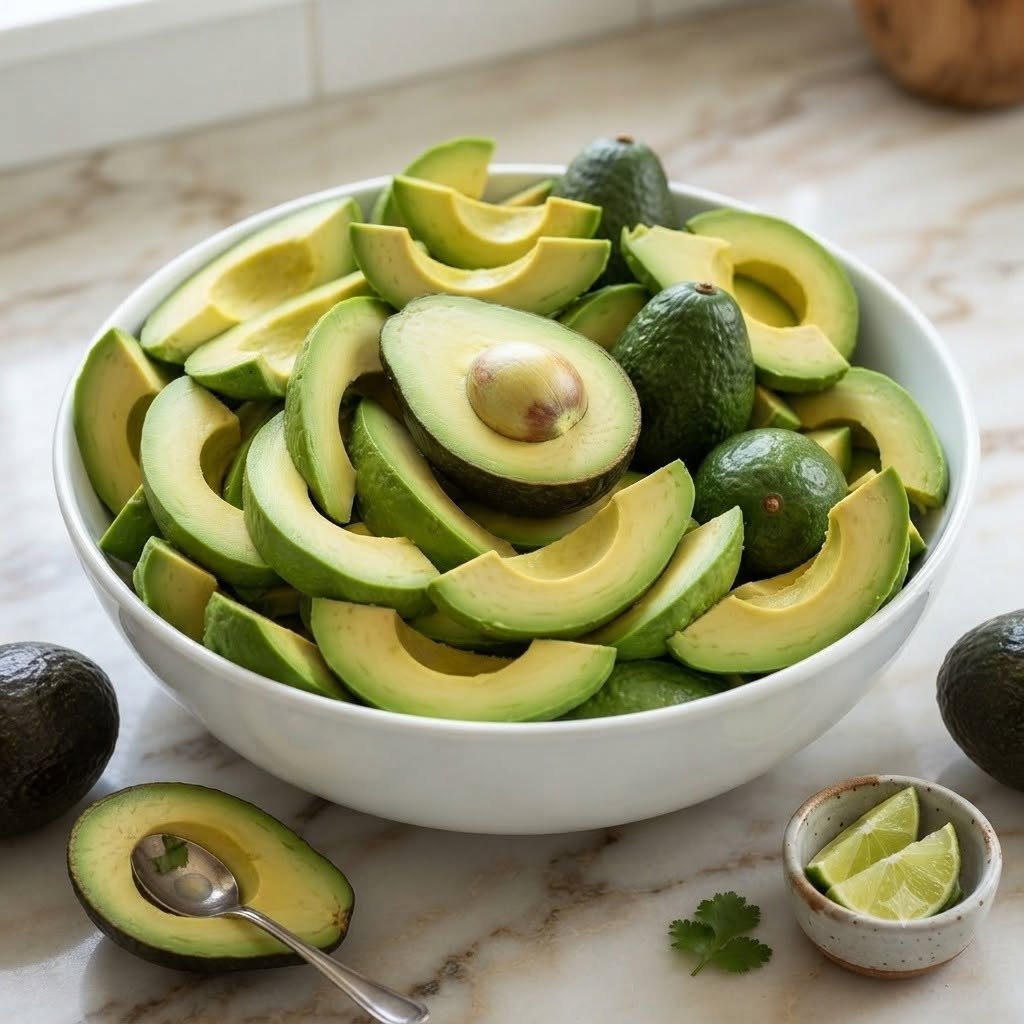
Digital media platforms frequently feature appealing food photography—such as a large bowl filled with freshly sliced avocados and limes—paired with sensationalized, warning-style headlines like “You Eat Avocados Often? Here Are Some Effects You May Want to Know About”. These viral posts rely on dietary curiosity hooks, hidden health hazard framing, and generalized wellness anxiety to bypass content moderation filters, provoke unnecessary nutritional apprehension in comment sections, and drive rapid social media sharing and ad-monetized click-through rates rather than offering accurate clinical nutrition or dietary education.
From a clinical nutrition and dietary science perspective, avocados are a nutrient-dense whole food packed with heart-healthy monounsaturated fats (primarily oleic acid), dietary fiber, potassium, vitamin E, and fat-soluble antioxidants. While incorporating avocados into a balanced diet supports cardiovascular health, satiety, and nutrient absorption, excessive and unmonitored consumption can contribute to high caloric intake due to their dense energy profile. Furthermore, individuals managing specific health conditions—such as those requiring strict low-potassium diets for chronic kidney disease or those with latex-fruit allergies—must monitor their intake. Content-farming networks systematically take wholesome, everyday foods and reframe them with ominous health warnings to manipulate recommendation algorithms and maximize digital ad revenue.
Evaluating dietary choices and incorporating nutrient-rich foods into a daily routine effectively relies on evidence-based nutritional science rather than succumbing to sensationalized internet warnings. Standard clinical guidance encourages balanced portion control, personalized caloric intake, and diverse whole-food selections tailored to individual metabolic and medical needs rather than adopting blanket fears regarding healthy fats. Understanding how engagement algorithms weaponize dietary curiosity helps consumers approach online wellness claims with critical media literacy. For verified guidance on nutritional planning, specialized dietary restrictions, or metabolic health, consulting a registered dietitian, primary care physician, or certified clinical nutritionist provides authoritative, scientifically grounded care.
Leave a Reply