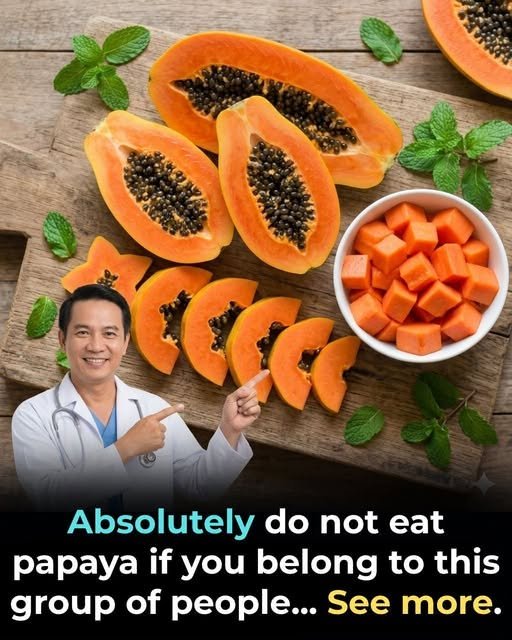
Digital media platforms frequently feature stock photography of fresh fruit paired with an inserted medical professional—such as a smiling person in a lab coat pointing at sliced papaya—accompanied by sensationalized headlines like “Absolutely do not eat papaya if you belong to this group of people…” and “… See more.”. These viral posts rely on absolute prohibition hooks, curiosity-driven sentence truncation, and manufactured health warnings to bypass content moderation filters, provoke unnecessary dietary anxiety in comment sections, and drive rapid social media sharing and ad-monetized click-through rates rather than offering accurate nutritional or gastroenterological education.
806001451_1412547657636600_1178258516455523821_n.jpg+ 1
From a clinical nutrition and gastroenterology perspective, papaya is a nutrient-dense fruit rich in vitamin C, vitamin A, folate, fiber, and papain—a proteolytic enzyme that aids in protein digestion. While papaya is a healthy addition to a balanced diet for the vast majority of people, certain specific groups must exercise caution. For instance, individuals with latex-fruit syndrome may experience cross-reactivity due to structural similarities between latex proteins and enzymes in raw papaya, and pregnant women are traditionally advised to avoid unripe or semi-ripe papaya because concentrated latex in green fruit can stimulate uterine contractions. However, content-farming networks systematically take these specific, nuanced medical caveats and exaggerate them into alarming, broad prohibitions to manipulate recommendation algorithms and maximize digital ad revenue.
806001451_1412547657636600_1178258516455523821_n.jpg+ 3
Evaluating dietary restrictions and incorporating wholesome fruits into a daily routine effectively relies on evidence-based nutritional science rather than succumbing to sensationalized internet warnings. Standard clinical dietary guidance encourages individualized food choices based on verified allergies, medical histories, and metabolic needs rather than blanket fear-mongering. Understanding how engagement algorithms weaponize everyday foods helps consumers approach online wellness claims with critical media literacy. For verified guidance on food allergies, dietary restrictions, or specialized medical nutrition, consulting a board-certified allergist, registered dietitian, or primary care physician provides authoritative, scientifically grounded care.
806001451_1412547657636600_1178258516455523821_n.jpg+ 3
Leave a Reply