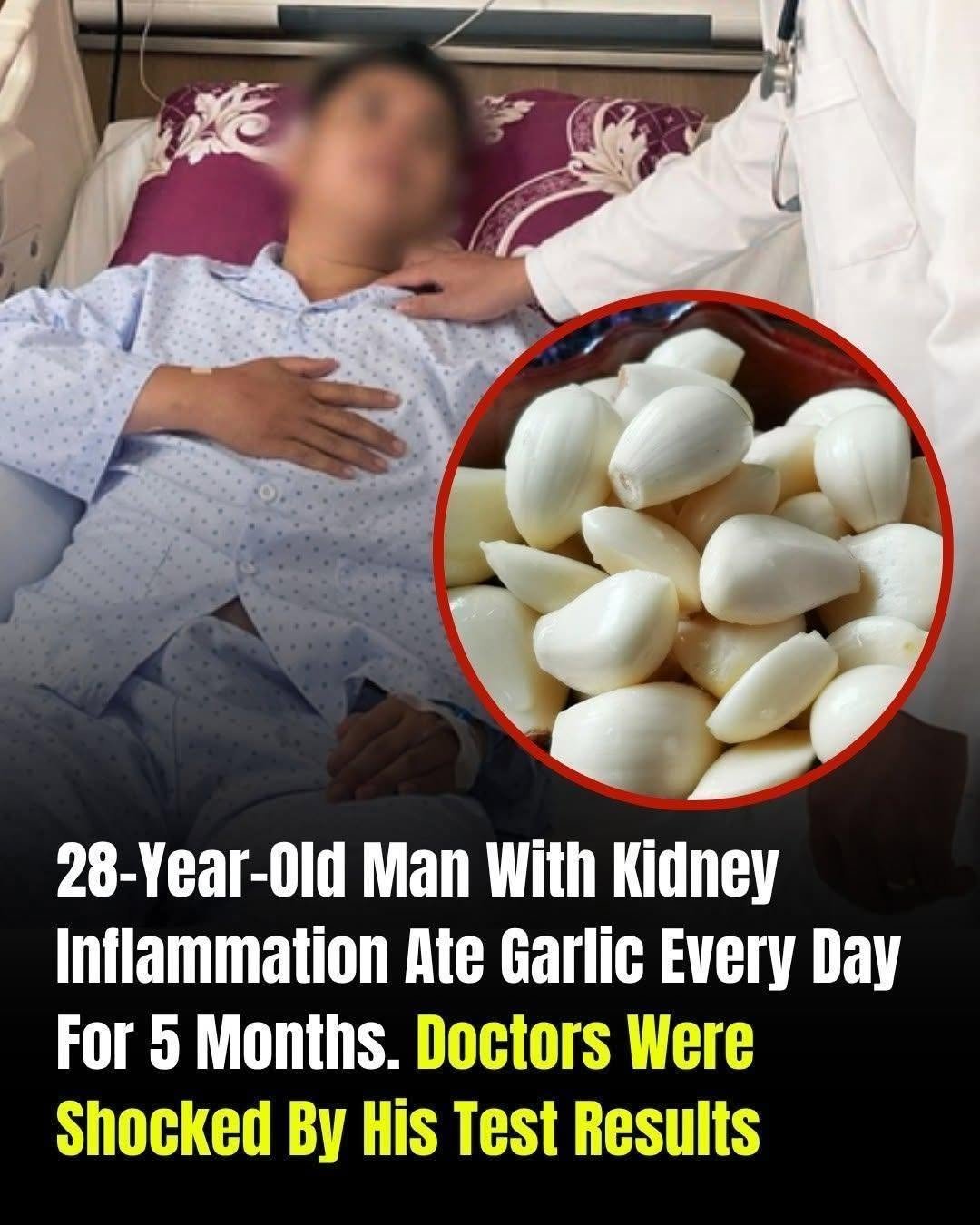
Digital media platforms frequently feature sensationalized medical graphics—such as a hospital patient paired with an inset bowl of garlic cloves—accompanied by dramatic headlines like “He Ate Garlic Every Day For 5 Months Hoping To Heal His Kid.neys The Results Shocked Doctors” and “28-Year-Old Man With Kidney Inflammation Ate Garlic Every Day For 5 Months. Doctors Were Shocked By His Test Results”. These viral posts rely on censorial text modifications (such as “kid.neys”), miraculous cure tropes, and manufactured medical shock value to bypass content moderation filters, provoke health anxiety in comment sections, and drive rapid social media sharing and ad-monetized click-through rates rather than offering accurate nephrological or nutritional education.
816123941_1412375297653836_8486013568227784648_n.jpg+ 1
From a clinical nephrology and nutritional science perspective, consuming excessive amounts of a single food item like garlic cannot reverse chronic kidney disease or acute renal inflammation. While garlic contains beneficial antioxidant and anti-inflammatory compounds (such as allicin) that support overall wellness as part of a balanced diet, it is not a targeted pharmaceutical cure for renal pathology. Furthermore, excessive intake of concentrated raw garlic or specific dietary supplements can interact unfavorably with medications (such as blood thinners), cause gastrointestinal distress, or present challenges for individuals with advanced kidney disease who require strict monitoring of potassium and fluid balances. Content-farming networks systematically exaggerate preliminary or anecdotal health claims into miraculous or disastrous medical narratives to manipulate recommendation algorithms and maximize digital ad revenue.
816123941_1412375297653836_8486013568227784648_n.jpg+ 2
Managing renal health and evaluating nutritional interventions effectively relies on evidence-based medical nephrology rather than relying on viral internet cure-alls. Standard clinical management of kidney inflammation involves comprehensive diagnostic workups, blood panel monitoring (such as creatinine and eGFR), tailored blood pressure control, and specialized renal diets prescribed by qualified professionals. Understanding how engagement algorithms weaponize health desperation helps consumers approach online wellness claims with critical media literacy. For verified guidance on kidney disease management, dietary restrictions, or nephrological care, consulting board-certified nephrologists, primary care physicians, or registered renal dietitians provides authoritative, scientifically grounded care.
Leave a Reply