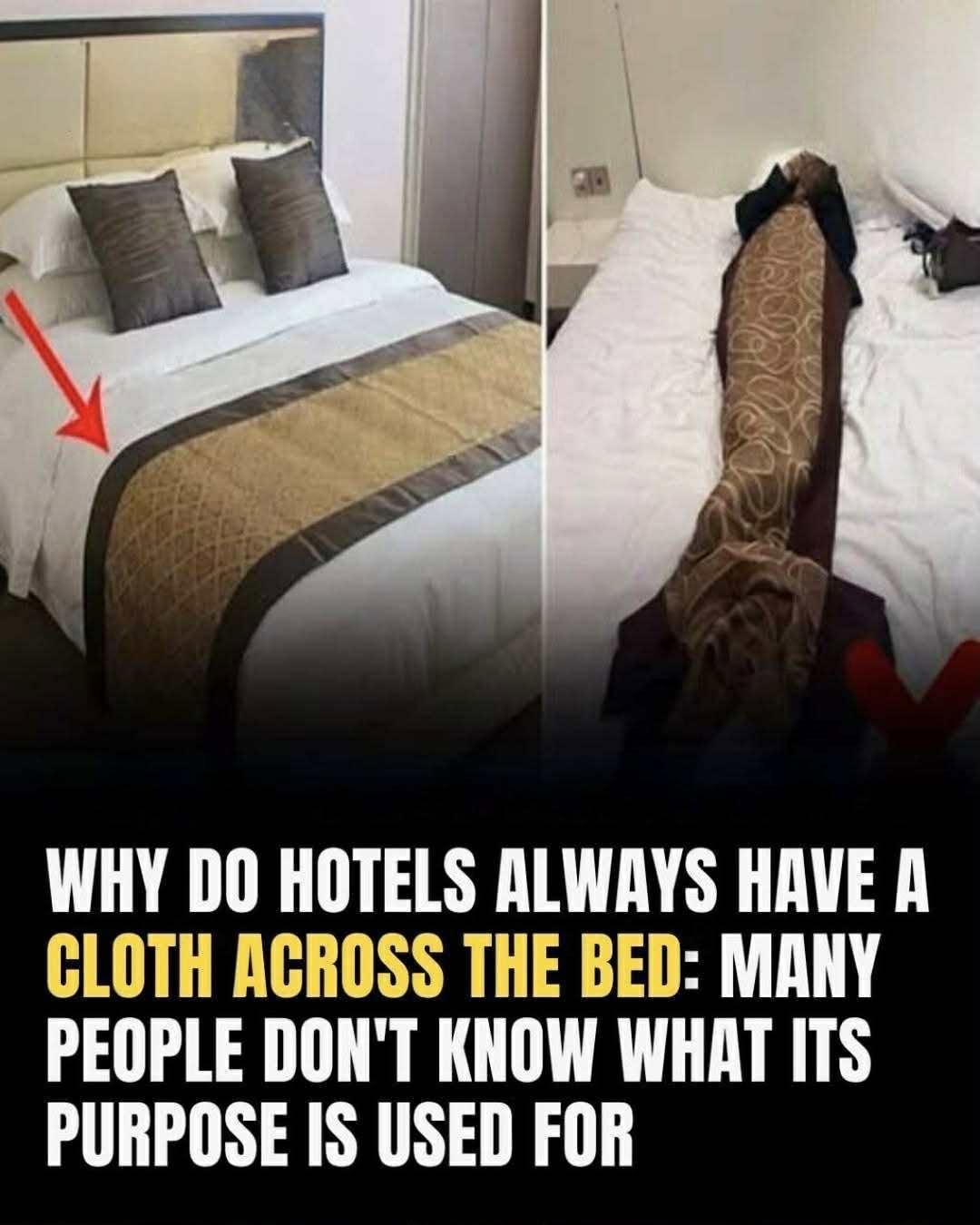
Digital media platforms frequently feature split-screen hotel photography—such as a made hotel bed with a decorative runner across the foot, juxtaposed with a humorous or exaggerated image of a person wrapped in the fabric like a cocoon—paired with sensationalized headlines asking “WHY DO HOTELS ALWAYS HAVE A CLOTH ACROSS THE BED: MANY PEOPLE DON’T KNOW WHAT ITS PURPOSE IS USED FOR”. These viral posts rely on faux-mystery hooks, exaggerated functionality claims, and curiosity-driven framing to bypass content moderation filters, provoke traveler amusement or anxiety in comment sections, and drive rapid social media sharing and ad-monetized click-through rates rather than offering accurate hospitality or interior design education.
From a hospitality management and interior design perspective, the decorative cloth placed across the bottom of a hotel bed is known as a bed runner (or bed scarf). Its primary functions are purely aesthetic and practical: it adds a layer of color and texture to complete the room’s interior design styling, and it serves as a protective barrier so guests can rest their luggage, shoes, or feet on the bed without directly soiling the pristine white duvet or comforter. Contrary to viral myths claiming the fabric serves secret sanitation or sleeping functions, it is simply a standard hotel decor and cleanliness accessory. Content-farming networks systematically take ordinary hospitality design elements and frame them as hidden secrets to manipulate recommendation algorithms and maximize digital ad revenue.
Navigating hotel cleanliness and travel hygiene effectively relies on standard hospitality practices and personal awareness rather than succumbing to viral internet myths. Recommended travel habits include checking hotel room cleanliness upon arrival, using luggage racks rather than placing bags on soft furnishings, and inspecting bedding as part of standard travel routines. Understanding how engagement algorithms weaponize everyday design features helps consumers evaluate online media claims with critical media literacy. For verified guidance on hospitality standards, travel safety, or hotel sanitation protocols, consulting official hospitality associations or travel safety resources provides authoritative, reliable information.
Leave a Reply