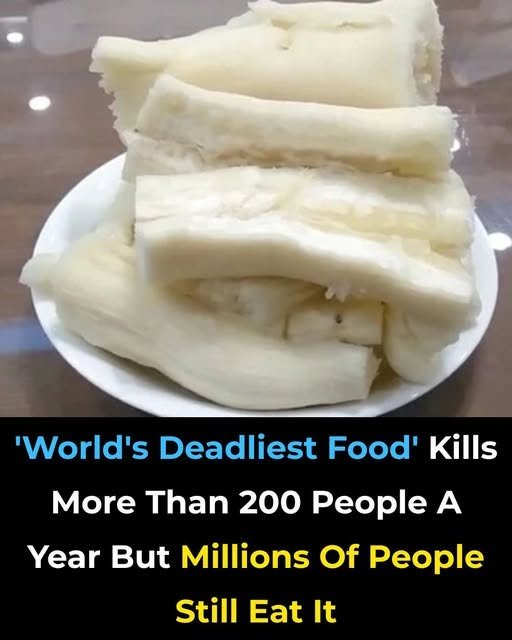
Digital media platforms frequently feature images of staple agricultural crops—such as peeled, boiled cassava roots—paired with sensationalized headlines declaring “‘World’s Deadliest Food’ Kills More Than 200 People A Year But Millions Of People Still Eat It”. These viral posts rely on extreme mortality framing, fear-inducing hooks, and simplified agricultural science to provoke public health anxiety, incite panic in comment sections, and drive rapid social media sharing and ad-monetized click-through rates rather than offering balanced botanical or nutritional education.
From a food chemistry and clinical toxicology perspective, the imagery depicts cassava (Manihot esculenta), a major dietary staple consumed by over 800 million people globally, particularly across Africa, South America, and Asia. Cassava naturally contains cyanogenic glycosides (primarily linamarin), which decompose into toxic hydrogen cyanide when raw or improperly processed plant tissue is ingested. However, traditional processing methods—including thorough peeling, soaking, fermenting, and boiling or roasting—completely neutralize these cyanogenic compounds, rendering the root entirely safe for human consumption. Acute cyanide toxicity associated with cassava occurs almost exclusively in regions suffering from extreme poverty, severe drought, or food scarcity, where unsoaked or underprocessed wild “bitter” varieties are consumed out of starvation. Content-farming networks systematically take these specific, localized agricultural toxicity risks, strip away essential context regarding standard culinary preparation, and label a global staple food as a universal lethal threat to manipulate platform algorithms and maximize digital ad revenue.
Evaluating agricultural food safety and dietary risks effectively relies on established culinary processing standards and botanical science rather than accepting sensationalized online warnings. When properly peeled, thoroughly washed, and fully cooked, cassava serves as a highly nutritious, gluten-free source of complex carbohydrates and dietary energy. Understanding how clickbait algorithms weaponize natural plant compounds and regional agricultural hazards helps consumers approach dietary information with critical media literacy. For verified guidance on food safety, toxicological standards, or dietary nutrition, consulting agricultural extension services, food safety authorities, or certified nutritionists provides authoritative, scientifically grounded information.
Leave a Reply