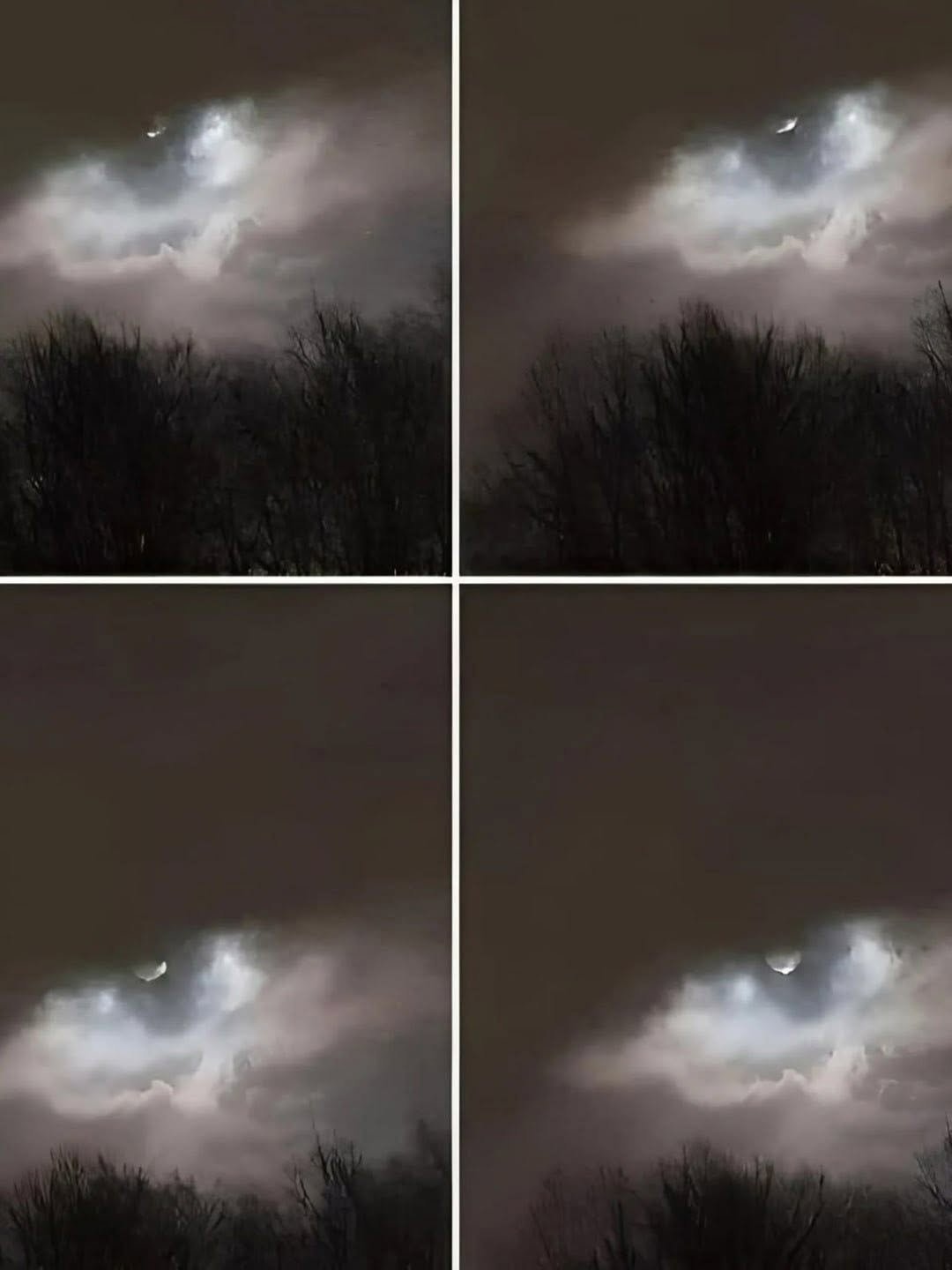
Digital media platforms frequently feature low-light, nighttime photography of cloudy skies paired with mysterious, personal narrative hooks—such as claiming a relative captured a strange sight near their home that contains an unseen “important detail”. These viral posts rely on deliberate ambiguity, open-ended questions, and subtle visual anomalies to trigger human pareidolia, provoke intense curiosity, and drive rapid online comment sharing rather than reporting genuine meteorological anomalies.
From a digital forensics and atmospheric physics perspective, images depicting glowing or eye-shaped formations in dark, cloudy skies are usually produced by common optical phenomena, lens reflections, or synthetic digital manipulation. In atmospheric conditions, illuminated cloud edges (iridescence) or light scattering from the moon or ground-based spotlights can create striking, pseudo-organic visual illusions—such as clouds resembling a gigantic human eye. Additionally, generative AI tools and content-farming networks systematically manufacture or digitally alter low-resolution sky photographs to exploit pareidolia—the psychological tendency to perceive recognizable patterns (like faces or eyes) in random visual stimuli—thereby driving algorithmic visibility, follower growth, and advertising revenue.
Evaluating unusual atmospheric or nocturnal media effectively requires understanding basic optical principles, inspecting photographic lighting consistency, and recognizing clickbait storytelling tropes designed to solicit user comments. Understanding how human cognition and digital content creation interact helps maintain a grounded perspective on modern online media. If you are seeking genuine astronomical, meteorological, or atmospheric research, consulting verified weather monitoring networks, planetarium archives, and academic optical physics organizations provides reliable, objective context.
Leave a Reply