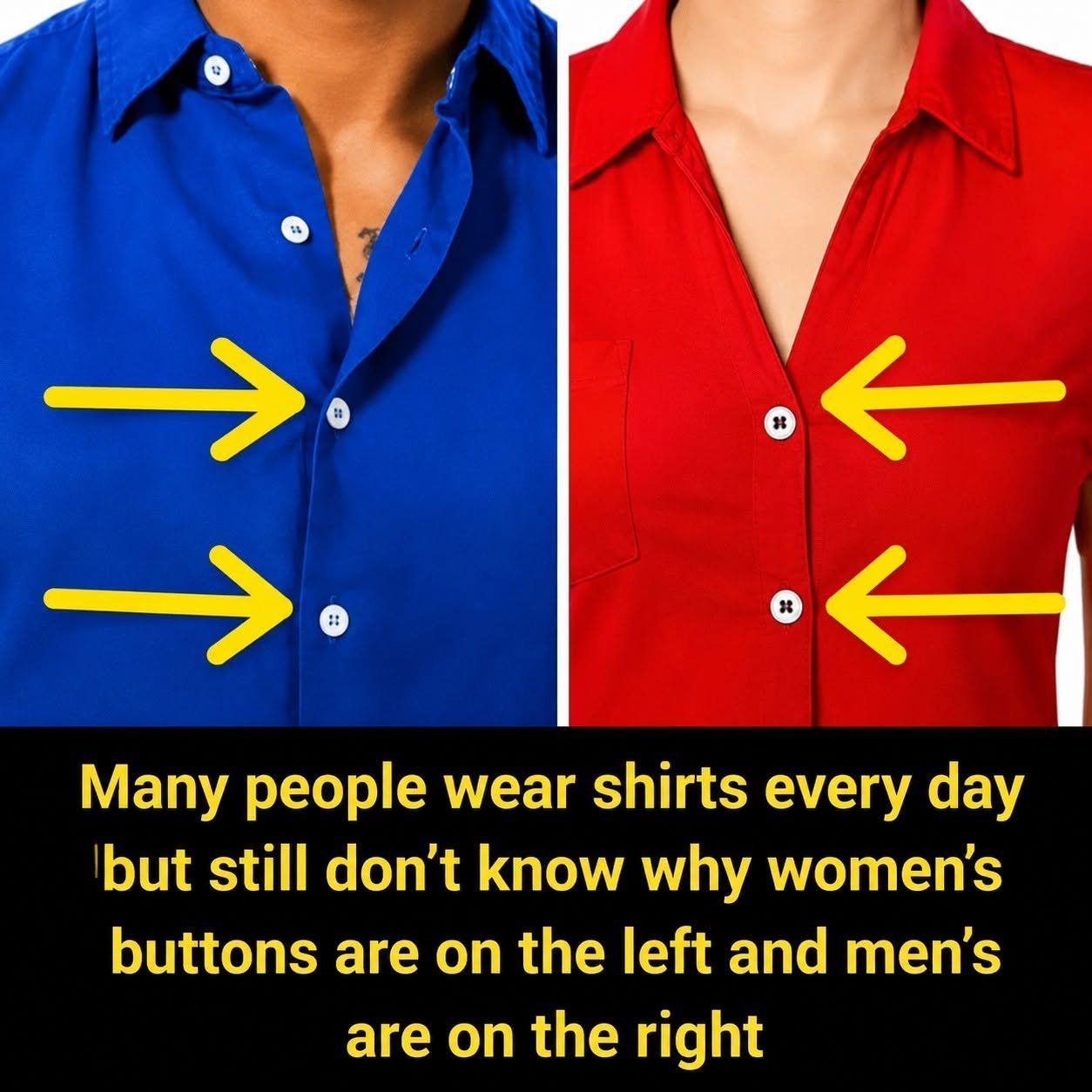
Digital media platforms frequently feature side-by-side comparisons of clothing items paired with dramatic, inquisitive headlines—such as claiming there is a secret or shocking historical “rule” explaining why men’s and women’s shirt buttons are placed on opposite sides. These viral graphics systematically utilize bright arrows, bold text, and curious teasers to spark social media debate, provoke curiosity, and drive rapid online comment sharing rather than providing objective textile history.
From a fashion history and garment manufacturing perspective, the asymmetry in button placement—men’s buttons traditionally on the right placket, women’s on the left—is an enduring historical convention standardized during the 19th century. The most widely accepted historical explanation traces back to aristocratic dress practices: wealthy women in the Victorian era were typically dressed by right-handed maidservants, making buttons on the left easier for a servant facing them to fasten. Conversely, men usually dressed themselves, favoring buttons on the right side for right-handed ease, as well as accommodating historical weaponry placement (such as unbuttoning a coat with the left hand while drawing a sword with the right). Over time, mass production and industrial garment sizing standardized these gendered traditions into modern manufacturing norms. Content-farming networks routinely frame basic historical design standards as sensationalized modern secrets to maximize digital engagement metrics.
Understanding apparel design involves recognizing historical manufacturing traditions and mass-production standardization rather than searching for hidden viral mysteries in everyday garments. Modern clothing manufacturers continue these traditions largely due to established pattern-making templates, brand consistency, and automated production machinery line setups. Recognizing how digital media content creators package historical trivia into clickbait teasers helps maintain a critical and objective perspective on viral online trends.
Leave a Reply