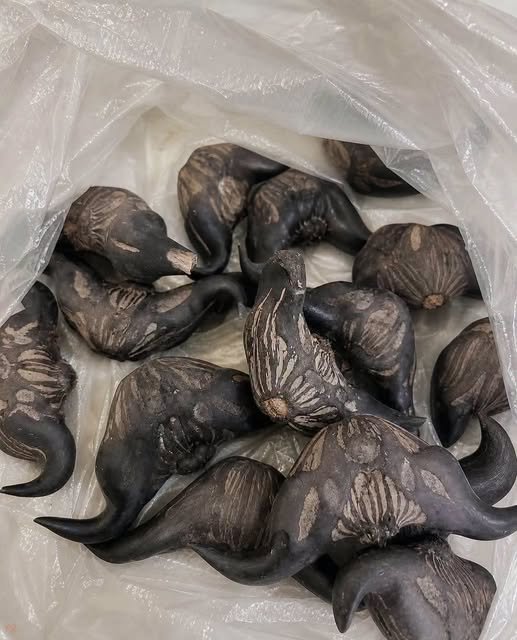
Digital media platforms frequently feature photographs of unusual produce paired with questions about mystery foods or alarming claims about strange natural growths. These viral images—often displaying distinctive, bat-shaped or bull-horn-like pods—routinely spark widespread online curiosity, misidentification, and engagement across social media.
From a botanical and culinary science perspective, the items in the photograph are Water Caltrops (Trapa natans or Trapa bicornis), also widely known as water caltrops, bat nuts, or horned water chestnuts. Native to temperate and tropical regions of Asia and Europe, these aquatic seed pods grow underwater attached to floating plants. Inside the thick, woody, horn-shaped outer shell lies a white, starchy kernel that tastes similar to a sweet chestnut or potato when properly prepared. Sensationalized online posts often frame them as bizarre alien pods or dangerous abnormalities to provoke shock and boost comment sections.
To safely consume water caltrops, they must always be cooked thoroughly before eating. Raw aquatic plants can harbor parasites or waterborne pathogens (such as Fasciolopsis buski), making raw consumption unsafe. Preparation involves thoroughly washing the hard outer pods and boiling them in salted water for 20 to 30 minutes (or roasting them). Once boiled, the woody outer shell is cut or cracked open with a knife or nutcracker to reveal the edible white flesh inside, which can be enjoyed warm as a snack, salted, or incorporated into stir-fries and stews.
Leave a Reply