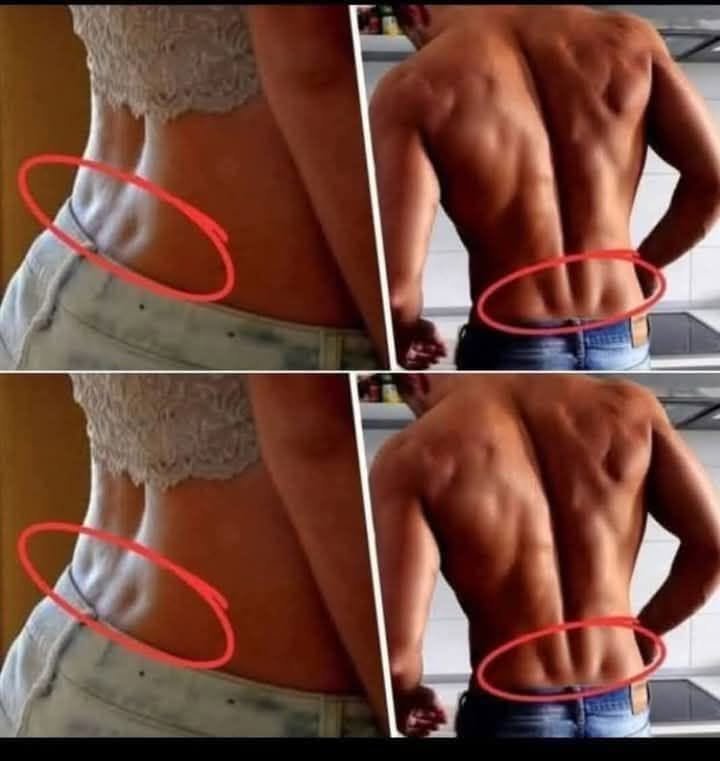
Digital media platforms frequently feature anatomical close-ups and alarmist clickbait headlines—such as questioning what physical marks like “two holes” or dimples on the lower back indicate. These viral posts are specifically engineered to provoke curiosity, body anxiety, and rapid online comment sharing rather than providing accurate, evidence-based anatomical or physiological education.
From a clinical anatomy and musculoskeletal perspective, these indentations are commonly known as sacral dimples or Venus/Apollo dimples. They are created by a short ligament that stretches between the posterior superior iliac spine of the pelvic bone and the overlying skin. This anatomical feature is entirely normal, genetically determined, and simply reflects an individual’s skeletal structure and low body fat distribution rather than any hidden disease, health hazard, or medical abnormality. Sensationalized online content regularly frames ordinary, harmless anatomical variations as mysterious warnings to maximize digital engagement metrics.
Maintaining a healthy body involves focusing on overall physical fitness, balanced nutrition, regular movement, and professional clinical guidance rather than worrying about harmless physical traits. Personal health choices and anatomical questions should always reflect scientific fact rather than internet myths. If you experience localized lower back pain, structural discomfort, or unusual skin changes, consulting a licensed physician, physical therapist, or orthopedic specialist provides safe, evidence-based direction.
Leave a Reply