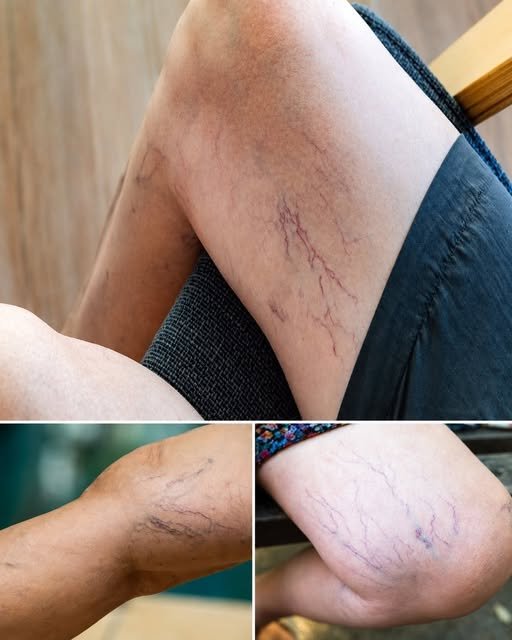
The image shows close-up photos of legs with visible web-like blue and purple vessels, framed by the incomplete, sensationalized prompt: “If you have purple veins on your legs, it means you are…”.
While alarming headlines often try to connect visible veins to severe or life-threatening organ failure, purple veins are extremely common, usually non-life-threatening, and most often represent spider veins (telangiectasias) or early varicose veins.
What Do Purple Veins Actually Mean?
- Spider Veins (Telangiectasias):
- What they are: Small, damaged blood vessels visible near the surface of the skin that appear as fine red, blue, or purple web-like clusters.
- Cause: Small valves inside tiny superficial veins weaken, allowing blood to pool slightly rather than flowing efficiently back toward the heart. They are primarily a cosmetic concern and rarely cause medical complications.
- Reticular or Early Varicose Veins:
- Slightly larger, deeper bluish/purple veins that feed into spider vein networks.
- When larger main leg veins develop valve insufficiency (chronic venous insufficiency), pressure builds up, causing larger vessels to twist, bulge, or swell over time.
- Common Risk Factors:
- Genetics: A family history of vein insufficiency is the single biggest factor.
- Prolonged Standing/Sitting: Jobs that require staying in one position for long periods increase vein pressure.
- Hormonal Changes: Pregnancy, menopause, or hormonal therapies can relax vein walls.
- Age & Weight: Natural wear on vein valves over time or increased abdominal pressure from weight.
Management and Treatments
- Lifestyle Adjustments: Regular walking, elevating your legs above heart level when resting, and avoiding prolonged sitting or standing.
- Compression Stockings: Wear specialized socks that exert gentle pressure to help blood flow upward efficiently.
- Medical Treatments: If troublesome or cosmetically undesirable, dermatologists and vein specialists offer simple outpatient procedures like sclerotherapy (injecting a solution to collapse the tiny vein) or laser ablation.
Deconstructing Social Media Engagement Farming
This post uses standard engagement tactics to drive social media algorithms:
- The Truncated Premise (“Curiosity Gap”): Ending mid-sentence (“it means you are…”) triggers health anxiety, forcing scrollers to click external links or search comments to finish the sentence.
- Universal Relatability: Millions of adults have visible spider veins, making the topic relatable to a massive audience, which guarantees high share rates and comment volume.
Leave a Reply