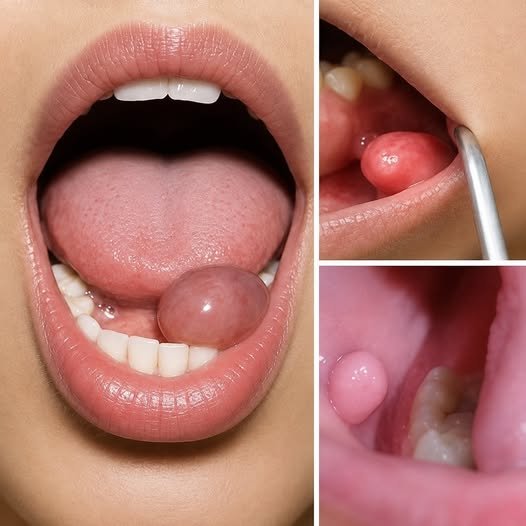
The composite image shows close-ups of large, smooth, fluid-filled or fleshy bumps in the oral cavity (under the tongue and along the gumline/inner cheek), accompanied by an incomplete, cliffhanger headline: “Here are the first symptoms of…”.
While sudden swelling in the mouth can cause anxiety, dramatic stock photos like these often depict benign conditions—or digitally rendered/exaggerated clinical examples—rather than immediate, fatal illnesses.
What Do These Bumps Usually Represent?
- Mucoceles (Mucous Retention Cysts):
- What they are: Harmless, fluid-filled sacs that develop when a minor salivary gland duct gets damaged or blocked (often from accidental cheek or lip biting).
- Appearance: Smooth, round, translucent, or bluish/pinkish swellings—most commonly found on the lower lip, floor of the mouth, or inner cheeks.
- Ranulas:
- A specific type of large mucocele that forms on the floor of the mouth under the tongue, caused by a blocked major salivary gland (such as the sublingual gland).
- Oral Fibromas:
- Smooth, firm, pinkish growths caused by repeated irritation or friction against a tooth or denture. They are non-cancerous, slow-growing, and benign.
- Pyogenic Granulomas or Oral Papillomas:
- Non-cancerous red or pink nodules on the gums or mucosa, often triggered by hormonal fluctuations, localized irritation, or mild viral activity (like HPV).
When to Seek Professional Evaluation
While most isolated oral bumps are non-cancerous cysts or tissue responses to mild trauma, consult a dentist or doctor if you notice:
- A lump or sore that persists for more than 2 weeks without healing
- Difficulty swallowing, chewing, or moving your tongue
- Unexplained bleeding, persistent pain, or rapid growth of the lump
- Persistent numbness anywhere in your mouth or lower face
Deconstructing Medical Clickbait Mechanics
This post employs standard engagement-farming techniques used by social media content farms:
- The Cliffhanger Hook (“Curiosity Gap”): Truncating the sentence (“Here are the first symptoms of…”) leaves the thought open-ended, driving panic and forcing users to click an external link-in-bio or search the comments for the “missing disease.”
- Shock-Value Visuals: Using dramatic, high-contrast close-ups (or hyper-realistic AI/stock edits) ensures scrollers pause mid-feed out of disgust or fear.
- Comment-Section Exploitation: Viewers flooding the comments to express alarm or debate potential diagnoses raises the post’s engagement metrics, pushing it to thousands
Leave a Reply