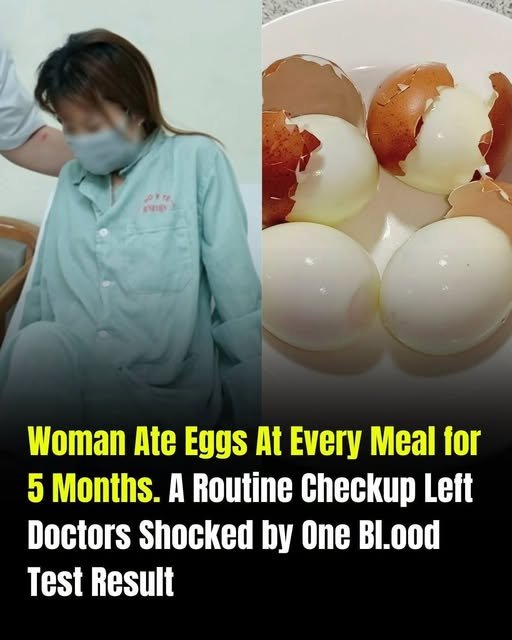
The split graphic shows a patient sitting in a clinical setting alongside a plate of peeled hard-boiled eggs, framed by a sensational headline: “Woman Ate Eggs At Every Meal for 5 Months. A Routine Checkup Left Doctors Shocked by One Bl.ood Test Result”.
While mono-diets (eating a single food or extremely restricted food group for extended periods) can lead to nutritional imbalances, the dramatic narrative presented in this graphic relies on sensationalized storytelling rather than standard dietary science.
Nutritional Mechanics of Extreme Egg Diets
- Dietary Cholesterol vs. Blood Cholesterol:
- For decades, dietary cholesterol was directly blamed for raising blood cholesterol. Modern cardiovascular research shows that for the vast majority of people, saturated fat and trans fats have a far greater impact on blood cholesterol levels than dietary cholesterol found in egg yolks.
- However, consuming excessive eggs daily over five months provides a high concentration of protein and fats without dietary fiber, essential plant phytonutrients, or adequate vitamin C.
- Risks of Single-Food Mono-Diets:
- Nutritional Deficiencies: Relying almost exclusively on eggs creates severe gaps in vitamin C, fiber, complex carbohydrates, and key minerals supplied by fruits, vegetables, and whole grains.
- Gastrointestinal Distress: The complete absence of fiber can lead to severe constipation and disrupted gut microbiome health.
- Kidney Strain: Extreme protein intake over long durations places additional filtration stress on individuals with underlying, undiagnosed kidney impairment.
Deconstructing the “Medical Shock” Clickbait Formula
This post uses textbook content-farm tactics designed to generate viral curiosity:
- Algorithmic Filter Evasion (“Algospeak”): Writing “Bl.ood” with a period inserted allows the post to bypass automated social platform filters that shadowban or limit the reach of medical health claims.
- Fabricated Narrative Tension: Combining an extreme timeframe (“5 Months”) with emotional reactions (“Left Doctors Shocked”) constructs a dramatic storyline that entices users to click linked blog posts or link-in-bio portals.
- Stock Photo Composite: Combining an unrelated, blurred image of a medical patient with generic stock photos of hard-boiled eggs creates an artificial illusion of a real, documented hospital case study.
- Engagement Inflation: Social media users flood the comments to debate extreme dieting, share personal stories, or ask what the “secret” test result was, driving the post straight to the top of platform recommendation feeds.
Leave a Reply