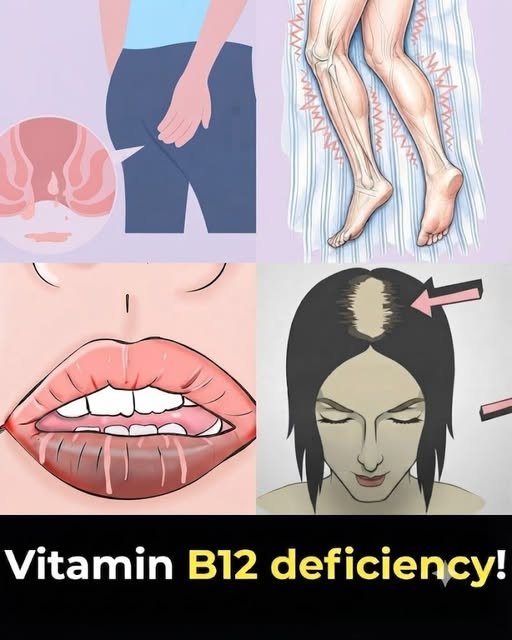
The graphic presents four distinct illustrations—including leg tingling/restlessness, mouth inflammation, patchy hair loss, and an unrelated hemorrhoid/rectal diagram—under the bold header “Vitamin B12 deficiency!” paired with a prompt asking scrollers if they might be low in the nutrient.
While Vitamin B12 is essential for nerve function, red blood cell production, and DNA synthesis, infographics like this often mix legitimate neurological and oral symptoms with completely unrelated physical conditions.
Actual Symptoms of Vitamin B12 Deficiency
When the body lacks adequate Vitamin B12, red blood cell production drops (megaloblastic anemia) and nerve damage can occur:
- Neurological & Sensory Symptoms:
- Paresthesia: A “pins and needles” tingling, burning, or numbness in the hands, feet, and legs (depicted by the vibrating lines around the legs in the top-right panel).
- Balance Issues & Muscle Weakness: Difficulty walking, poor coordination, or generalized muscle weakness.
- Cognitive Changes: Brain fog, memory loss, confusion, and mood alterations like irritability or depression.
- Oral & Skin Symptoms:
- Glossitis & Mouth Sores: A swollen, red, smooth, or sore tongue (glossitis) and angular cheilitis (painful cracks at the corners of the mouth, depicted in the bottom-left panel).
- Pale or Jaundice Skin: A pale or slightly yellowish tinge to the skin and whites of the eyes due to low red blood cell levels.
- General Anemia Symptoms:
- Chronic fatigue, shortness of breath, dizziness, and heart palpitations.
Misleading Elements in the Image
- Unrelated Visuals (Top-Left Panel): The top-left diagram clearly illustrates hemorrhoids or anal fissures, which have no physiological link to Vitamin B12 deficiency. This misattribution is common in recycled stock-image collages created by non-medical content farms.
- Alopecia vs. B12 (Bottom-Right Panel): Severe nutritional deficiencies can cause general hair thinning, but patchy bald spots (like Alopecia Areata shown here) are typically autoimmune conditions, not direct indicators of B12 deficiency.
Deconstructing Health Clickbait & Engagement Tactics
This graphic relies on well-known engagement-farming techniques:
- Sensationalized Symptom Stacking: Grouping common, widespread issues (fatigue, mouth sores, leg sensations) alongside alarming diagrams increases the likelihood that a user will identify with at least one symptom and believe they are sick.
- Reused / Recycled Stock Art: Combining unrelated medical diagrams into a single composite image creates a high-contrast visual puzzle that encourages scrollers to pause and analyze.
- The “Could You Be Low?” Curiosity Hook: Posing a diagnostic question instead of providing structured clinical facts leads users to click external link-trees or leave comments asking for medical advice.
- Algorithmic Boost: Shares, saves, and comment disputes over the inaccurate illustrations boost the post’s reach across platform algorithms.
Leave a Reply