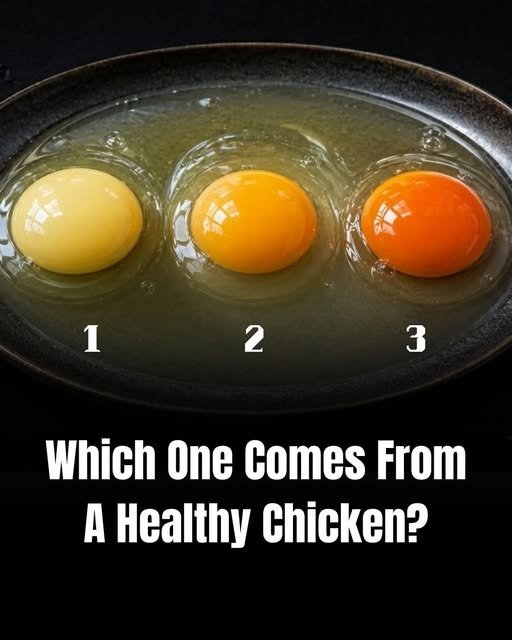
None of the three choices exclusively guarantees a “healthier” chicken. Yolk color is a measure of the hen’s diet, not her overall health or the egg’s nutritional quality.
All three eggs can come from perfectly healthy chickens.
What Determines Egg Yolk Color?
The shade of an egg yolk is controlled almost entirely by pigments called carotenoids in the hen’s feed:
- Egg 1 (Pale Yellow): Indicates a diet rich in pale grains like wheat, barley, white corn, or sorghum.
- Egg 2 (Medium Yellow/Gold): Typical for hens fed standard commercial feed containing yellow corn, alfalfa meal, or soy.
- Egg 3 (Deep Orange): Indicates a diet high in rich carotenoids—such as marigold petals, red pepper extracts, paprika, or fresh green pasture forage (grasses and insects).
Nutritional Value & Misconceptions
- Macro-Nutrients Are Virtually Identical: Protein, total fat, cholesterol, and essential minerals remain nearly identical across pale, yellow, and deep orange yolks.
- Micro-Nutrient Variations: Darker orange yolks may contain slightly higher levels of vitamin A and lutein due to carotenoid pigments, or higher Omega-3 levels if the hen was pasture-raised, but this does not make pale yolks unhealthy.
- Feed Additives: Commercial egg farmers frequently add natural plant extracts (like marigold or paprika) to feed simply to darken yolk color, because consumers associate darker yolks with “farm-fresh” quality.
Deconstructing Social Media Engagement Bait
Posts asking scrollers to pick “1, 2, or 3” are standard engagement-farming graphics:
- Forced Choice Mechanics: Presenting a simple numbered quiz compels users to leave a comment with their vote.
- Debate Generation: People who prefer pasture-raised eggs clash with poultry farmers and food scientists in the comment section.
- Algorithmic Boost: Thousands of single-number or debate comments trigger platform algorithms to spread the post widely, driving traffic and ad revenue to content farms.
Leave a Reply