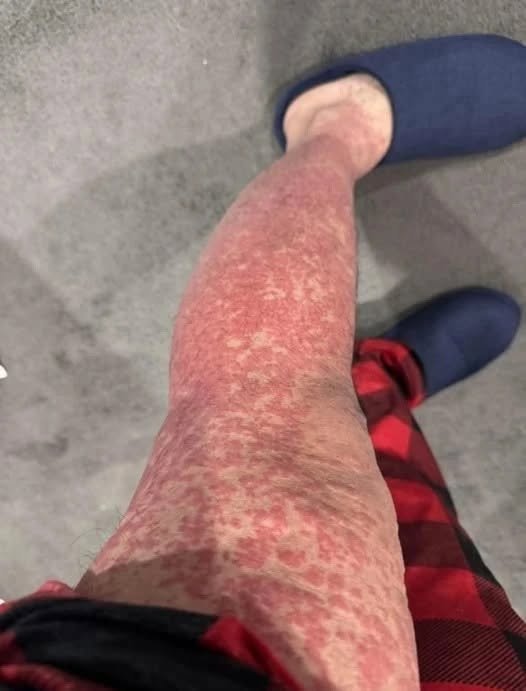
The image shows a widespread, maculopapular red rash across a person’s lower leg, accompanied by an unfinished, ominous caption: “Here are the consequences of sleeping with…”.
Leaving the phrase incomplete is a classic health-clickbait strategy designed to manufacture panic and exploit fears surrounding common sleep habits, pets, houseplants, or bedroom appliances. A severe, widespread skin reaction like this is a systemic medical issue, not the result of a vague “sleeping habit.”
What Can Cause a Sudden Extensive Rash?
A widespread rash covering large areas of the skin—often described as a maculopapular or confluent erythema—typically points to systemic triggers rather than simply sleeping next to a specific object:
- Drug Eruption (Exanthem): An adverse allergic reaction to systemic medications (such as antibiotics, nonsteroidal anti-inflammatory drugs, or anticonvulsants) is one of the most common causes of a widespread, blotchy rash developing over a few days.
- Viral or Bacterial Infections: Systemic infections (such as measles, rubella, mononucleosis, or viral exanthems) frequently present with extensive, generalized skin eruptions.
- Contact Dermatitis (Severe/Systemic): While contact with an allergen (like a new laundry detergent, fabric softener, or plant) usually causes localized irritation, severe exposure can lead to extensive inflammation.
- Autoimmune or Inflammatory Conditions: Conditions such as vasculitis, hives (urticaria), or acute flare-ups of inflammatory skin disorders can produce widespread lesions.
Deconstructing the Incomplete Curiosity Trap
Posts formatted with trailing headlines like “Here are the consequences of…” utilize precise engagement-farming mechanics:
- The Incomplete Hook: By omitting the subject (e.g., “sleeping with fan on”, “sleeping with pets”, or “sleeping with wet hair”), the post triggers an artificial curiosity gap, forcing users to click link trees or hunt through comments for answers.
- Shock Value Imagery: Using photos of real, severe medical conditions creates immediate anxiety, making viewers stop scrolling to verify if their own habits put them at risk.
- Monetization & Traffic Routing: Pinned comments on these graphics usually lead to ad-heavy blogs, affiliate product sites, or questionable health app downloads that stretch vague medical advice across dozens of pages.
If anyone experiences a sudden, widespread, or rapidly spreading rash—especially if accompanied by a fever, pain, facial swelling, or difficulty breathing—they should seek evaluation from a healthcare professional or dermatologist rather than relying on social media posts.
Leave a Reply