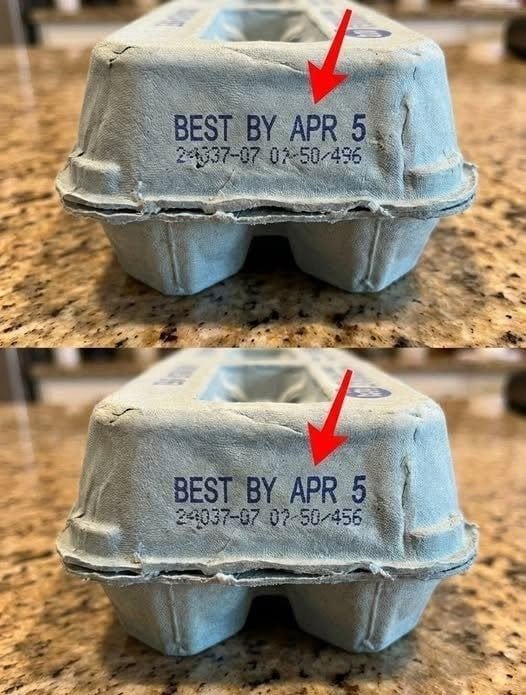
The graphic shows an egg carton with a red arrow pointing to the “BEST BY APR 5” date. The caption sensationalizes this ordinary grocery stamp with lines like: “It’s not an ordinary expiration date. After working for years and years in grocery stores, I see that most people just randomly buy eggs without really noticing this detail…. I never knew this before”.
While the “Best By” date is straightforward, the real hidden detail consumers often miss is the Julian code stamped right beneath it.
Decoding the Numbers on an Egg Carton
- The “Best By” or “Sell By” Date (Top Line):
- This date (e.g., “APR 5”) indicates maximum quality and freshness as set by the processor.
- It is not a sudden “spoilage” date. Properly refrigerated eggs remain perfectly safe and good to eat for 3 to 5 weeks past the “Sell By” or “Best By” date.
- The Julian Date / Pack Date (Bottom Line):
- The 3-digit number printed near the plant code on the bottom line (for example, numbers ranging from
001to365) represents the exact day of the year the eggs were washed, graded, and packed. 001corresponds to January 1st, while365corresponds to December 31st.- Checking this 3-digit Julian number tells you exactly how recently the eggs left the farm, allowing you to pick the freshest carton on the shelf regardless of the printed “Best By” date.
- The 3-digit number printed near the plant code on the bottom line (for example, numbers ranging from
- The Plant Code (P-Number):
- Stamped alongside the Julian date is usually a plant code starting with “P-” followed by four digits. This identifies the specific USDA-inspected processing facility where the eggs were packed, which is useful during food safety recalls.
Simple Freshness Test: The Water Float Method
If you are unsure whether older eggs are still good to eat, place them in a bowl of cold water:
- Sinks to the bottom and lays flat: Very fresh.
- Stands upright on the bottom: Slightly older, ideal for hard-boiling (easier to peel).
- Floats to the top: Old. As eggs age, air pockets inside the shell expand. Floating eggs should be discarded.
Deconstructing Engagement Clickbait
This post relies on classic social media tactics designed to farm clicks and shares:
- False Insider Authority: Phrases like “After working for years and years in grocery stores” are used to establish unearned credibility and intrigue.
- Artificial Mystery: Pointing a big red arrow at a completely normal “Best By” date creates an artificial curiosity gap, forcing viewers to click on the comments or an attached link to find the “secret”.
- Comment Driving: Pinned comments under posts like this routinely lead to ad-heavy websites or spam links that stretch basic food safety facts across multiple pages for ad revenue.
Leave a Reply