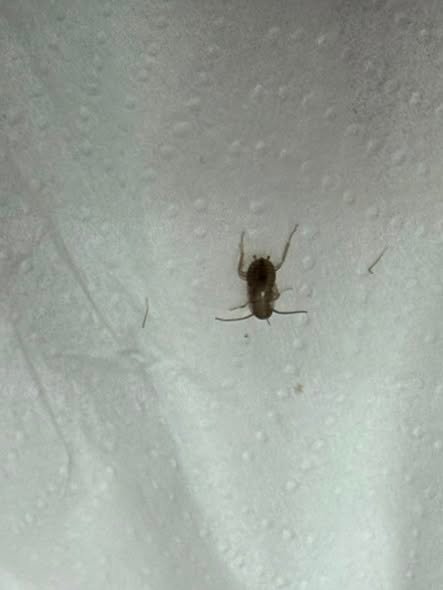
The insect in the image is a cockroach nymph (juvenile cockroach) resting on a paper towel. In North Texas, finding multiple nymphs indoors—especially if some are already dead—points to either an ongoing indoor infestation or outdoor roaches seeking moisture and shelter inside during warm or dry weather.
Species Possibilities in North Texas
- Smokybrown Cockroach (Periplaneta fuliginosa): Very common in North Texas. Young nymphs are dark brown to black with distinctive white bands across their antennae and back. They primarily live outdoors in trees, mulch, and gutters, but nymphs frequently wander indoors through small cracks or vents.
- American Cockroach (Periplaneta americana): Also widespread in Texas (“palmetto bugs”). Nymphs are reddish-brown without wings. They thrive in damp areas like bathrooms, basements, or near plumbing.
- German Cockroach (Blattella germanica): The primary indoor pest species. German roach nymphs have a dark body with a pale, tan stripe running down the center of their back. They inhabit kitchens and bathrooms near food and water sources and reproduce rapidly indoors.
- Surinam or Oriental Cockroach: Dark brown or black nymphs that live in soil, leaf litter, or crawlspaces and occasionally enter ground-level structures.
Why You Are Finding Them (And Some Dead)
- Breeding Nearby: Finding 7 nymphs indicates a hatch recently occurred nearby—either inside wall voids, under appliances, or right outside exterior entry points.
- Dehydration or Residual Treatment: Finding several dead roaches often means they entered an environment lacking sufficient water, or they came into contact with previously applied pest control treatments, dusts, or clean surfaces.
- Weather Mobility: Texas heat and dry spells frequently drive outdoor roach nymphs inside through door sweeps, window screens, and weep holes in brick foundations.
Actionable Steps to Address the Issue
- Targeted Inspection: Check dark, high-moisture zones—under kitchen/bathroom sinks, behind the refrigerator, and around water heaters—for droppings, egg cases (oothecae), or live bugs.
- Eliminate Moisture & Entry Points: Repair plumbing leaks, wipe down sinks before bed, seal gaps around pipes, and check exterior door sweeps and window screens.
- Use Gel Baits and Sticky Traps: Place roach gel bait (such as those containing fipronil or imidacloprid) in hidden crevices and lay down sticky monitor traps to identify where they are entering.
- Consult Pest Control: If new nymphs continue appearing daily, contact a licensed professional to inspect for nest locations and apply targeted treatments.
Pest Identification Misdirection and Engagement Farming
Images showing captured insects alongside distressed captions (“Going crazy over here”) are frequently shared on social media to capitalize on household infestation fears.
Content creators leverage these posts to drive platform metrics:
- Household Disgust and Alarm: Pest posts evoke strong emotional reactions, causing users to stop scrolling to inspect the image and share their own pest experiences.
- Regional Crowdsourcing: Mentioning specific geographic areas (like “North Texas”) encourages local residents to debate species, compare experiences, and recommend regional exterminators in the comments.
- Monetized Affiliate Links: Viral pest posts often feature pinned comments with affiliate links for pest traps, repellent devices, or extermination services.
Leave a Reply