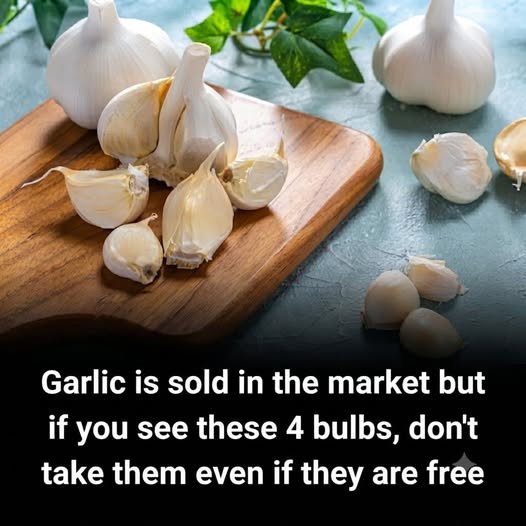
The graphic shows fresh garlic bulbs and cloves resting on a wooden cutting board, accompanied by the dramatic headline: “Garlic is sold in the market but if you see these 4 bulbs, don’t take them even if they are free”. While garlic is a culinary staple with well-documented antimicrobial and nutritional benefits, certain physiological and fungal signs do indicate that a garlic bulb is spoiled, unsafe, or unpalatable.
Indicators of Compromised or Unsafe Garlic
- Black Mold (Aspergillus niger): Garlic bulbs showing powdery black spots under the outer papery skin are infected with Aspergillus niger. While small amounts can sometimes be trimmed if the cloves remain firm, severe mold contamination produces mycotoxins that make the bulb unsafe to consume.
- Sprouted or Green Core: Garlic bulbs that have sprouted long green shoots are actively drawing nutrients out of the cloves. While not toxic or unsafe to eat, sprouted garlic becomes bitter, hollow, and woody in texture.
- Soft, Spongy, or Discolored Cloves: Cloves that feel mushy, appear yellow/brown and translucent (waxy breakdown), or exhibit blue-green mold (Penicillium) are decaying. Internal breakdown often results from bacterial rot or poor post-harvest storage conditions.
- Bleached or Chemically Treated Import Myths: Some viral claims allege that smooth, brilliant-white imported garlic is treated with toxic bleach. In reality, while imported garlic may undergo chlorine washing to sanitize soil residue according to agricultural inspection standards, the primary reason to avoid old garlic is physical spoilage, decay, or mold rather than conspiracy theories.
Food Safety Panic and Clickbait Tactics
Social media posts featuring common grocery items paired with extreme warning labels represent standard food-safety engagement farming.
Content creators utilize these tactics to maximize algorithmic reach:
- Manufacturing Food Paranoia: Suggesting that standard produce items pose a hidden health hazard taps into dietary anxieties, causing users to pause and check their own pantry items.
- Artificial Curiosity Gap: The image text deliberately avoids listing the “4 bulbs”. This design forces users to click outbound links, view slideshow ads, or open the comment section to find out what specific visual cues they should avoid.
- Comment Section Traps: Food safety warnings naturally prompt viewers to share cooking tips, debate regional sourcing, or ask for clarification, generating high comment volume that tricks social media algorithms into promoting the post.
When purchasing garlic, simply select firm, plump bulbs with tight, dry skins, and avoid those that feel hollow, soft, or display visible mold.
Leave a Reply