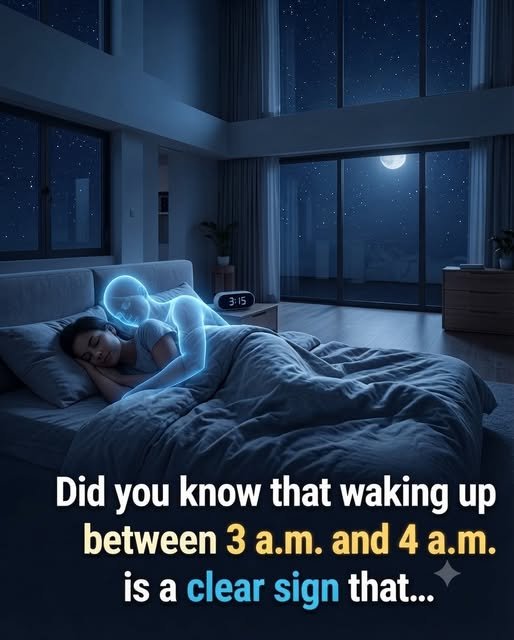
The viral image displays an AI-generated scene of a sleeping person paired with a glowing figure and a classic cliffhanger prompt asking, “Did you know that waking up between 3 a.m. and 4 a.m. is a clear sign that…”. While online posts frequently attribute mid-night awakenings to spiritual occurrences, paranormal activity, or severe medical conditions, waking up around 3:00 A.M. to 4:00 A.M. is actually a routine physiological function tied to human sleep architecture and circadian rhythms.
The Science of Sleep Cycles and Cortisol
- Sleep Cycle Shifts: Sleep progresses in approximately 90-minute cycles, alternating between deep slow-wave sleep and REM (Rapid Eye Movement) sleep. Deep sleep dominates the first half of the night, whereas the second half (typically around 3:00 A.M. onward) consists mostly of lighter REM and stage 2 sleep, making a person far more susceptible to waking up from minor internal or external disturbances.
- Cortisol and Temperature Rhythms: Core body temperature reaches its lowest point around 3:00 A.M. to 4:00 A.M., while the body begins naturally releasing small amounts of cortisol—the hormone that readies the body to wake up—in anticipation of morning.
- Common Physical Triggers: Waking during this window is frequently triggered by mundane factors, including nocturnal blood sugar drops (especially if eating high-carb snacks before bed), alcohol metabolism (which disrupts REM sleep mid-night), sleep apnea, a full bladder, or environmental temperature changes.
Health Anxiety Clickbait and Engagement Tactics
Graphics implying that a specific waking time carries a sinister or sensational meaning rely heavily on medical and psychological engagement farming.
Content creators leverage universal experiences to manipulate platform algorithms:
- Relatable Hook: Occasional early morning awakenings affect millions of adults, making the headline immediately relevant to a massive scrolling audience.
- Sensational Imagery and Cliffhangers: Depicting a ghostly glowing figure while leaving the sentence incomplete (“is a clear sign that…”) exploits curiosity and anxiety, compelling users to click through or search the comment section for an answer.
- Driving Comment Engagement: Open-ended sleep prompts lead hundreds of users to share their own sleep struggles or debate superstitious theories, generating high comment volume that boosts organic distribution across social feeds.
While brief awakenings between 3:00 A.M. and 4:00 A.M. are a natural part of human sleep architecture, chronic insomnia or disrupted sleep accompanied by daytime fatigue should be discussed with a healthcare professional rather than analyzed via social media posts.
Leave a Reply