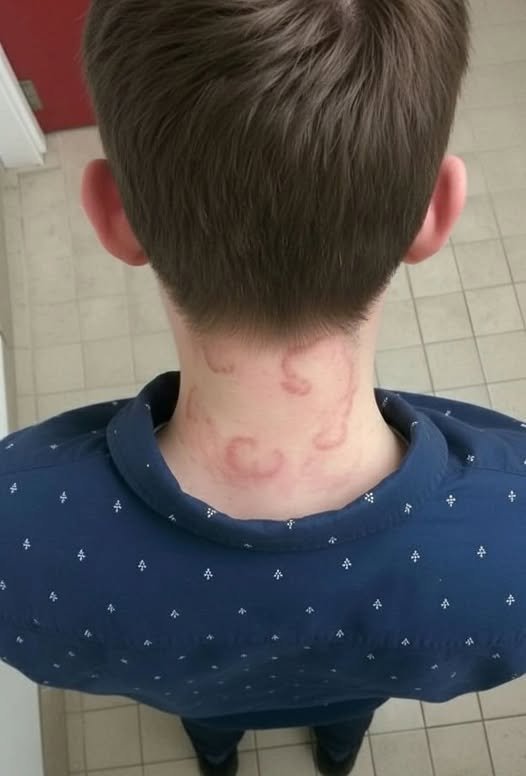
The raised, circular, ring-like red rash displayed on the back of the child’s neck in the photograph is a classic visual representation of ringworm (tinea corporis or extending from tinea capitis). Despite its name, ringworm is not caused by a worm or parasite, but rather by a common fungal infection (dermatophytosis) that affects the outer layers of the skin, hair shafts, and scalp.
Clinical Characteristics and Progression
- Visual Pattern: Ringworm typically presents as circular or annular red patches with slightly raised, scaly borders and clearer skin in the center.
- Contagious Nature: The fungus spreads easily through direct skin-to-skin contact, contact with infected pets, or shared personal items like hats, combs, hairbrushes, towels, and clothing.
- Medical Management: Unchecked fungal infections can persist or expand over months, potentially causing scalp itching, hair breakage, or secondary bacterial infections if scratched. Treatment generally involves topical or oral antifungal medications prescribed by a healthcare professional.
Social Media Context and Digital Clickbait Tactics
Images showing distinctive medical conditions or unusual skin rashes paired with frantic parental queries—such as “My 8 year old son been having this for 2 months… What is it”—are frequently deployed across social media as engagement farming.
Content creators exploit medical concern and curiosity to manipulate user activity:
- Trigger Immediate Comment Volume: Posing open-ended medical questions prompts hundreds of users to share personal anecdotes, home remedies, or diagnoses in the comments, boosting the post’s algorithmic reach.
- Drive Traffic to Monetized Sites: These posts often feature captions directing users to a “link in the comments,” leading to external blogs, affiliate pages, or ad-heavy storefronts.
While ringworm is a common and manageable dermatological condition, persistent or worsening skin rashes require professional evaluation from a pediatrician or dermatologist rather than social media crowdsourcing.
Leave a Reply