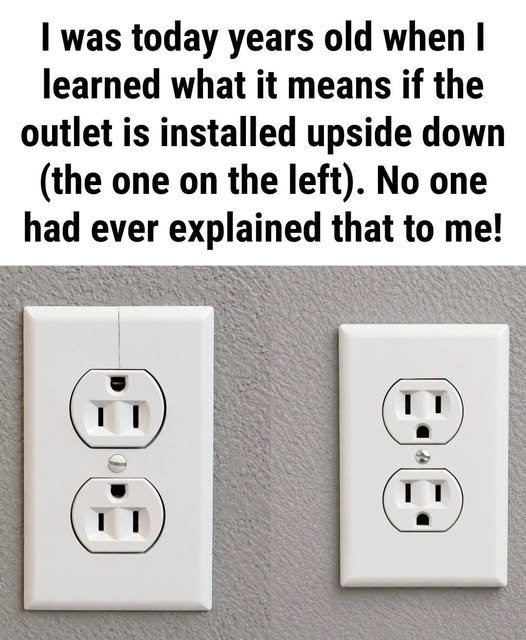
Viral posts often frame an inverted electrical outlet (ground pin on top) as a secret code or hidden home hack. In reality, there is no universal “secret meaning” required by law, though electric contractors intentionally install outlets with the ground pin facing up for practical safety and operational reasons.
Why Electricians Install Outlets Ground-Up
- The Switched Outlet Standard: In many residential homes, an upside-down outlet is a deliberate visual cue used by electricians to indicate a switched receptacle—meaning the outlet is wired to a nearby wall switch to control a floor lamp or room lighting.
- Fall-Protection Safety: The primary safety benefit of ground-up installation is preventing accidental short circuits. If a plug is pulled slightly out of the wall and a thin metal object (like a coin, paperclip, or blind slat) falls between the wall and the plug, it will hit the uncharged ground pin first rather than bridging the hot and neutral prongs, which causes sparks or a blown breaker.
- NEC Code Neutrality: The National Electrical Code (NEC) in North America does not specify whether an outlet must be installed with the ground pin facing up or down. Both orientations are fully compliant with code, provided the wiring behind the faceplate is attached correctly.
Understanding Household Electrical Orientation
While standard residential construction historically placed the ground pin on the bottom to resemble a traditional “face,” commercial buildings, hospitals, and industrial facilities almost exclusively install outlets ground-up for enhanced safety. Whether an inverted outlet in a home signifies a wall-switch connection or simply an electrician prioritizing fall-protection, it poses no danger and operates identically to standard outlets.
Leave a Reply