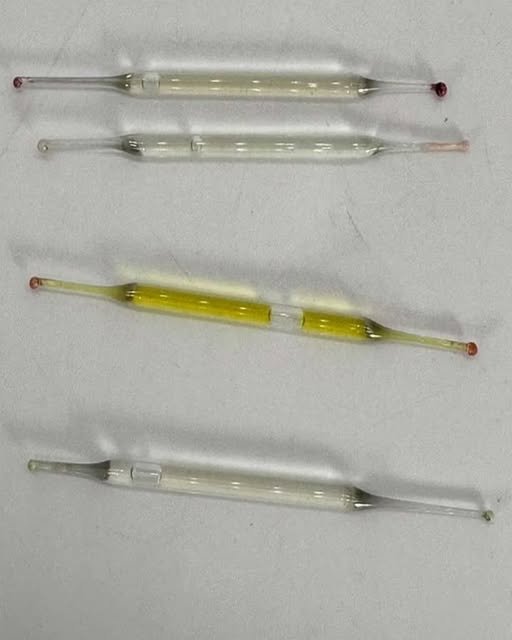
They were widely used from the mid-20th century for sterile, single-dose topical remedies, smelling salts, or antiseptic treatments commonly found in household medicine cabinets or specialized first-aid kits.
Key Features and How They Worked
- Sealed Design: The liquid inside is hermetically sealed in glass to preserve shelf life and prevent contamination or evaporation without needing chemical preservatives.
- Breakable Tips: The thin, rounded ends are scored or sealed under tension. To use them, you would snap off one or both tips (often wrapped in a tissue or cotton ball to prevent glass cuts), allowing the liquid to drop or flow out.
- Common Contents: Depending on the color and intended use, these historical ampoules typically contained:
- Ammonia Inhalants (Smelling Salts): Used to revive someone who had fainted.
- Iodine or Mercurochrome: Applied as a topical antiseptic for minor cuts.
- Fragrances or Essential Oils: Used as bath additives, perfume samples, or room fresheners.
Safety Precautions
Do not try to snap these open or crush them with bare hands. Because of their age, the glass may be fragile, and the contents could be degraded, harsh chemicals, or skin irritants. It’s best to wrap them carefully and dispose of them safely, or keep them stored in a sealed container if keeping them as vintage curiosities.
Leave a Reply