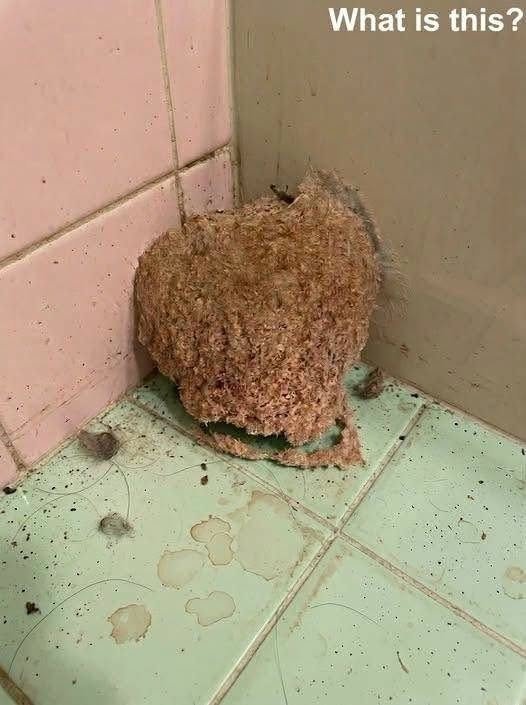
Returning home after a vacation to find a strange, textured mass in a corner can certainly be unsettling. However, the light brown, foamy structure pictured in the corner of the bathroom tile is an ootheca—the protective egg case laid by a female praying mantis. When mantises lay their eggs, they extrude a frothy liquid that quickly hardens into a tough, papier-mâché-like protective shell, guarding dozens to hundreds of developing eggs inside against weather and predators.
Why Mantises Nest Indoors and What to Expect
- Humid and Quiet Environment: Female mantises search for warm, undisturbed, and sheltered spots to lay their egg cases before winter. Open windows, small gaps in screen frames, or bathroom exhaust vents provide an easy pathway indoors.
- Completely Harmless: Praying mantises are beneficial insects that eat flies, mosquitoes, and small garden pests. They do not sting, bite humans, vector diseases, or cause structural damage to homes or wood.
- Hatching Risks: If left in a warm indoor environment, the artificial heat can trick the eggs into hatching early, leading to dozens of tiny mantis nymphs emerging into the room looking for food.
Safe Removal and Handling
Removing a mantis egg case requires no chemicals or exterminators. Homeowners can carefully scrape the hardened mass off the wall or tile using a flat putty knife or butter knife. Once detached, place the ootheca outdoors in a garden, resting it gently in a shrub, tree branch, or elevated plant bed away from direct ground moisture. This preserves beneficial garden insects while keeping your living spaces clean and pest-free.
Leave a Reply