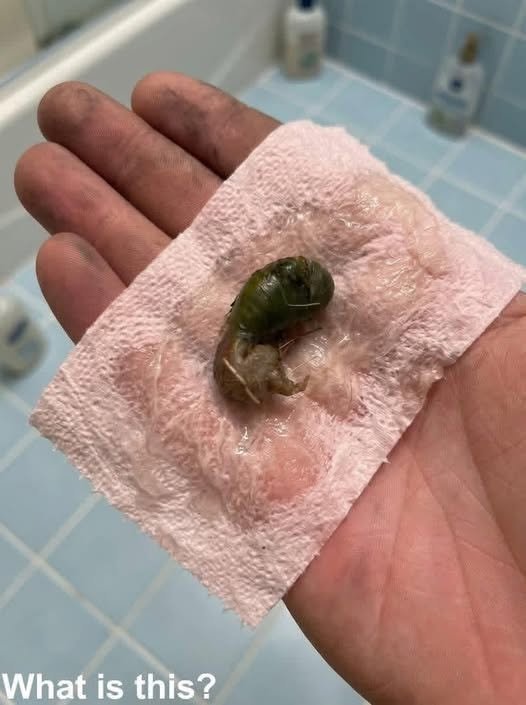
Finding an unfamiliar, organic-looking object in domestic spaces like bathrooms can naturally provoke anxiety, but the item in the image is a completely harmless insect pupal casing. Specifically, this object is the pupa—or empty exuviae shell—of a large moth, such as a hawk moth or cutworm moth. During the pupal stage, caterpillars transform inside a protective, hardened chrysalis that often features dark green, brown, or bronze coloration, segmented rings, and a distinct curved tail hook. These pupae are non-venomous, do not bite or sting, and pose zero physical threat to humans or household pets.
How Garden Pupae Enter Indoor Living Spaces
- Accidental Import: Caterpillars frequently pupate in soil, potted plant dirt, or outdoor laundry hung outside to dry, allowing them to be accidentally brought indoors on shoes, clothing, or household items.
- Drain and Vent Exploration: In rare cases, fully grown caterpillars searching for dark, humid places to undergo metamorphosis crawl through small gaps around window screens, bathroom exhaust vents, or plumbing penetrations.
- Pet Transport: Outdoor pets like dogs or cats can unknowingly transport pupae or caterpillars inside their fur after playing in gardens or leaf piles.
Proper Disposal and Household Prevention
Disposing of a moth pupa requires no specialized chemical treatments or pest control interventions. Homeowners can simply wrap the casing in a paper towel or tissue and place it outdoors in a garden bed or trash receptacle. To prevent future garden insects from entering living areas, ensure window screens fit securely, seal small gaps around bathroom pipe entry points, and inspect indoor potted plants regularly. Understanding basic insect life cycles replaces fear with clear knowledge, ensuring a calm, safe, and clean home environment.
Leave a Reply